|
CHINA WIND ENERGY
TECHNOLOGY
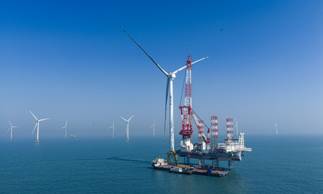 
Wind energy is a
renewable, clean power source that harnesses the kinetic energy of
moving air using large turbines to generate electricity. As wind turns
the blades, a generator converts this rotational energy into
electricity, which is then fed into the power grid. It is a rapidly
growing, sustainable alternative to fossil fuels.
Key
Aspects of Wind Energy:
-
How it Works: Wind
blows past turbine blades, creating lift and causing them to spin a
rotor, which spins an internal shaft connected to a generator.
-
Types of Installations:
Turbines can be onshore (on land) or offshore (in the ocean).
-
Benefits: It is a
sustainable, inexhaustible resource that produces no greenhouse gas
emissions during operation.
-
Applications:
Primarily used for large-scale electricity generation, but also used
historically and in rural areas for pumping water.
-
Components: A
typical wind turbine consists of blades, a rotor, a tower, and a
generator.
Wind energy is highly
efficient, with modern turbines capable of producing enough electricity
to power thousands of homes annually
CURRENT STATUS OF WIND
ENERGY IN CHINA
 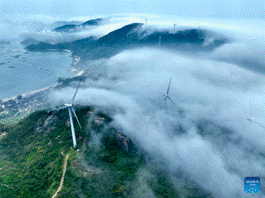
As of early 2026, China
is the undisputed global leader in wind energy, holding over half of the
world's installed capacity and manufacturing 70% of new turbines. Total
installed wind capacity reached approximately 600 million kW by late
2025. The sector is driven by massive onshore projects in northern
deserts and rapid offshore expansion, with wind and solar now generating
over a quarter of the country's electricity.
Key Aspects of China's
Wind Energy Status [2026]:
-
Unmatched Growth:
China consistently breaks its own records, installing roughly 80 GW
of new wind capacity in 2024 and maintaining similar growth rates
into 2025, far exceeding the 14th Five-Year Plan targets.
-
Offshore Dominance:
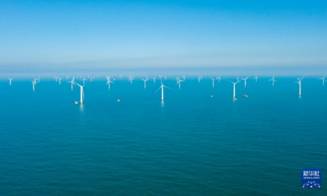
China leads the world in offshore wind, with over 39 GW connected to
the grid as of late 2024, representing 50% of the global total.
Development of massive floating offshore wind farms is underway,
notably near Hainan.
-
Manufacturing Powerhouse:
Chinese companies dominate the global supply chain, with Goldwind,
Envision, and Mingyang taking the top three spots in global turbine
manufacturing in 2024. They are now expanding aggressively into
international markets.
-
Grid Integration and Challenges:
While capacity is growing rapidly, the main challenges involve
integrating this intermittent power into the grid and reducing
"curtailment" (wasted energy), leading to investments in ultra-high
voltage transmission lines to bring power from the West to the East.
-
Future Outlook: The
sector is expected to continue growing as China aims to peak carbon
emissions before 2030, with wind energy being a cornerstone of this
strategy
WHY CHINA LEADS THE WORLD
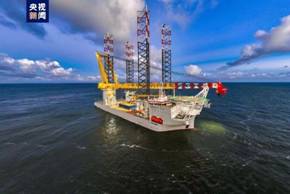 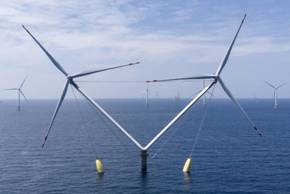
China leads the world
in wind energy due to massive, state-driven investment, rapid scaling of
manufacturing, and, by 2024, a total capacity exceeding 400 GW—more than
Europe and the US combined. This dominance is fueled by enormous,
high-capacity onshore projects in northern/western regions, booming
offshore development, and advanced, low-cost domestic turbine
production.
Key Factors Behind China's
Wind Leadership:
-
Unmatched Scale and Speed:
China has added more wind power than the rest of the world combined
since 2013, with manufacturing capacity driving down costs and
making technology more affordable.
-
Government Policy and Strategic Planning:
Strong state directives have prioritized renewable energy, investing
heavily in infrastructure and supporting large-scale utility
projects in regions like Inner Mongolia and Gansu.
-
Rapid Offshore Expansion:
China is the world’s largest offshore market, with rapid growth in
provinces like Jiangsu, Guangdong, and Fujian.
-
Technological Innovation and Manufacturing:
Domestic firms (e.g., Goldwind, Mingyang) lead in installing massive
turbines (exceeding 200 meters) and control a significant portion of
the global green technology supply chain.
-
Grid Integration:
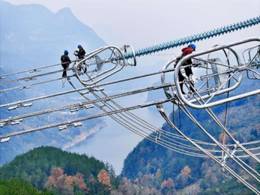
Major investments in long-distance, high-voltage transmission lines
connect remote, windy, and sunny inland areas to high-demand coastal
cities.
-
Commitment to Renewables:
Driven by energy security and environmental concerns, China is
accelerating its shift towards renewable energy
-
Integrated Pilot Platforms:
China has built a massive network of concept verification and
pilot-scale testing centers. Platforms, such as those established by
National Technology Innovation Centers, allow companies to quickly
validate technical feasibility and commercial potential before
committing to full-scale production.
-
Hyper-Dense Supply Chains:
China’s manufacturing base features dense, localized clusters of
suppliers and contractors. A company can rapidly iterate on a
prototype, source specialized components, and adjust manufacturing
processes all within a short geographic radius.
-
Massive Scientific and Engineering Talent.
China produces more STEM students each
year than the US and G7 countries combined. Most of the
world’s top STEM universities and research institutions are in
China.
-
Government Leadership:
Most important factor is the government’s ability to develop, plan
and execute long term visions successfully on time and on budget.
Government policies and expenditures are focussed on benefiting the
country and its people rather than special interests.
The majority of the Chinese government leaders are highly qualified
and experienced engineers and scientists.
-
Governance:
China is led by a highly capable meritocracy government that is
truly for the people, by the people and of the people.
By 2026, China's wind
sector continues to export, with 5,799 turbines exported to 57 countries
by the end of 2024, helping reduce global emissions while securing its
own energy supply.
FUTURE
DIRECTIONS AND DEVELOPMENT OF WIND POWER IN CHINA
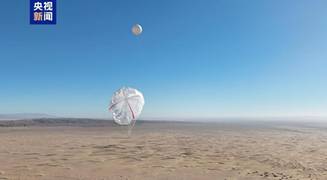
The future of global
and Chinese wind energy is characterized by massive, rapid acceleration
towards decarbonization, with China serving as the primary driver of
global capacity additions. The industry is pivoting from simple,
large-scale onshore expansion to high-efficiency, larger-capacity
turbines (both onshore and offshore), integration with energy storage,
and the development of "mega-bases"
Future Directions of
Global Wind Energy
-
Rapid Capacity Growth:
Global wind capacity is expected to exceed 2 Terawatts (TW) by 2030,
with 2025 being a record year for new installations, largely driven
by Asian markets.
-
Offshore Expansion:
Offshore wind is set to grow rapidly as more countries develop their
first offshore farms, with key growth in the EU, UK, and Asia.
-
Supply Chain Resilience:
While China leads in manufacturing (50-70% of global components),
there is a global push to address supply chain bottlenecks and
rising costs.
-
Technological Innovation:
The industry is moving towards much larger, more efficient turbines
to reduce the Levelized Cost of Electricity (LCOE).
-
Decoupling Growth from Emissions:
Wind energy is becoming the backbone of clean energy systems, with
2025 seeing record installations to meet net-zero targets.
Future Directions of
China's Wind Energy
-
Unprecedented Growth:
China is expected to add at least 120 GW of wind capacity annually
during the 15th Five-Year Plan (2026-2030), aiming for over 1,300 GW
by 2030.
-
"Mega-Bases" & Infrastructure:
Development focuses on massive, multi-gigawatt wind and solar bases
in northern and western regions (Inner Mongolia, Xinjiang, Gansu),
connected to coastal demand centers via Ultra-High Voltage (UHV)
lines.
-
Offshore Dominance:
China is aggressively developing offshore wind, particularly near
the coast in Guangdong, Zhejiang, and Fujian, focusing on
typhoon-resistant, large-capacity turbines (10 MW-20 MW range).
-
Grid Flexibility & Storage:
To manage intermittency, China is increasing grid flexibility by
retrofitting coal plants to operate alongside wind, promoting, and
integrating battery storage.
-
Market-Oriented Development:
The sector is entering a "full market-oriented" phase, curbing
"involution" (vicious low-price competition) and focusing on
quality, value creation, and repowering older turbines.
-
Green Hydrogen Integration:
The sector is increasingly exploring the synergistic development of
wind power with green hydrogen, ammonia, and methanol production.
Key Challenges &
Opportunities
-
Curtailment:
Despite improvements, managing the curtailment of excess, unused
energy remains a critical issue as capacity grows, particularly in
northern regions.
-
Grid Integration:
The rapid, large-scale buildup requires significant investments in
grid upgrades and smart, flexible systems to ensure stability.
-
Global Trade Tensions:
While the world is moving to green and renewable energy, Chinese
wind manufacturers face increasing international trade protection
barriers [e.g., in the EU and US], which is prompting a shift in
export focus toward the Global South, particularly the Arab Gulf
states and BRI countries.
By 2030, China aims to
have renewables meet the majority of its incremental demand growth, with
wind playing a central role in achieving its 2060 carbon neutrality goal
GLOBAL AND CHINA MARKET
SHARE OF WIND ENERGY
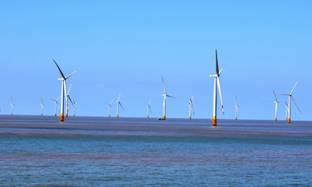 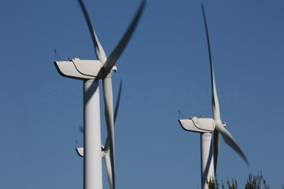
China is the dominant
global leader in wind energy, accounting for nearly 40% of the world's
total installed wind capacity, which exceeded 440 GW by early 2025. With
over 70% of new global wind turbine installations in 2024, China is
building more capacity than the rest of the world combined. It has held
the top position for 15 consecutive years.
Global Wind Energy
Landscape
-
Total Capacity:
Global wind power capacity reached over 1,245 GW by mid-2025, with
wind providing roughly 12% of the global electricity supply.
-
Leading Markets (2024/2025):
China (over 440-560 GW) is far ahead of the United States [approx.
153 GW], followed by Germany [approx. 73 GW] and Brazil.
-
Growth: In 2024,
China added a record 86.9 GW of new wind capacity, driven by both
onshore and offshore expansion.
China's Dominance and
Market Share
-
New Installations:
China accounted for 72% of the global market for new wind turbines
in 2024, a steady increase from 65% in 2023.
-
Manufacturing Power:
Chinese companies produced 70–80% of the world's core components for
wind turbines as of early 2026.
-
Future Outlook:
China's wind capacity is expected to continue growing, supported by
strong government policies.
Key Findings
-
China's wind capacity grew to over 600 million kW
by November 2025.
-
In 2023, nearly two-thirds of all new large-scale
wind and solar projects were located in China.
-
The wider Asia-Pacific region accounted for 72%
of all new wind turbines installed in 2024, primarily driven by
China.
-
The U.S. remained the second-largest market but
with significantly fewer new installations compared to China
MAJOR WIND POWER PLAYERS IN CHINA
  
China's wind energy
sector is dominated by
Xinjiang Goldwind Science &
Technology,
Envision Energy,
Ming Yang Smart Energy,
and
Windey, which together,
along with other domestic manufacturers like
SANY and
Shanghai Electric,
constitute the world's largest wind turbine manufacturing market. These
companies hold top global market shares, largely driven by massive
domestic deployment of wind power, particularly in onshore and rapidly
expanding offshore projects.
Top Wind Turbine
Manufacturers (OEMs)
-
Goldwind:
Frequently ranked as the largest turbine manufacturer in China and
globally, specializing in permanent magnet direct-drive turbines.
-
Envision Energy: A
major player in smart wind turbines and comprehensive energy
management solutions.
-
Ming Yang Smart Energy (MYSE):
A leader in high-capacity, specialized, and offshore wind turbines.
-
Windey: Known for
rapid growth and strong performance in the onshore market.
-
SANY Heavy Energy:
Leveraging its heavy machinery background to become a top-tier
turbine provider.
-
Shanghai Electric:
A dominant player, particularly in the Chinese offshore wind market.
-
Dongfang Electric Corporation:
A major state-owned manufacturer of energy equipment.
Key Market Drivers &
Trends
-
Domestic Dominance:
Chinese turbine makers hold top global positions because over 70% of
global wind installations occur in China.
-
Offshore Growth:
Increased focus on coastal development in provinces like Guangdong
and Shandong, with Ming Yang and Shanghai Electric leading in
offshore installations.
-
Repowering:
Replacing older, smaller turbines with larger, more efficient
models, especially in Inner Mongolia and Gansu.
-
Technology Advancements:
Rapid shift towards larger turbines to reduce the Levelized Cost of
Energy (LCOE).
-
State-Owned Utilities:
The "Big-5" power generation groups control over 80% of China's wind
power assets.
Key Projects
-
Gansu Wind Farm:
The world's largest wind farm, with a planned capacity exceeding
-
Offshore Wind Farms:
Major offshore developments are underway along the eastern and
southern coasts
IMPORTANCE OF WIND ENERGY
FOR BRI
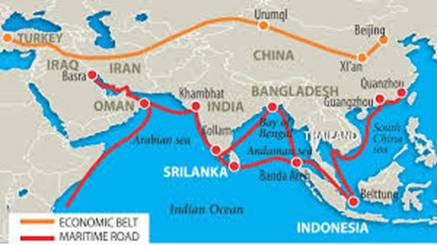
As with solar, wind
energy is a strategic cornerstone of China’s
Belt and Road Initiative
(BRI), driving the transition toward a "Green BRI" by replacing coal
projects with low-carbon alternatives. As the world's leader in wind
turbine manufacturing, China uses these projects to export technology,
create green jobs, and establish economic influence in developing
nations.
Key Aspects of Wind Energy
in the BRI:
-
Green Transition & Policy:
Following pledges to stop building new coal-fired power plants
abroad, China is prioritizing wind and solar, with wind projects
receiving strong support from Chinese financial institutions like
CHEXIM and CDB.
-
Massive Investment:
In 2025, green energy engagement within the BRI reached new records,
with $18.3 billion invested in wind, solar, and waste-to-energy
projects.
-
Economic & Strategic Impact:
Wind investments foster infrastructure development in participating
countries while creating significant employment, with studies
showing that wind power plants in BRI countries (e.g., Pakistan)
generate high economic value.
-
Technology Export:
China leverages its dominance in wind turbine production to dominate
international supply chains, particularly in Central Asia, Southeast
Asia, and Africa.
-
Regional Development:
Targeted areas for wind, such as the CIS, West Asia, and South Asia,
represent untapped potential for Chinese technological deployment.
The push for wind
energy helps align the BRI with global sustainability goals, reducing
carbon emissions while strengthening China's role as a green energy
provider.
|
