|
CHINA SOLAR POWER
TECHNOLOGY
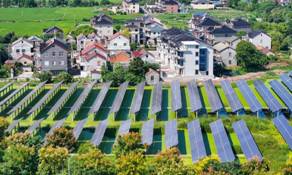 
Solar energy is radiant
light and heat harnessed from the sun to generate electricity or heat
surfaces, acting as a clean, renewable, and sustainable power source. It
is converted using photovoltaics [PV] to turn sunlight into electricity
or solar thermal technology to create heat. This energy source is
abundant, free, and reduces reliance on fossil fuels.
Key Aspects of Solar Energy:
-
Solar Photovoltaic (PV):
Sunlight hits semiconductor cells in panels, creating an electric
current that is converted into usable electricity for homes and
businesses.
-
Solar Thermal:
Captures the sun’s heat for water heating or to generate electricity
via steam turbines.
-
Benefits:
It is a renewable, green, and emission-free energy source. It
significantly reduces power bills and is ideal for residential
(rooftop) or large-scale, utility-grade power generation.
-
Peak Production:
Solar panels produce the most energy during the day (9 am to 3 pm),
though they can work in varied conditions.
-
Storage:
While solar energy is intermittent, batteries can store excess power
for use at night or during low-sunlight periods.
Solar energy is the
most abundant energy resource on Earth, with the potential to meet all
future energy needs if properly harnessed.
CURRENT STATUS
OF SOLAR TECHNOLOGY IN CHINA
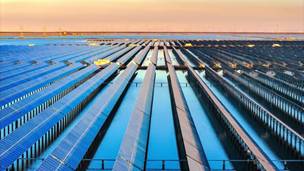 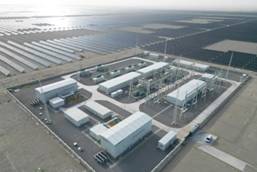
China dominates the
global solar industry, producing over 80% of components and installing
the most capacity. Due to the instability and reliability of fossil
fuel supplies, the majority of the countries around the world are moving
to green and renewable energies such as solar.
China has the world’s
most advanced yet inexpensive solar technology and will play a pivotal
role in helping global transition from polluting fossil fuel to
renewable green solar energy.
Global Solar
Energy Status [Early 2026]
-
Rapid Growth:
Global solar capacity is expanding at a breakneck pace, with 2025
expected to exceed 2024’s record installations.
-
Dominance of
Supply Chain: China controls over 80%
of all solar manufacturing stages [polysilicon, wafers, cells,
modules].
-
Key Markets:
Outside China, India and the US are the largest potential growth
markets. Africa is seeing a rapid increase in solar adoption.
-
Price Drop:
Massive production has caused a 50% decrease in global PV module
spot prices between late 2022 and late 2023.
China's Solar
Energy Status [Early 2026]
-
Unmatched
Capacity: China leads the world in
both solar manufacturing and deployment. By 2028, China is expected
to generate 60% of the world's renewable energy.
-
Generation
Milestone: Solar power generation has
overtaken wind in China, accounting for over 11% of the country’s
total electricity generation.
-
Future Outlook:
Annual installation growth rates may slow slightly due to market
saturation and grid limitations, China is expected to remain the
dominant force in global solar.
Key
Challenges & Trends
-
Trade Barriers:
Western nations led by US and EU are enacting protectionist policies
to limit the import of solar products and technologies from China at
the detriment of their own green transition goals and climate change
obligations.
However, most developing countries are adopting Chinese solar
technology in an accelerated pace caused by tariffs, fossil fuel
energy insecurity and the need for green transition to minimize the
negative impacts of climate change.
-
Grid Capacity:
The speed of solar installation is creating a need for massive
investment in power grids and energy storage to manage
intermittency.
-
Complete Supply
Chain: China’s central role as a
stabilizer and anchor in global solar energy supply chain will
continue.
WHY CHINA LEADS THE WORLD IN SOLAR ENERGY
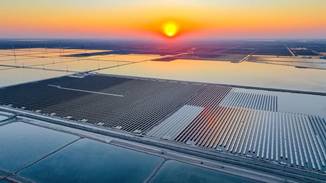 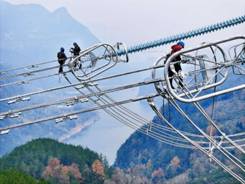
China
leads the global solar energy market through overwhelming manufacturing
dominance, controlling over 80% of the solar panel supply chain
including polysilicon, wafers, and modules.
This
dominance is fueled by focussed state support, strategic investment, a
robust and complete industrial ecosystem, and low-cost production
capabilities, enabling China to produce, install, and export solar
technology faster than any other nation.
Key factors
behind China's global leadership include:
-
Supply
Chain Control:
China dominates every stage of solar manufacturing, holding more
than 96% of the world's solar wafer manufacturing capacity.
-
Massive
Investment & Subsidies:
The government has provided sustained, significant financial support
to build, maintain, and upgrade solar factories, creating immense
manufacturing overcapacity.
-
Drastic
Cost Reduction:
Chinese companies have played a pivotal role in reducing the global
cost of solar PV by scaling up production, making solar energy
affordable, and making them global giants.
-
Strategic
Planning:
China has created localized, integrated industrial hubs that combine
research and development with manufacturing.
-
Rapid
Installation & Infrastructure:
China is the world’s leading installer of solar panels, with, for
example, 100 GW of capacity reached by 2017. They are also building
large-scale, innovative solar farms in desert and, floating, or,
urban rooftop locations.
-
Commitment
to Renewables:
Driven by energy security and environmental concerns, China is
accelerating its shift towards renewable energy
-
Integrated Pilot
Platforms: China has built a massive
network of concept verification and pilot-scale testing centers.
Platforms, such as those established by National Technology
Innovation Centers, allow companies to quickly validate technical
feasibility and commercial potential before committing to full-scale
production.
-
Hyper-Dense
Supply Chains: China’s manufacturing
base features dense, localized clusters of suppliers and
contractors. A company can rapidly iterate on a prototype, source
specialized components, and adjust manufacturing processes all
within a short geographic radius.
-
Massive
Scientific and Engineering Talent.
China produces more STEM students each year than the US and G7
countries combined. Most of the world’s top STEM
universities and research institutions are in China.
-
Government
Leadership: Most important factor is
the government’s ability to develop, plan and execute long term
visions successfully on time and on budget. Government policies and
expenditures are focussed on benefiting the country and its people
rather than special interests.
Most of the Chinese government leaders are highly qualified and
experienced engineers and scientists
-
Governance:
China is led by a highly capable meritocracy government that is
truly for the people, by the people and of the people.
FUTURE
DIRECTIONS AND DEVELOPMENT FOR SOLAR TECHNOLOGY IN CHINA
China's solar energy
development is transitioning from a phase of explosive and high-capacity
growth to a "high-quality" development era [2026–2030] focused on system
integration, efficiency, and market-based operations.
Having achieved 2030
renewable targets in 2024, the nation is pivoting towards addressing
integration challenges, reducing overcapacity, and embedding solar into
a broader, intelligent energy system, with solar power expected to
overtake coal in capacity by 2026.
Future
Directions of China's Solar Energy Development
-
Grid Integration
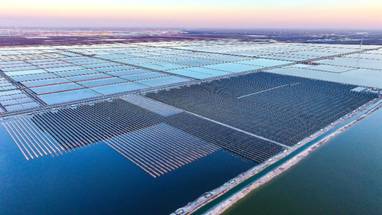
and "Shagehuang" Bases: The primary
focus has shifted to connecting massive, multi-gigawatt "Shagehuang"
(desert, Gobi, and arid region) solar bases to the grid,
particularly in northwestern regions. This includes building massive
Ultra-High Voltage (UHV) transmission lines to send power to coastal
demand centers.
-
"Solar +"
Diversification: Beyond traditional
ground-mount, China is aggressively pushing AI driven integrated,
multi-scenario applications to mitigate land constraints.
-
Floating
Solar: Utilizing lakes and
reservoirs.
-
BIPV
(Building-Integrated Photovoltaics):
Integrating panels into urban, industrial, and residential
building surfaces.
-
Agricultural/Fishery Solar:
Combined land-use projects.
-
Energy Storage
and System Flexibility: To handle the
intermittency of solar, the future focus is on pairing projects with
energy storage, specifically utility-scale lithium-ion battery
storage and pumped-hydro, which tripled between 2021 and 2024.
-
Shift to
Market-Based Pricing: The sector is
moving away from direct government subsidies to "grid parity," where
solar must compete with other power sources on price. The June 2025
policy update requires new projects to operate within
market-determined prices, forcing efficiency and consolidation.
-
Technological
Upgrading (High-Efficiency Cells): The
industry is moving from P-type PERC cells to more efficient N-type (TOPCon
and HJT) cells, with significant R&D investment into next-generation
perovskite technology.
-
"Going Global"
and Exporting Solutions: Facing
domestic overcapacity, Chinese solar manufacturers are pivoting to
exporting not just panels, but entire, integrated renewable
solutions to the Global South.
-
Solar Panel Recycling:
With early installations nearing end-of-life, the focus is on
creating a circular economy, with a projected "billion-level"
recycling market expected to emerge.
Key
Challenges and Strategic Directions
-
Curtailment
Mitigation: Despite record growth,
rising curtailment rates [over 5% in some regions] in 2024 have
forced the government to focus on improving grid capacity and
balancing renewable output.
-
Overcapacity and
Consolidation: Intense internal
competition ("involution") and falling prices have led to a drop in
manufacturer operating income. The 15th Five-Year Plan is expected
to focus on consolidating the industry through mergers and
acquisitions to eliminate inefficient, smaller players.
-
Decoupling
Growth from Coal: While solar capacity
is rising, coal still accounts for a large share of generation. The
ultimate goal is to force a structural, irreversible decline in coal
power, which is expected to occur from 2025.
Policy
Outlook [2026–2030]
The upcoming 15th Five-Year Plan will likely formalize higher,
non-fossil energy consumption targets, focusing on integrating AI to
manage smart grids and ensuring that solar-generated electricity is
fully utilized to meet China's carbon-neutrality goal by 2060.
China's future solar
energy development is transitioning from rapid, subsidy-driven capacity
expansion to a "new energy system" focused on high-quality integration,
technological innovation, and market-driven deployment, according to the
15th Five-Year Plan recommendations (2026–2030).
Key future
directions include:
-
Surpassing 2030
Targets & Continued Growth: China
surpassed its original 2030 goal of 1,200 GW of solar and wind
capacity in 2024, six years ahead of schedule. Future growth aims to
reach up to 2,500 GW of solar capacity by 2030.
-
Grid Integration
and Flexibility: A major focus is on
reducing "curtailment" [wasted energy] by improving grid
flexibility. This includes building Ultra-High Voltage [UHV] lines
to transport power from the sunny Northwest to the industrial East,
developing virtual power plants, and integrating battery storage.
-
"Shagehuang"
[Desert] Bases & Distributed Energy:
Large-scale solar bases in desert regions (Shagehuang) are being
scaled up alongside widespread rooftop solar in cities and
industrial parks.
-
Market-Based
Pricing & Consolidation: In 2025,
China began phasing out fixed feed-in tariffs for new solar
projects, moving toward market-determined prices. The industry is
experiencing a shakeout due to overcapacity, with a move towards
consolidation, mergers, and acquisitions to improve profitability.
-
Technological
Advancement: Focus is shifting toward
next-generation technologies like TOPCon, HJT, and back-contact
cells to achieve higher efficiency, with expectations of 500 Wh/kg
energy density targets by 2030.
-
Storage Pairing
& Long-Duration Storage: The 15th
Five-Year Plan (2026-2030) sets a 2027 target of 180 GW for new
energy storage capacity, focusing on high-safety, long-life, and
large-scale battery storage.
-
Global Expansion
& Local Manufacturing: Due to domestic
overcapacity and trade barriers, Chinese firms are accelerating
overseas investment, manufacturing, and exports of solar technology
to Southeast Asia, the Middle East, and the Global South.
Key Policy
Focus [2026–2030]:
The 15th Five-Year Plan will shift from "controlling energy consumption"
to "controlling carbon emissions," prioritizing the "new energy system"
and the "orderly replacement" of coal-fired power
CAPTURING THE
SUN’S ENERGY IN SPACE
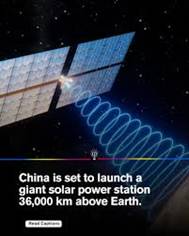 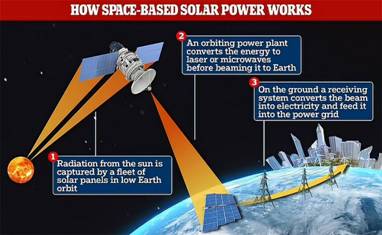
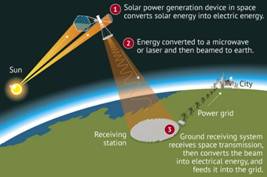
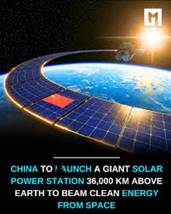
China is developing a
space-based solar power (SBSP)
program to capture solar energy using massive, orbiting, kilometers-wide
photovoltaic satellite arrays, aiming for continuous 24/7 power
generation, with plans to launch operational units by 2030 and a
full-scale plant by 2050. These satellites will convert solar energy
into microwaves or lasers, transmitting them to ground-based receiving
stations.
Key elements of China's
space solar project include:
-
High-Orbit
Stations: The solar panels will be
placed in geostationary orbit, roughly 36,000 km (22,000+ miles)
above Earth, avoiding nighttime interruptions and atmospheric
interference.
-
Efficiency:
The system aims for ten times more efficiency than terrestrial solar
panels, with 99% uptime.
-
Transmission
Technology: Energy collected will be
converted to microwave or laser beams, sent to massive "rectifying
antennas" on Earth to be converted back into usable electricity.
-
Testing and
Development: China has established
testing facilities, such as in Chongqing's Bishan district, and
successfully conducted tests of wireless power transmission.
-
Ambitious
Timeline: Following small-scale
testing, China aims to construct a megawatt-level space power plant
by 2030, with larger, more powerful, commercial-scale stations
expected by 2050.
MAJOR PLAYERS
IN CHINA’S SOLAR ENERGY MARKET
China holds a dominant
position in the global solar energy industry, manufacturing over 80% of
the world's solar equipment as of 2024. The industry is characterized by
high vertical integration, significant overcapacity, and intense price
competition among top Chinese manufacturers, who also dominate global
solar asset ownership. Top global solar players are primarily Chinese.
The
world's largest manufacturers of solar cells and modules are primarily
Chinese, known for being fully or partially vertically integrated:
-
LONGi Green
Energy Technology: A major leader in
monocrystalline silicon and module manufacturing.
-
JinkoSolar (Jinko):
One of the world’s top producers, known for high-efficiency
TOPCon solar modules.
-
Trina Solar:
A top-tier manufacturer of PV products and smart energy solutions.
-
JA Solar
Technology: A leading manufacturer
with high-efficiency cells and modules.
-
Tongwei Group:
A dominant force, particularly in the production of high-purity
polysilicon, as well as solar cells and modules.
-
Suntech Power:
An early pioneer in solar panel mass production.
In addition
to manufacturing, Chinese state-owned enterprises dominate the global
ownership of operating solar assets:
-
SPIC (State
Power Investment Corporation): The
world's largest solar asset owner.
-
China Huaneng
Group: Holds a massive portfolio of
operating solar projects.
-
CHN Energy
(China Energy Investment Corporation):
A leading operator in utility-scale solar farms.
Other major
international players include:
-
First Solar
(USA): A leader in thin-film solar
technology.
-
Qcells
(Korea/Germany): A major player in
high-efficiency solar cells.
-
NextEra Energy
(USA): A leading solar asset owner
outside of China.
-
Enel Green Power
(Italy), Adani Group (India), Iberdrola (Spain), Engie (France):
Key international players in solar project development.
-
Emerging Hubs:
Vietnam, Malaysia, and India are growing as alternative
manufacturing hubs, partly due to Chinese investment.
|
