|
CHINA SMART MATERIALS
TECHNOLOGY
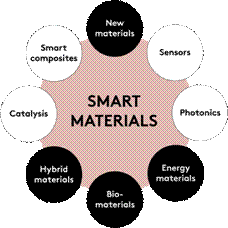 
Smart
materials, or "intelligent" materials, are engineered substances that
change their properties (shape, color, viscosity, or conductivity) in a
controlled, reversible way in response to external stimuli like heat,
light, pressure, electricity, or magnetic fields. These materials are
used to create adaptive, efficient, and self-healing systems in
industries ranging from aerospace and medicine to fashion.
Key Characteristics and Types
of Smart Materials
-
Shape Memory Alloys/Polymers
[SMAs]:
Materials that can remember their original shape and return to it
when heated, such as Nitinol.
-
Piezoelectric Materials:
Generate an electric charge in response to applied mechanical
stress, or change shape when an electric field is applied.
-
Chromic Materials:
Change color in response to stimuli, such as photochromic (light) or
thermochromic (temperature) materials.
-
Magnetorheological [MR]
Fluids: Liquids that become semi-solid
instantly when exposed to a magnetic field, used in shock absorbers.
-
Self-Healing Materials:
Materials, such as specialized concrete, that can repair cracks or
damage on their own.
-
Electroactive Polymers [EAPs]:
Polymers that change size or shape when stimulated by an electric
field, often used as artificial muscles.
Common Applications
-
Aerospace & Automotive: Actuators,
vibration dampers, and morphing wings.
-
Construction: Self-healing concrete
and energy-efficient, adaptive insulation.
-
Medicine: Drug delivery systems,
stents, and biomedical sensors.
-
Consumer Goods: Eyeglasses that darken
in sunlight, clothes with adaptive ventilation.
These
materials allow for the development of advanced technology, such as 4D
printing, where 3D-printed objects change shape over time.
CURRENT
STATUS OF SMART MATERIALS TECHNOLOGY IN CHINA
 
China's
smart materials market is expanding rapidly, with an expected annual
growth rate of 10.5% [2023–2027]. Present market has surpassed US$59
billion.
The
sector is driven by strategic, government-backed R&D into
superconductors, high-performance alloys, and intelligent sensors for
aerospace, EVs, and semiconductors.
Key developments include:
-
Market Growth & Investment: The market
is projected to reach US$3,503.9 million in 2023 and continue robust
growth, with China becoming a leader in global smart manufacturing,
expected to reach $158.2 billion by 2030.
-
Research Leadership: China is leading
research in approximately 90% of crucial, high-impact technologies.
-
Key Focus Areas: Significant focus is
placed on rare earth barium copper oxide superconductors for energy
grids and advanced, lightweight metamaterials for soft robotics and
protective gear.
-
Challenges: While research output is
high, challenges remain in achieving full self-sufficiency in
semiconductor materials and high-value, precise medical devices,
with reliance still placed on foreign multinationals.
The
industry is shifting from a primarily manufacturing base to
innovation-driven, with, for example, advancements in photonic and
semiconductor chips and intelligent, responsive materials.
HUAWEI TAU SCALING LAW SEMICONDUCTOR
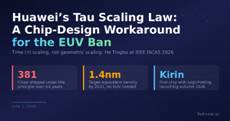 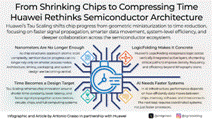
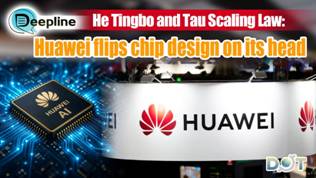
Huawei’s
Tau (τ) Scaling Law is an alternative semiconductor design framework
that shifts focus from shrinking transistor sizes to compressing signal
travel times. By bypassing the physical limits of traditional 2D
scaling, Huawei have proven this technology can boost microchip
performance significantly without needing advanced, restricted
lithography equipment.
Instead
of trying to physically miniaturize transistors, Huawei’s Tau technology
focuses on reducing the time constant (tau)) the amount of time it takes
for electrical signals and data to travel across circuits. It achieves
this through several key methods:
-
LogicFolding Architecture: Traditional chips are laid out as flat 2D
grids, meaning information sometimes has to travel long distances.
LogicFolding stacks active circuit layers vertically using hybrid
bonding. This creates a 3D layout that drastically shortens the
physical wiring and distance a signal must travel.
-
System-Level Optimization: The approach optimizes multiple levels of
the computing stack from physical devices and circuits to the whole
system by reducing parasitic capacitance and optimizing
interconnects.
-
3D
AI Packaging: For high-performance computing (AI), it shifts memory
and power delivery to the chip's surface rather than just the
perimeter, reducing end-to-end latency.
Why Huawei Developed It
For decades, the semiconductor industry relied on Moore’s Law, which
dictates that transistor density doubles roughly every two years through
continuous physical shrinkage. However, as transistors approach atomic
limits, issues like heat, power leakage, and the extreme difficulty of
acquiring advanced EUV lithography machines have slowed this progress.
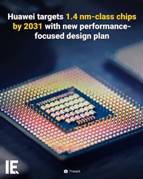
Huawei developed the Tau Law to side-step these roadblocks, with the
goal of producing chips that match the performance and transistor
density of advanced 1.4 nm processes by 2031.
Real-World Application
Huawei's
next-generation Kirin processors designed for flagship smartphones and
their Ascend series AI processors are the first commercial hardware to
utilize the LogicFolding architecture.
China is also in the process of revolutionizing chip design and
performance by focussing on improving the performance of the
semiconductors and the software that operate the chips rather than just
making the chips smaller.
WHY CHINA
LEADS THE WORLD
 
China
leads the world in several smart and advanced materials, driven by
massive investment in manufacturing and R&D. Key areas include battery
materials [lithium, cobalt, graphite processing], rare-earth elements,
smart LED technology, advanced composites for aerospace, and
nanotechnology. They are also advancing in biodegradable polymers and
high-temperature superconductors.
-
Energy Storage
& Battery Materials: China controls a
significant portion of the global supply chain, processing roughly
65% of the world's lithium, 74% of cobalt, and 100% of graphite.
-
Rare-Earth
Elements & Magnets:
China is the world leader in rare-earth mining, processing,
and purification, holding a dominant position in the end-to-end
supply chain.
-
Advanced &
Smart Composites: Significant leadership in
smart composites for aerospace, which include self-sensing,
self-healing, and multifunctional capabilities.
-
Smart LED
Technology:
Dominance in MOCVD-based LED manufacturing, focusing on
AI-driven smart lighting that adjusts to environmental conditions.
-
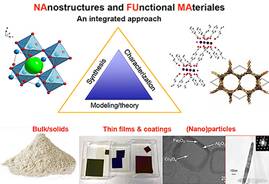
Nanotechnology
& Functional Materials: Strong, high-impact
research output in nanoscale materials.
-
Biodegradable
Materials: Rapid advancement in Polylactic
Acid (PLA) for green, sustainable applications.
-
Superconductors:
Advancing in high-temperature superconductors for energy
efficiency.
-
Integrated Pilot Platforms: China has
built a massive network of concept verification and pilot-scale
testing centers. Platforms, such as those established by National
Technology Innovation Centers, allow companies to quickly validate
technical feasibility and commercial potential before committing to
full-scale production.
-
Hyper-Dense Supply Chains: China’s
manufacturing base features dense, localized clusters of suppliers
and contractors. A company can rapidly iterate on a prototype,
source specialized components, and adjust manufacturing processes
all within a short geographic radius.
-
Massive Scientific and Engineering Talent.
China produces more STEM students each year than
the US and G7 countries combined. Most of the world’s top
STEM universities and research institutions are in China.
-
Government Leadership: Most important
factor is the government’s ability to develop, plan and execute long
term visions successfully on time and on budget. Government
policies and expenditures are focussed on benefiting the country and
its people rather than special interests.
Most of the Chinese government leaders are highly qualified and
experienced engineers and scientists
-
Governance:
China is led by a highly
capable meritocracy government that is truly for the people, by the
people and of the people.
These
materials are foundational to China's rapid development in AI, EV
batteries, 5G/6G, and clean energy technology.
FUTURE
GLOBAL DIRECTIONS AND DEVELOPMENT
 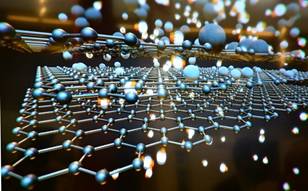
The
global and Chinese smart materials industries are entering a phase of
rapid, AI-driven, and sustainable development from 2026 to 2030, with a
focus on materials that can sense, respond, and adapt to environmental
changes.
Global
markets are predicted to grow at a Compound Annual Growth Rate [CAGR] of
9.1%, reaching over USD 115 billion by 2030. China is aggressively
pursuing self-sufficiency and leadership in this sector as part of its
"future industries" strategy, with its smart materials market expanding
from US$3,194 million in 2022 to over US$5,216 million by 2027.
-
Integration of AI and Machine Learning:
The most significant trend is the use of AI for material design,
accelerating the discovery of new functional materials and
optimizing their properties [e.g., self-healing, shape memory].
-
"Twin Transition" Focus: Development
is heavily focused on the intersection of digital intelligence and
green sustainability. This includes smart, energy-efficient
materials and self-healing structures.
-
Self-Healing and Responsive Materials:
Advancements are focused on materials capable of restoring up to 97%
of their mechanical strength, with high growth in sectors like
infrastructure, aerospace, and wearable electronics.
-
Nanomaterials and Metamaterials:
Continued development of materials with unnatural properties for
improved sensors, actuators, and communication devices.
-
Energy-Harvesting Materials:
Development of innovative materials, such as fabrics that generate
electricity from body heat or solar energy.
FUTURE
DIRECTIONS AND KEY DEVELOPMENTS IN CHINA
-
AI-Integrated Manufacturing ("AI + Material"):
China is focusing on "material genetic engineering," using AI and
high-throughput computing to accelerate material R&D.
-
"Future Industries" Roadmap [15th Five-Year Plan 2026-2030]:
The government has identified smart materials as key to future
industries, including humanoid robots, 6G equipment, and
brain-computer interfaces.
-
Embodied AI and Robotics: Development
of advanced materials for "embodied intelligence," such as flexible
sensors, actuators, and soft robotics to enhance robot-human
interaction.
-
Solid-State Batteries: 2026 is viewed
as a "sprint year" for the industrialization of solid-state and
semi-solid-state batteries, which promise higher energy density and
safety, driven by companies like CATL and BYD.
-
Strategic Self-Reliance: Facing
external limitations, China is focusing on localizing the supply
chain for key materials (e.g., photoresists, high-performance
alloys) and developing new packaging materials.
-
Sustainable Materials: High emphasis
on green, bio-based materials to support carbon neutrality goals,
including in shipbuilding and low-altitude economy (eVTOL).
Top Smart Materials to Watch (2026-2030)
-
Shape Memory Alloys/Polymers (SMAs/SMPs):
High ROI materials with strong demand in aerospace, biomedicine, and
automotive for adaptive structures.
-
Piezoelectric Materials: Especially
Piezoelectric Composites that embed sensors within polymers, used
extensively in transducers, automotive sensors, and smart devices.
-
Self-Healing Polymers/Coatings:
Materials that can fix damages autonomously, crucial for durable,
long-lasting products.
-
Smart Hydrogels: pH, temperature, or
light-responsive gels for medical and soft-robotic applications.
-
Electrochromic Materials: Materials
that change color or transparency, used in smart windows and
energy-efficient building skins.
Summary of Future Outlook
The next
five years will be characterized by moving from passive smart materials
to active, intelligent, and autonomous systems that not only
sense but also respond, compute, and, in some cases, power themselves.
China's development will be characterized by intense, policy-supported
speed, prioritizing AI integration and national self-sufficiency in the
material supply chain
MAJOR
PLAYERS IN SMART MATERIALS IN CHINA
Major
players in China's smart materials sector include leading specialized
firms such as Beijing Easpring Material Technology (cathode materials),
Semcorp (advanced films), and KBC [carbon-based composites]. Key
research entities pushing innovation include the State Grid Corporation,
Chinese Academy of Sciences, and top universities [Zhejiang, Tsinghua].
Key Players in China's Smart Materials &
Advanced Materials Sector
Research & Institutional Leaders [Patent
Holders]
-
State Grid Corporation of
China: Holds the highest number of advanced
materials patents in China.
-
Chinese Academy of
Sciences:
Key driver of research, particularly through the Dalian Institute of
Chemical Physics.
-
Top Universities:
Zhejiang University and Tsinghua University are leading research in
smart material development.
-
Harbin Institute of
Technology [HIT): Actively involved in
developing composites and alloys for aerospace and defense.
Market Focus Areas
-
Energy & Lithium Batteries: Dominated
by firms like Easpring and Semcorp.
-
Aerospace & Defense: Supported by
research from HIT and AVIC.
-
Semiconductors & Electronics: Involves
KBC and specialized carbon materials.
-
Industrial Automation: Involves smart
sensors and IoT-enabled materials.
|
