|
CHINA SMART MANUFACTURING
TECHNOLOGY
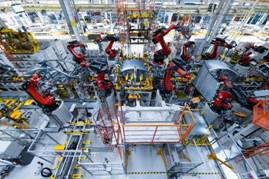 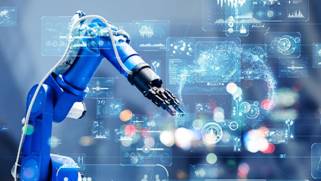
Smart manufacturing is
a technology-driven approach that uses
Internet of Things [IoT]
sensors, data analytics, artificial intelligence [AI]), and robotics to
create highly connected, automated, and efficient production systems. It
enables real-time monitoring and optimization of factory operations,
reducing waste, enhancing quality, and improving supply chain
responsiveness.
Key
Components and Technologies
-
Industrial Internet of Things
[IIoT]:
Connected devices and sensors that collect real-time data from
machinery and factory environments.
-
Big Data and
Analytics:
Processing large data sets to optimize production, identify
bottlenecks, and improve decision-making.
-
Artificial Intelligence [AI]
and Machine Learning: Algorithms that enable
predictive maintenance, reducing equipment downtime.
-
Digital Twins:
Virtual, simulated replicas of physical machines or entire factories
used for testing and optimizing processes before implementation.
-
Robotics:
Autonomous machines that perform complex tasks, increasing
productivity and consistency.
-
Cloud Computing:
Platforms for storing and accessing massive amounts of data from
anywhere.
Key Benefits of Smart
Manufacturing
-
Increased Productivity:
Automation and optimized workflows streamline operations.
-
Reduced Costs and Waste:
Enhanced efficiency leads to better resource allocation.
-
Improved Quality Control:
Real-time monitoring allows for immediate adjustments, reducing
defects.
-
Predictive Maintenance:
Moving from reactive to proactive maintenance minimizes unplanned
downtime.
-
Enhanced Supply Chain Visibility:
Real-time data helps manage inventory and respond to demand changes
faster.
Examples in Practice
-
Predictive Maintenance:
Sensors on a machine detect vibrations, and AI predicts a potential
failure, allowing maintenance to be scheduled before a breakdown
occurs.
-
Digital Twins: A
company creates a virtual version of its production line to test a
new product's assembly process, eliminating the need for physical,
costly, and time-consuming trial runs.
-
Autonomous Supply Chain Management:
Real-time tracking of raw materials helps automatically adjust
production schedules in response to material shortages.
CURRENT STATUS OF SMART
MANUFACTURING IN CHINA
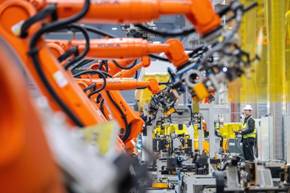 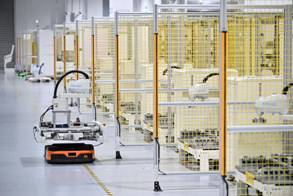
China is aggressively
transitioning from a low-cost manufacturer to a global leader in smart
manufacturing, with over 43,000 smart factories and a dominant 50% share
of global industrial robot installations annually. Driven by "Made
in China 2025" initiatives, the sector focuses on AI
integration, 5G-connected production lines, and high-value, high-tech
sectors like electric vehicles [EVs] and batteries.
China has now
established over 8,200 advanced-level smart factories and 15 flagship
"dark factories" nationwide.
Key aspects of the current
status (2026) include:
-
Massive Adoption:
China is the world's largest user of industrial robots, with density
rivalling top global leaders. More than 90% of major manufacturing
industries are adopting smart technologies.
-
Key Regions & Sectors:
Jiangsu, Shandong, Zhejiang, and Shanghai are hubs for smart plants.
Top sectors for high-level, "excellence-level" factories include
chemical production, steel, and electrical machinery.
-
Ambitious Roadmaps:
China aims to integrate AI into over 70% of key manufacturing
domains by 2027 and over 90% by 2030, becoming a fully intelligent
economy by 2035.
-
Development Goals vs. Challenges:
While advancing, China still faces challenges in high-end, core
component production [e.g., high-end CNC machines, where
localization targets were missed] and is striving to bridge the gap
between Industry 2.0 and 4.0, aiming for 3.0 standards first.
-
Strategic Focus:
The goal is to move from mass production of low-value goods to
high-tech, high-value-added products.
Despite some
bottlenecks in cutting-edge chip technology, China's smart manufacturing
industry is projected to reach $158.2 billion by 2030, potentially
leading the global market
WHY CHINA LEADS THE WORLD
IN SMART MANUFACTURING
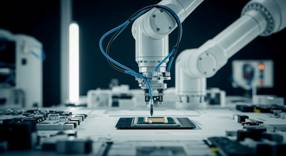 
China leads in smart
manufacturing by integrating AI, 5G, and IoT into a massive, mature
industrial ecosystem, accounting for over 30% of global manufacturing
capacity. Backed by "Made in China 2025" policies, they are upgrading
from low-cost production to high-end, automated, and AI-driven,
data-connected smart factories, boosting efficiency and supply chain
speed.
Key factors driving this
leadership include:
-
Comprehensive Industrial Ecosystem:
With over 4,200 complete industrial chains, China possesses
unparalleled, mature supply chain integration, allowing for rapid
scaling and prototyping.
-
Government-Led Strategic Policy:
The "Made in China 2025" initiative has successfully pushed for
high-end, green, and smart manufacturing, with roughly 86% of its
goals achieved.
-
Advanced Digital Integration:
Chinese manufacturers are heavily adopting AI, Big Data, and IoT to
upgrade factories, leading to significant cost reductions (up to
20%) and faster delivery.
-
Massive Investment in Infrastructure & R&D:
Unmatched investment in 5G, robotics, and logistics, combined with a
large pool of STEM talent (over 5 million graduates annually), fuels
innovation in smart production.
-
"Process Knowledge" & Scale:
A unique, deep, and accumulated expertise in factory floor
operations allows Chinese firms to quickly turn R&D into
large-scale, high-quality production.
-
Integrated Pilot Platforms:
China has built a massive network of concept verification and
pilot-scale testing centers. Platforms, such as those established by
National Technology Innovation Centers, allow companies to quickly
validate technical feasibility and commercial potential before
committing to full-scale production.
-
Hyper-Dense Supply Chains:
China’s manufacturing base features dense, localized clusters of
suppliers and contractors. A company can rapidly iterate on a
prototype, source specialized components, and adjust manufacturing
processes all within a short geographic radius.
-
Massive Scientific and Engineering Talent.
China produces more STEM students each
year than the US and G7 countries combined. Most of the
world’s top STEM universities and research institutions are in
China.
-
Government Leadership:
Most important factor is the government’s ability to develop, plan
and execute long term visions successfully on time and on budget.
Government policies and expenditures are focussed on benefiting the
country and its people rather than special interests.
China's shift is moving
from merely being "the world's factory" (low-cost) to becoming a global
leader in high-tech, automated, and intelligent industrial production
FUTURE
DIRECTIONS AND DEVELOPMENT OF SMART MANUFACTURING IN CHINA
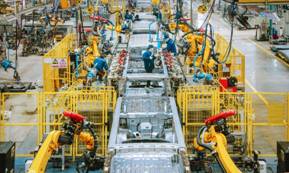 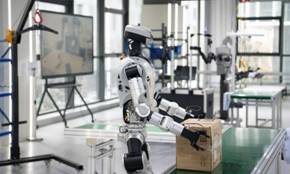
Smart manufacturing in
China is shifting from automation to AI-driven "Made in China 2.0,"
focusing on "AI
Plus" integration, green energy-powered production, and deep
industrial Internet adoption. By 2030, China aims to lead the global
market in AI manufacturing [worth $158.2 billion], with AI penetration
in key sectors exceeding 90% and a massive expansion of humanoid
robots.
China plans to have 90%
of its economy driven by AI by 2030.
Key Future Directions and
Developments
-
AI Plus Initiative:
Integrating artificial intelligence into manufacturing to optimize
production, with AI penetration into key industries targeted to
exceed 70% by 2027.
-
New Generation Intelligent
Manufacturing: Moving beyond simple automation
toward intelligent systems, including digital twins, 5G-connected
industrial internet platforms, and cloud-based AI, to achieve
high-quality development.
-
Humanoid Robots and Automation:
Rapidly advancing the humanoid robot market, projected to reach 100
billion yuan by 2030, alongside expanding the world's largest
industrial robot stock.
-
Green and Sustainable Production:
Shifting toward green-energy-powered, eco-friendly manufacturing to
meet sustainability goals.
-
Self-Reliance in Core Technologies:
Reducing dependence on foreign technology by fostering domestic
innovation in AI, high-end sensors, and machine learning,
particularly to boost industrial competitiveness against emerging
economies.
-
Regional Coordination:
Developing intelligent manufacturing clusters to bridge regional
development imbalances, aligning with the 15th Five-Year Plan's
focus on new growth engines.
Key 2026–2035 Goals
-
2027: Achieve 70%
AI penetration in key sectors.
-
2030: Lead the
world in smart manufacturing, creating an intelligent economy as a
primary driver.
-
2035: Establish a
fully intelligent economy and society.
These developments are
expected to transition China from a low-cost manufacturer to a high-end,
intelligent producer, boosting productivity and reducing product defect
rates
MAJOR SMART MANUFACTURING
PLAYERS IN CHINA
Major players in
China's smart manufacturing sector include industry leaders driving AI,
IoT, and automation, such as
Huawei (Industrial
Internet platform), Haier (smart factories), Foxconn Industrial
Internet, and SIASUN (robotics). Key players also include BYD, CATL, and
Geely in EV manufacturing, and digital platforms like Alibaba Cloud and
Rootcloud.
Top Smart Manufacturing
Players (2025–2026):
Industry-Specific Leaders:
-
Electric Vehicles (EV):
BYD, NIO, Geely, and BAIC are pioneering automated, high-speed
production lines.
-
Robotics & Automation:
SIASUN, Inovance Technology, and EFORT Intelligent Equipment are
key, along with international leaders like ABB and Fanuc.
-
Technology & AI:
Alibaba Cloud and Tencent provide essential cloud infrastructure for
manufacturing.
-
Industrial Internet/Software:
CasiCloud and Getec (Getech) are recognized for developing digital
factory solutions.
With over 35,000 basic
smart factories and 7,000 advanced ones, China's manufacturing sector is
rapidly transforming through AI, automation, and IoT technologies.
|
