|
CHINA SHIPPING NETWORK AND TECHNOLOGY
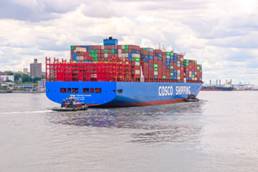 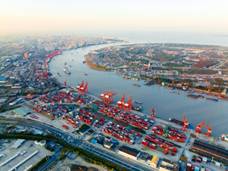
Shipping is the
backbone of the global economy, responsible for transporting over 80-90%
of international trade, including raw materials, food, fuel, and
finished goods. It is the most cost-effective and energy-efficient mode
of transport, enabling globalization, connecting producers to consumers,
and supporting the supply chains of industries like automotive and
electronics.
Key aspects of the importance
of shipping include:
-
Global Economic Impact:
Shipping is vital for economic growth and trade, accounting for a
significant portion of GDP for many nations. It enables the movement
of goods on a massive scale, from raw materials to consumer
products.
-
Cost-Efficiency and Scale:
Shipping is the most cost-effective way to transport large
quantities of goods over long distances compared to air or land. A
single ship can carry vast amounts of cargo, such as grain for
millions of people or enough oil to heat a city.
-
Essential Supply Chain Component:
It is crucial for Just-in-Time manufacturing and delivery, ensuring
that industries can operate without high inventory costs.
-
Environmental Efficiency:
Maritime shipping produces the lowest CO2 emissions per ton of cargo
per mile compared to other transportation methods.
-
Global Connectivity:
Shipping connects economies worldwide, allowing countries to import
necessary goods and export their products to new markets
Shipping logistics
involves managing the entire, synchronized journey of goods from origin
to final destination, encompassing inventory storage, order fulfillment,
transportation, and documentation. While shipping focuses on the
physical movement [transport], logistics is the strategic
planning and coordination of warehousing, route optimization, and 3PL
services.
Key Aspects
of Shipping and Logistics
-
Inbound Logistics:
Managing the flow of raw materials and goods from suppliers to the
business, including procurement and receiving.
-
Warehousing and Storage:
Storing inventory in fulfillment centers, managing inventory levels,
and picking/packing items.
-
Transportation and Freight:
The actual movement of goods via air, sea, rail, or road [trucking].
-
Outbound Logistics [Shipping]:
Delivering finished products to customers, including last-mile
delivery.
-
Documentation and Compliance:
Handling customs clearance, international regulations, and freight
documentation.
-
Tracking and Management:
Monitoring shipments in real-time, optimizing routes, and managing
third-party logistics (3PL) providers.
Difference in
Scope
-
Shipping: The
physical action of moving goods from A to B.
-
Logistics: The
broader, strategic system managing the entire lifecycle of goods,
ensuring the "7 Rs": right product, quantity, condition, place,
time, customer, and price
A global shipping
network is the foundational, interconnected system of maritime routes
and ports that facilitates over 80% of international trade volume and
70% of its value. It is vital for driving the world economy, enabling
cost-effective, large-scale transport of commodities, raw materials, and
manufactured goods between, connecting almost all coastal nations.
Key
Components and Importance:
-
Economic Drivers:
The network acts as the backbone of global trade, with maritime
transport being the most cost-effective method for shipping,
particularly for large, intercontinental shipments.
-
Logistics & Efficiency:
It provides essential infrastructure for inventory management,
supply chain reliability, and specialized services like cold chain
logistics.
-
Resilience and Stability:
A well-connected network is crucial for ensuring the smooth
operation of industrial supply chains, providing alternatives when
facing sudden disruptions such as health crises or geopolitical
conflicts.
-
Economic Integration:
The network connects ports as nodes, which enhances trade
connectivity, facilitates hinterland access, and supports the growth
of developing economies through better, more efficient access to
international markets.
-
Technology & Data:
Modern shipping networks utilize advanced tracking and data
analytics to improve operational efficiency, reduce costs, and allow
businesses to scale,
PRESENT
STATUS OF CHINA SHIPPING
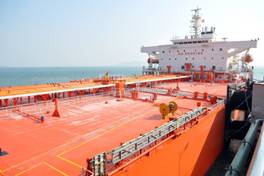
As of March 2026,
China's shipping industry holds a dominant global position, controlling
over 50% of newbuilding orders and acting as the primary hub for global
supply chains. Despite facing high freight costs, geopolitical tensions,
and declining external demand, China is expanding its "Maritime Silk
Road" network, maintaining high capacity and investing heavily in port
infrastructure globally.
Key Status
Indicators (2026):
-
Global Dominance:
China holds a 68.5% record high of global orders for container
ships, with orderbooks extending to 2030. Shipyards are fully booked
for the next 3-4 years, with capacity increasing by 12% in 2024.
-
Logistics & Trade Disruptions:
Major routes face volatility, including surging, record-high costs
for tankers in the Strait of Hormuz. High container demand and
lingering post-pandemic bottlenecks have caused shipping delays for
key routes to regions like Australia.
-
Strategic Expansion:
Over 27% of global container trade passes through terminals where
Chinese firms have stakes.
-
Impact of Trade Tensions:
The US has suspended the de minimis exemption for Chinese goods,
causing disruptions to small-parcel, e-commerce shipping, while
rising tariffs have led to a decline in overall freight volume.
-
Industry Trends:
Continued focus on green, intelligent vessels, and state-backed
consolidation of shipping giants like COSCO
A robust shipping
network is essential to China's foreign trade, with over 80% of its
import/export cargo by volume moving via sea, connecting the nation to
global markets. As the world's largest exporter, China relies on its
top-tier, smart-port infrastructure and extensive international liner
shipping routes to sustain its economic growth.
Key aspects of the shipping
network's importance include:
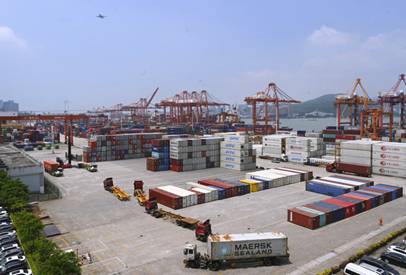
-
Dominant Trade Route:
With 7 of the world's top 10 busiest container ports (e.g.,
Shanghai, Shenzhen), China uses these hubs for the vast majority of
its international commerce.
-
Economic Drivers:
Enhanced maritime connectivity has significantly stimulated China's
trade growth, with a reported 54% improvement in connectivity
driving a $686 billion increase in trade between 2004 and 2012.
-
Strategic Global Reach:
The
Belt and Road Initiative (BRI)
and the
21st-Century Maritime Silk Road
have expanded China’s reach, with shipping routes covering major
regions to secure trade in energy and industrial products.
-
Logistics Efficiency:
Investment in automation, AI, and big data at ports like Tianjin and
Shanghai improves efficiency and reduces logistical bottlenecks.
-
Resilience and Stability:
The network is designed to balance domestic and foreign demand,
ensuring supply chain continuity even during global disruptions.
WHY CHINA
DOMINATES WORLD SHIPPING
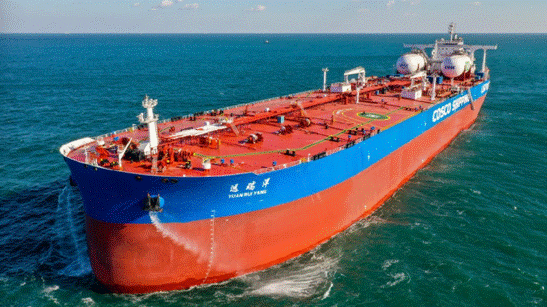
China leads the global
shipping industry through a combination of massive state-driven
investment, unparalleled manufacturing scale, and rapid advancements in
green, smart-ship technology. Controlling over 50% of global
shipbuilding and 95% of container production, China dominates via
cost-efficient, high-volume production, while strategically investing
in, and owning, key international port infrastructure.
Key Reasons
for China’s Leadership in Shipping
-
Focussed State Support & Strategic Planning:
Since the 2000s, Beijing has designated shipbuilding as a priority
industry, providing billions in subsidies, low-interest loans, and,
as of 2013, at least $90 billion in support to foster a
self-reinforcing industrial machine.
-
Unrivalled Manufacturing & Supply Chain:
China controls the entire ecosystem, from raw material
(steel/aluminium) to assembly, allowing it to build ships
significantly faster and cheaper than competitors.
-
Global Port Network Expansion:
Chinese firms own or have significant stakes in many of the world's
busiest ports, controlling supply chains and securing trade routes.
-
Technological Advancements & Green Transition:
China has moved up the value chain, mastering the construction of
complex vessels like LNG carriers and large cruise liners. It is
leading in green shipping by developing electric vessels and green
fuels, leveraging its dominance in battery supply chains.
-
Economies of Scale:
A single Chinese shipyard can produce more ships annually than all
U.S. shipyards combined, holding over 50% of the market share as of
2023.
-
Government Leadership:
Most important factor for China’s success is the government’s
ability to develop, plan and execute long term visions successfully
on time and on budget. Government policies and expenditures are
focussed on benefiting the country and its people rather than
special interests.
-
Massive Scientific and Engineering Talent.
China produces more STEM students each
year than the US and G7 countries combined. Most of the
world’s top STEM universities and research institutions are in China
China’s dominance has
shifted from merely assembling low-cost vessels to leading in high-end,
intelligent, and environmentally friendly, marine technology.
FUTURE
DIRECTIONS AND DEVELOPMENT FOR CHINA SHIPPING
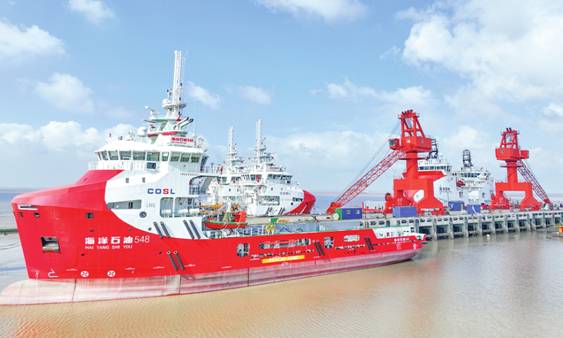
China's shipping
industry is undergoing a major transformation, shifting from a focus on
sheer volume to "high-quality development" defined by digitization,
decarbonization, and vertical integration to control global logistics
chains.
By 2030, China is
expected to overtake Greece as the world's top shipping nation, with its
fleet capacity, smart port technology, and maritime service sector
heavily influenced by state-driven investment and AI adoption.
Future
Directions and Key Trends (2025–2030)
-
Green Transformation and Alternative Fuels:
China is investing heavily in cleaner fuels, with a focus on
methanol, LNG, and battery-powered vessels for short-sea and inland
shipping. The China Classification Society is spearheading the
adoption of green technologies to meet international emission
reduction standards, aiming for a "blue sea initiative" that
integrates green shipping into the broader supply chain.
-
Digitalization and "Smart" Shipping:
AI is being embedded in every stage of the industry, from smart port
operations [autonomous cranes and trucks] to real-time cargo
tracking systems. The development of smart, unmanned merchant ships
is a key research area, alongside the use of digital twins and
blockchain for logistics efficiency.
-
Vertical Integration and End-to-End Logistics:
Major Chinese state-owned enterprises SOEs] are moving beyond just
operating ships to owning terminals, warehouses, and controlling
last-mile logistics. This strategy aims to create a more resilient
supply chain and reduce costs through increased control over the
entire transportation network.
-
Strategic Expansion of Port Infrastructure:
Through the Belt and Road Initiative, China continues to invest in
overseas ports to secure supply chain routes, with Chinese companies
operating in over 120 ports globally.
-
Arctic Route Development:
China is actively expanding the use of the Arctic "Northern Sea
Route," which can reduce transit times between Asia and Europe by 12
days, saving significantly on fuel and canal fees.
Key Focus
Areas for Future Development
-
Strategic Shipbuilding Leadership:
Chinese shipyards are aggressively dominating the construction of
dual-fuel and specialized vessels, with tonnage capacity far
exceeding the US, positioning them as the leader in future-oriented
ship manufacturing.
-
Dual-Circulation Strategy:
The industry is focusing on a "dual-circulation" model, where the
domestic maritime market (inland and coastal) works in tandem with
international shipping, heavily supported by Free Trade Zones [FTZs].
-
Automation of Ports:
The development of fully automated container terminals, such as the
Yangshan Deepwater Port Phase IV, is setting global standards for
efficiency and reducing labor dependency.
Geopolitical
and Economic Challenges
The growth of China’s shipping industry faces challenges from rising
trade protection by many western countries, which may push China to
build stronger, more localized, and sustainable networks with
"like-minded" trading partners.
MAJOR
SHIPPING OPERATORS IN CHINA
China's shipping
industry is dominated by state-owned giants, with
China COSCO Shipping
being the largest, controlling massive container, tanker, and port
infrastructure. Other major players include
Sinotrans (logistics),
China Merchants Group,
and
SITC International,
while global carriers like Maersk and CMA CGM maintain strong
operations. Key ports in Shenzhen and Shanghai act as hubs.
Top Shipping
and Logistics Companies in China
Key Regional
and Specialized Players
Leading
Freight Forwarders & Logistics Firms [2026]
Major
International Players with Strong China Operations
CHINA GLOBAL
PORTS NETWORK
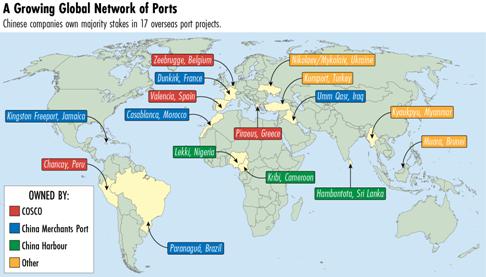
China operates many of
the world's busiest shipping ports, with Shanghai being the
world's largest, followed by major hubs in Ningbo-Zhoushan, Shenzhen,
Guangzhou, Qingdao, and Tianjin. These ports, often managed by
state-owned enterprises like COSCO Shipping Ports, serve as critical
nodes in global trade and the
Belt and Road Initiative.
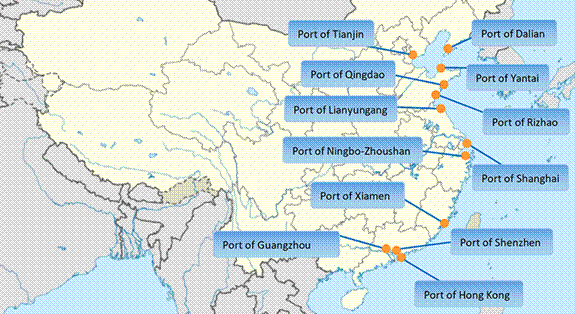
Top Major
Ports in China
-
Shanghai Port
[SIPG]:
The world's busiest container port, utilizing the Yangshan Deepwater
Port for massive, automated, and deep-water, operations.
-
Ningbo-Zhoushan Port:
One of the world's largest ports by cargo tonnage, it surpassed
other major hubs in recent years.
-
Shenzhen Port:
A major hub in the Pearl River Delta, comprising several terminals (Yantian,
Chiwan, Shekou).
-
Guangzhou Port:
A vital South China port handling significant international trade
and regional logistics.
-
Qingdao Port:
A key Pacific gateway with advanced, automated container terminals.
-
Tianjin Port:
The largest man-made port in China, acting as the main maritime
gateway to Beijing.
-
Dalian Port:
A major northeastern port focusing on northern and international
trade.
Key Features
of Chinese Port Operations
-
Dominance in Technology:
Chinese ports, especially Shanghai, are pioneers in fully automated
container terminals and "green" shipping corridors.
-
Massive Infrastructure Investment:
Continued expansion, such as the $7-billion expansion of Yangshan
port, underscores their growth.
-
Global Reach:
Chinese firms COSCO Shipping Ports and
China Merchants Ports
also operate major overseas ports in Djibouti, Belgium, Greece, and
Pakistan [Gwadar].
Other notable ports
include Xiamen, Yingkou, and Beibuwan, which are critical regional hubs.
Major
Chinese-Operated/Invested Overseas Ports
-
Piraeus, Greece [COSCO]:
The premier Chinese-operated hub in Europe, connecting to the Belt
and Road Initiative.
-
Hambantota, Sri Lanka:
A strategic deep-water port in the Indian Ocean.
-
Felixstowe & London Gateway,
UK: Key terminals with Chinese, particularly
Hutchison/COSCO, involvement.
-
Valencia & Bilbao, Spain:
Major Mediterranean and Atlantic access points.
-
Abu Dhabi [Khalifa Port], UAE:
A major strategic, automated terminal in the Middle East.
-
Port Said, Egypt:
Crucial, high-connectivity location near the Suez Canal.
China's influence spans
major global shipping routes, with COSCO and China Merchants Ports
managing significant overseas infrastructur
Chinese firms operate
or have invested in roughly 95 to over 120+ overseas ports across
50+ countries, with the heaviest concentration in Africa, Southeast
Asia, and Europe. These investments, primarily driven by state-owned
enterprises (SOEs) like COSCO Shipping Ports and China Merchants Port,
form part of the 21st Century Maritime Silk Road under the Belt and Road
Initiative (BRI).
Key Global
Ports Operated/Invested in by China (2025–2026)
The following are major
strategic, commercial, and container ports where Chinese entities hold
significant stakes, concessions, or operating control:
Europe & Mediterranean
-
Piraeus, Greece:
100% owned by COSCO; a central Mediterranean hub.
-
Valencia & Bilbao, Spain:
Major terminals (CSP Spain).
-
Zeebrugge & Antwerp, Belgium:
Significant CSP terminals.
-
Hamburg, Germany:
Terminal Tollerort (24.99% stake).
-
Kumport, Turkey:
26% stake.
-
Vado Ligure, Italy:
40% stake.
Africa
-
Djibouti: Doraleh
Multipurpose Port [key "dual-use" port with adjacent military base].
-
Lekki, Nigeria:
Deepwater port [Africa's deepest, operated by CCCC].
-
Mombasa & Lamu, Kenya:
Heavy infrastructure investment.
-
Dar es Salaam, Tanzania:
Key port development.
-
Lomé, Togo: Major
terminal.
Asia & Indian
Ocean
-
Gwadar, Pakistan:
99-year lease to China Overseas Port Holding Company.
-
Colombo & Hambantota, Sri Lanka:
Major terminal control and 99-year lease respectively.
-
Singapore: Major
terminal [Cosco-PSA].
-
Muara, Brunei:
Operational Control.
-
Laem Chabang, Thailand:
Terminal operations.
Middle East
-
Khalifa Port, UAE:
CSP Abu Dhabi Terminal [40% stake].
-
Jeddah Islamic Port, Saudi Arabia:
20% stake in Red Sea Gateway Terminal.
-
Port Said/Ain Sokhna, Egypt:
20% stake.
Americas
-
Chancay, Peru: 60%
stake (major new deepwater hub).
-
Freeport, Bahamas:
50% stake.
-
Panama City/Colon, Panama:
Terminal concessions.
Key
Characteristics of Chinese Port Network
-
Strategic "Dual-Use" Potential:
While primarily commercial, several ports [e.g., Djibouti, Gwadar,
Walvis Bay, Lekki] have specifications that allow them to support
People's Liberation Army Navy vessels.
-
Port-Rail-Industrial Model:
China frequently couples port investment with industrial parks and
rail, such as the Djibouti-Ethiopia railway, to create end-to-end
supply chains.
-
Market Leadership:
Chinese companies own or operate terminals in 96 ports in 53
countries, managing nearly 30% of global container traffic.
IMPORTANCE TO
BRI
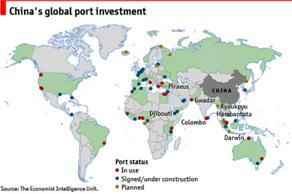 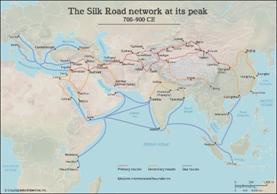
Shipping ports are the
linchpin of China’s Belt and Road Initiative (BRI), functioning as
strategic infrastructure to secure, accelerate, and control global trade
routes. These investments, particularly through the Maritime Silk Road,
enhance China’s logistics, reduce reliance on maritime choke points
[like the Strait of Malacca], and boost geopolitical influence by
creating trade dependencies.
Key Strategic
Importance of Ports in the BRI:
-
Logistics and Trade Facilitation:
With 95% of its trade conducted by sea, China invests in foreign
ports to ensure efficient, reliable access to overseas markets for
its goods and to secure raw materials, controlling nodes that handle
over 27% of global container trade.
-
Geopolitical and Security Leverage:
Many BRI ports, such as in Djibouti or potential dual-use locations,
are strategically placed to extend China's naval influence, reduce
vulnerability to Western-controlled chokepoints, and project
maritime power.
-
Economic Expansion and Control:
By investing in port infrastructure in 16 of the top 20
shipping-connected countries, China facilitates its trade while
using these "logistical fixes" to manage capital accumulation and
influence regional economies.
-
Digital Integration (LOGINK):
China is integrating these ports with
LOGINK, a government-backed platform that centralizes supply
chain data, providing Beijing with insights into global commerce and
enhancing shipping efficiency.
-
Strategic Network Expansion:
Projects span from the
Organisation for Research on
China and Asia [ORCA] notes the Port of Chancay in Peru
(securing Latin American routes) to African and Asian, creating a
comprehensive maritime ecosystem that connects continents.
Through these
investments, China seeks to lead global logistics and establish a new
international trade framework, shifting maritime connectivity toward its
economic interests and security, and protect its maritime trade networks
from potential blockades and threats.
|
