|
CHINA QUANTUM TECHNOLOGY
 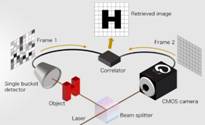 
Quantum technology
harnesses the principles of quantum mechanics - specifically
superposition,
entanglement, and
tunneling at the atomic level to develop advanced devices for computing,
sensing, and communication. It enables breakthroughs in processing
speed, security, and precision, with applications ranging from drug
discovery to ultra-secure communications.
Key Areas and
Applications
-
Quantum Computing:
Uses
qubits (which can
represent 0, 1, or both simultaneously) to perform complex
calculations far faster than classical computers, aiding in
optimization and simulation.
-
Quantum Sensing:
Leverages subatomic properties to measure time, gravity, and
electromagnetic fields with unprecedented precision, improving GPS,
navigation, and medical imaging.
-
Quantum Communications:
Utilizes principles like
Quantum Key Distribution (QKD) to create virtually unhackable,
highly secure communication networks.
-
Quantum Simulation:
Models complex molecular interactions for faster pharmaceutical
development and material science breakthroughs.
Core Principles
-
Superposition:
The ability of a quantum system to exist in multiple states at the
same time.
-
Entanglement:
A phenomenon where particles become linked, allowing the state of
one to instantly inform the state of another, regardless of
distance.
While some technologies
like MRIs and lasers are already based on early quantum principles,
current advancements aim to revolutionize data analysis, cybersecurity,
and computational power.
CURRENT
STATUS OF QUANTUM TECHNOLOGY IN CHINA
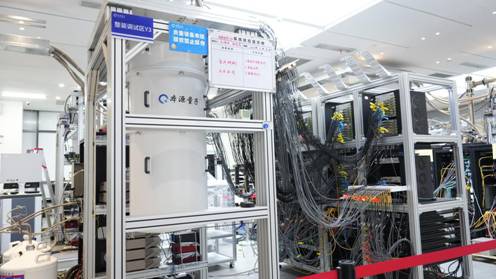
As of early 2026, China
is a global leader in quantum technology, investing over US$15 billion
and prioritizing it as a core "future industry" for 2026–2030. China
dominates in quantum communication via its 2,000 km satellite/fiber
network and is rapidly closing the gap with the US in quantum computing,
boasting breakthroughs like the 105-qubit Zu Chongju 3.0, the Origin
Wukong processor, and advanced photonic quantum chips.
Key Areas of Development (2026
Status)
-
Quantum Computing:
China is moving from lab to industry, with systems like the Zu
Chongju 3.0 (superconducting) and Jiuzhang (photonic).
The Origin Wukong computer has seen over 20 million visits
from 139 countries.
-
Quantum Communications:
China holds a significant lead in Quantum Key Distribution (QKD) and
quantum cryptography.
-
Quantum Sensing & AI:
Chinese researchers have developed high-speed photonic AI chips
using thin-film lithium niobate that operate at speeds 1,000 times
faster than conventional GPUs, with pilot production lines capable
of manufacturing 12,000 wafers annually.
-
Industrial Ecosystem:
"Quantum Avenue" in Hefei is a major hub, accelerating the
transition of research into commercial products. The country is now
developing open-source quantum operating systems like Origin
Pilot.
Strategic Outlook &
Restrictions
-
Government-Led:
The 15th Five-Year Plan (2026–2030) positions quantum tech as a top
priority for economic growth.
-
Export
Restrictions: China has restricted the
export of quantum encryption and ultra-low temperature technologies,
aiming for self-reliance and national security.
-
Separation from
West: Collaboration with Western
researchers is decreasing, as China shifts toward domestic
innovation and building a closed-loop supply chain.
China's approach is
aimed at creating a complete ecosystem from chip design and fabrication
to cloud access to challenge U.S. leadership, particularly by offering
accessible, industrial-grade quantum solutions.
WHY CHINA
LEADS THE WORLD IN QUANTUM TECHNOLOGY
 
China leads in quantum
technology through massive state-directed funding, a 12,000 km quantum
communication network, massive talent pool, world leading research
institutions focussing on quantum technology and a strategy focusing on
rapid commercialization of research. By integrating military-civil
fusion, state labs, and prioritizing quantum sensing and communication.
China has secured
global leadership, specifically in practical and long-distance, secure
communication.
Key Reasons for China’s Quantum
Leadership:
-
Massive
State-Led Funding and Planning: China
views quantum technology as a top strategic priority, investing
roughly billions of dollars which exceeds the combined investment of
the EU and US. This priority approach allows for rapid, large-scale
projects.
-
Dominance in
Quantum Communication: China leads
globally in quantum communications, operating the world's largest
quantum secure network (12,000 km) and launching the first quantum
satellite, Micius.
-
Strategic Focus
on Commercialization: Unlike the US,
which often relies on private sector breakthroughs, China’s model
emphasizes converting academic research into practical, commercial
applications rapidly, such as at "Quantum Avenue" in Hefei.
-
Military-Civil
Fusion: China's policy integrates
research labs, defense-affiliated firms, and the People’s Liberation
Army (PLA), ensuring that scientific advancements are immediately
aimed at military advantages in cryptography and intelligence.
-
Talent and
Infrastructure Concentration: Top
researchers [e.g., Pan Jianwei] are supported by a coordinated
ecosystem that aligns government policy, funding, and industrial
capacity, reducing fragmentation in research efforts.
-
Government
Leadership: Most important factor is
the government’s ability to develop and execute long term visions
successfully on time and on budget. Government policies and
expenditures are focussed on benefiting the country and its people
rather than special interests.
-
Massive
Scientific and Engineering Talent.
China produces more STEM students each year than the US and G7
countries combined. Most of the world’s top STEM
universities and research institutions are in China.
While the United States
remains a strong competitor in quantum computation, China's consistent,
long-term investment, specifically post-2013, has given it a significant
edge in practical quantum communication.
FUTURE DIRECTIONS AND DEVELOPMENT FOR
QUANTUM TECHNOLOGY IN CHINA
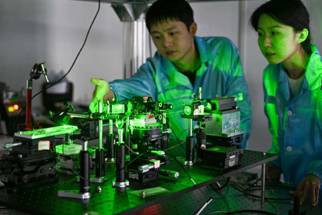
China is accelerating
its quantum technology development to achieve global leadership by 2030,
focusing on practical applications, national infrastructure, supply
chain and commercialization through the 15th Five-Year Plan [2026–2030].
Key strategies include building a + qubit computer by 2026, expanding
the world's largest quantum secure communication network, and creating a
"new quality productive force" for economic growth.
Future Directions and Strategic
Focus
-
Quantum Computing
(QC): China aims for commercialization and "quantum advantage"
in areas like logistics and biomedicine, with plans for a + qubit
superconducting computer by 2026.
-
Quantum Communication
(QCom): Expanding the existing 1,200-mile
Beijing-Shanghai backbone
with satellite links to create a national, secure communication
infrastructure.
-
Quantum Precision Measurement
(QPM): Developing advanced measurement technologies for
semiconductors and national metrology.
-
Key Institutions:
The National Laboratory for Quantum Information Sciences is central
to these efforts, backed by billions of dollars in funding.
Development and
Commercialization Trends
-
Commercialization Pivot: The 15th
Five-Year Plan [2026–2030] positions quantum technology as one of
the key "future industry" to drive new economic growth.
-
Industrial
Applications: Companies like Origin
Quantum are moving toward practical applications, and quantum
encryption is being piloted in sectors like transit [Hefei] and
finance.
-
High-Volume
Research: China ranks second in global
quantum research output behind the U.S., with a, in some metrics,
higher publication count [over 7,000] through Aug 2025, although
average citations are still lower than top Western peers.
-
Market Growth:
The quantum computing sector is experiencing rapid expansion, with
30%+ annual growth and a projected valuation exceeding US$1.6
billion in 2025.
Challenges and Long-Term
Outlook
Despite progress, China faces obstacles in developing high-performance
hardware, as many technologies are still transitioning from lab to
industry. The strategy focuses on overcoming these limitations through
"self-reliance" and building a fully domestic quantum ecosystem, aiming
to become a major exporter of industrial and educational quantum systems
by 2030.
MAJOR
PLAYERS OF QUANTUM TECHNOLOGY IN CHINA
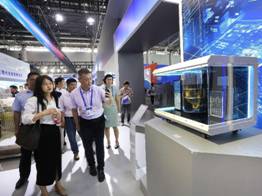 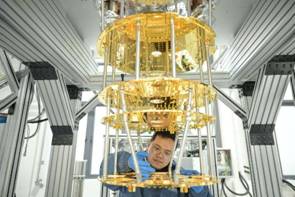
Major Companies and Startups
-
Origin Quantum
[Hefei]: A leading quantum startup
that developed the 24-qubit Wukong superconducting quantum computer,
the 72-qubit Wuyuan, and "Origin Pilot," an open-source quantum OS.
-
QuantumCTek
[Hefei]: Specializes in quantum
communication and networking infrastructure, providing technology
for the national quantum-secured communication backbone.
-
SpinQ Technology
[Shenzhen]: Focuses on portable
quantum computers for education and industrial-grade superconducting
quantum products.
-
TuringQ:
Focuses on photonic quantum chips for industrial-grade, AI-focused
computing.
-
Chip X:
Developed a 6-inch thin film lithium niobate photonic quantum chip,
providing a scalable, high-speed solution for data centers.
-
China Telecom
Quantum Group [CTQG]: A key player
focusing on integrating quantum secure technology with
telecommunication networks.
Key Research Institutions and
Hubs
-
University of
Science and Technology of China [USTC]:
Led by researchers like Pan Jianwei, USTC is the foundation for
breakthroughs in photonic quantum computing [Jiuzhang] and quantum
communication satellites [Micius].
-
Anhui Quantum
Computing Engineering Research Center:
Involved in the development of superconducting quantum systems.
-
Shanghai Quantum
Science Research Center: A major
research hub focusing on fundamental and applied quantum research.
-
Key Clusters:
Development is heavily concentrated in four primary clusters: Hefei,
Beijing, Shanghai, and Shenzhen.
Strategic Focus
-
Quantum
Communication: China is a world leader
in this field, with a 2,000 km secure link between Beijing and
Shanghai and advanced satellite systems.
-
Photonic/Superconducting Computing:
Both approaches are pursued, with recent advances in photonics
designed to accelerate AI.
-
Industrial
Applications: The industry is moving
from labs to commercial application, particularly in finance,
security, and materials, with firms like CATL and Gotion using
quantum sensors for battery testing
|
