|
CHINA PHOTONICS TECHNOLOGY
 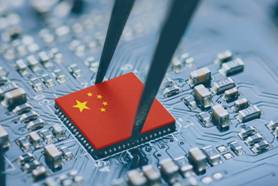
Photonics is the
science and technology of generating, controlling, and detecting photons
[light particles] across the electromagnetic spectrum, including
infrared, visible, and ultraviolet light. Often considered the
"electronics of light," it uses photons rather than electrons to
transmit, process, and store information at faster speeds.
Key applications of photonics
technology include:
-
Telecommunications: Fiber optic cables
enable high-speed data transmission worldwide.
-
Imaging and
Sensing:
LiDAR in self-driving
cars, medical imaging, and infrared cameras for night vision.
-
Manufacturing:
High-power lasers for precise cutting, welding, and marking
materials.
-
Consumer
Electronics: LEDs, OLED displays, and
smartphone cameras.
-
Energy:
Solar panels (photovoltaics) for converting sunlight into
electricity.
-
Future Tech:
Photonic Integrated Circuits
for AI data centers and quantum computing.
Photonic technologies
offer significantly higher bandwidth and lower power consumption
compared to traditional electronics, making them critical for the future
of AI, communication, and advanced computing.
CURRENT
STATUS OF PHOTONIC TECHNOLOGY IN CHINA
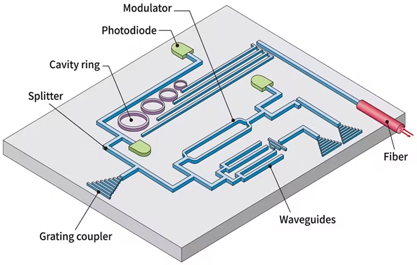
As of early 2026, China
is rapidly advancing in photonics, focusing on
silicon photonics and
thin-film lithium niobate (TFLN)
technologies to circumvent Western semiconductor equipment
restrictions. Key developments include the establishment of pilot
production lines, such as the 6-inch TFLN line in Wuxi, and the creation
of high-speed optical chips for AI, boasting potential 1,000-fold speed
increases for specific tasks.
Key Aspects
of China's Photonics Status:
-
Industrialization & Production: In
late 2025, Chinese research teams launched the world's first, or
among the first, scalable industrial-grade optical quantum chips,
using 6-inch TFLN wafers, marking a shift from lab research to
commercial application.
-
Technological
Focus: China is heavily investing in
TFLN, which allows for greater miniaturization and integration of
optical components. They are also advancing 90-nanometer and
130-nanometer silicon photonics processes, allowing them to use
older, non-EUV machinery.
-
AI and Data
Centers: These chips are targeted at
AI data centers, aiming to reduce power consumption and increase
speed. They are being developed for applications in autonomous
driving, 6G, aerospace, and biomedicine.
-
Market Growth:
The Chinese silicon photonics market is projected to grow
significantly, with revenue expected to rise from approximately USD
98.9 million in 2023 to USD 531.5 million by 2030, a CAGR of 27.2%.
-
Strategic Goal:
The overarching goal is to achieve self-reliance and gain a
competitive edge in next-generation computing, as these technologies
offer an alternative to traditional, bottlenecked electron-based
chips.
Key Players
and Developments:
-
ChipX
and
Shanghai Jiao Tong University:
Crucial in developing TFLN photonic chip production lines.
-
Hesai:
A major player in automotive LiDAR, delivering high volumes for
robotics and vehicles.
-
Research Output:
China has been a leader in optical-chip research, with high volumes
of published papers.
Despite these strides,
challenges remain in scaling production, improving yields of fragile
materials, and competing with established Western firms.
WHY CHINA LEADS THE WORLD IN PHOTONICS
China leads the global
photonics industry by combining massive state-driven investment (over
$15 billion for quantum), rapid industrial-scale production, and
vertical integration from raw materials to chip packaging. By leveraging
strengths in fiber-optics and laser technology, China is bypassing
Western-dominated traditional silicon chip restrictions to advance AI
and quantum computing through efficient photonic quantum chips.
Key Drivers
of China’s Photonics Leadership
-
Strategic
Industrial Policy: China views
photonics as a "lane-change" opportunity to bypass US-led
restrictions on advanced semiconductors, aiming for
self-sufficiency.
-
Rapid
Commercialization: Unlike Western
efforts, which are often in the prototype stage, Chinese firms such
as Chip X and Touring Quantum have moved to industrial-scale
production of 6-inch thin-film lithium niobate photonic wafers.
-
Focussed
Investment: China has invested
heavily, including a $15 billion commitment to quantum technology
over five years, focusing on building a complete ecosystem of
design, fabrication, and packaging.
-
High-Efficiency
AI/Data Solutions: China is deploying
photonic quantum chips for AI data centers that offer high-speed,
low-latency computing with lower energy consumption than electronic
chips.
-
Supply Chain
Control: China processes a dominant
share of the raw materials needed for optical components, creating a
secure, vertically integrated, and domestically controlled supply
chain.
-
Government
Leadership: Most important factor is
the government’s ability to develop and execute long term visions
successfully on time and on budget. Government policies and
expenditures are focussed on benefiting the country and its people
rather than special interests.
The majority of the Chinese leaders are highly qualified and
experienced engineers and scientists with extensive experience in
administration, management and project development.
-
Massive
Scientific and Engineering Talent.
China produces more STEM students each year than the US and G7
countries combined. Most of the world’s top STEM
universities and research institutions are in China.
China is now the world leader in the publication of high impact and
frontier technology papers.
Technological
Advancements
-
Laser & Communication
Technologies: Deep expertise in fiber-optics
provides a strong foundation for developing advanced silicon
photonics.

-
Advanced Manufacturing:
The development of 6-inch thin-film lithium niobate pilot lines puts
China ahead of many Western rivals in manufacturing, enabling
mass-produced, high-performance optical components.
China's ability to
swiftly transition from research to mass production of quantum photonic
hardware, combined with its strong investment, positions it as a leader
in this critical, emerging technology.
FUTURE
DIRECTIONS AND DEVELOPMENT OF PHOTONICS IN CHINA
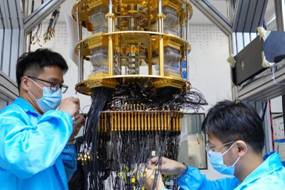 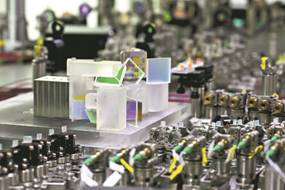
China's photonics
industry is undergoing a rapid, state-backed transformation focused on
achieving self-sufficiency and global leadership in high-end,
next-generation technologies. Driven by the need to bypass Western
export controls and solve high-speed computing bottlenecks, the future
of Chinese photonics centers on photonic integration, AI
acceleration, and industrial-grade quantum computing.
Here are the
key future directions and developments:
1.
Revolutionary AI & Quantum Computing Chips
China is moving
aggressively from laboratory-level quantum research to industrial-grade
deployment, focusing on light-based computing to outperform traditional
electronics.
-
Photonic AI
Accelerators: Chinese researchers have
unveiled photonic AI chips capable of operating 1,000 times faster
than leading digital GPUs for specific AI tasks.
-
Scalable Quantum
Hardware: Companies like Chip X and
Turing Quantum are developing 6-inch thin-film lithium niobate
wafers that integrate thousands of optical components. These are
being used to build scalable optical quantum chips for AI data
centers and secure communication.
-
Reduced Power
Consumption: These chips utilize
photons, which do not generate heat like electrons, addressing the
critical energy-consumption challenges of AI data centers.
2. High-Speed
Optical Communications and Data Centers
With the rapid growth
of AI and IoT, China is investing heavily in optical infrastructure to
support massive data transfer.
-
Co-Packaged
Optics (CPO): The industry is shifting
toward CPO, which places optical conversion directly next to the
switch ASIC to drastically reduce power consumption.
-
Low-Cost 10G/25G
to 400G: There is a major push to
develop low-cost, high-speed DWDM (Dense Wavelength Division
Multiplexing) components and coherent modules for 100G/200G/400G,
aiming to dominate the market with volume production.
-
Silicon
Photonics (SiPh): China is developing
full-loop ecosystems for silicon photonics, combining CMOS
compatibility with new materials to create faster, more reliable
interconnects.
3. Key
Technological Breakthroughs in Manufacturing
To counter U.S.
sanctions, China is advancing in domestic, non-EUV (Extreme Ultraviolet)
manufacturing techniques.
-
Thin Film
Lithium Niobate (TFLN): China has
established leading pilot lines for 6-inch TFLN, which is crucial
for high-speed, low-loss optical components.
-
2D Material
Wafers: Recent advancements include
mass-producing 2D semiconductor wafers, which could act as a
successor to silicon-based technology, offering superior
performance.
-
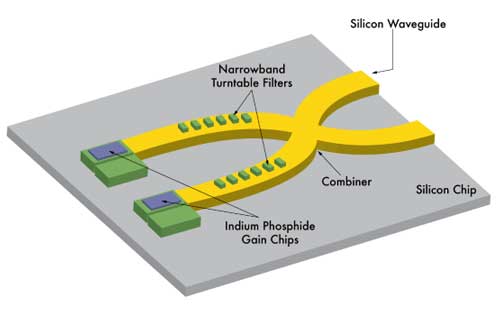
Heterogeneous
Integration: Research centers are
focusing on integrating III-V compound semiconductors (like Indium
Phosphide) on silicon substrates, allowing for laser integration
that is not possible with pure silicon.
4. Advanced
Applications and Industrial Integration
Photonics is being
integrated into, and upgrading, traditional and emerging industries.
-
LiDAR for
Autonomous Vehicles: Chinese OEMs are
standardizing LiDAR, with costs dropping below $200 in 2025,
enabling widespread adoption.
-
Biomedical
Photonics: Development of high-speed
diagnostic and monitoring tools is a major growth area, driven by
increased health awareness and technological advancements.
-
Industrial
Material Machining: Laser systems for
lithium-ion battery production and other manufacturing, particularly
in Industry 4.0 applications, are expected to grow rapidly.
5. Policy and
Strategic Focus
-
"Changing Lanes
and Overtaking": Beijing has adopted a
"self-reliance" strategy to reduce vulnerability to foreign
technology controls, with high-level government, such as the
Politburo, focusing on fundamental research.
-
"Optics Valley"
and Regional Hubs: The Optics Valley
(Wuhan) and other areas, such as Shanghai and Suzhou, are receiving
billions in funding to build a fully vertically integrated photonics
supply chain.
These developments
indicate that China is rapidly transitioning from a high-volume
manufacturing base to a leader in advanced, intellectual property-driven
photonics, aiming for total industry sovereignty within the next few
years.
MAJOR
PHOTONIC TECHNOLOGY PLAYERS IN CHINA
China’s photonics
industry is a rapidly growing sector, driven by advancements in optical
communication, LiDAR, and silicon photonics for AI applications, with a
major concentration of players in Shenzhen, Wuhan, Suzhou, and Chengdu.
The industry is heavily focused on transitioning from R&D to mass
production to support AI data centers, 6G, and quantum computing.
Key Players
and Companies in China Photonics
-
High-Speed Optical Transceivers & Components:
-
InnoLight
Technology (Suzhou): A global
leader in high-speed optical transceivers, specializing in 400G
and 800G solutions for data centers and cloud computing.
-
Eoptolink
Technology (Chengdu): A major
manufacturer of 100G to 800G optical transceivers for data
centers and telecom operators.
-
Gigalight
(Shenzhen): Focuses on 400G/800G
optical modules, particularly for AI data centers and 5G.
-
Accelink
Technologies (Wuhan): A leading
comprehensive provider of active and passive optoelectronic
components.
-
Fast
Photonics (Shenzhen): Specialized
in high-speed optical transceivers (100G, 400G, 800G).
-
O-Net
Technologies (Shenzhen): Produces
optical networking components, including passive equipment and
amplifiers.
-
Silicon Photonics & Photonic Chips:
-
CHIPX [Chip
Hub for Integrated Photonics Xplore] / TuringQ:
A key player in producing industrial-grade, 6-inch thin-film
lithium niobate (TFLN) photonic chips for AI and quantum
computing.
-
Henan Shijia
Photons Technology: Specializes in
PLC optical splitters and dense wavelength division multiplexing
(DWDM) modules.
-
Wuhan
Guangzhi Technology: Focuses on
pulsed and continuous-wave fiber lasers.
-
LiDAR
& Sensors (Autonomous Driving):
-
Hesai
Technology (Shanghai): A major
player in LiDAR-based sensors for autonomous vehicles and
robotics.
-
RoboSense
(Shenzhen): Develops AI-enabled
LiDAR sensor systems.
-
ZVISION (Haidian):
Specializes in solid-state LiDAR sensors for autonomous driving.
-
Fiber
Optics & Materials:
-
Laser
Technology:
-
Optoelectronics & Displays:
Key Research
Institutions and Hubs
-
Wuhan:
Known as "Optics Valley" in China, home to Accelink, Raycus, and the
Britton Chance Center for Biomedical Photonics.
-
Shanghai
Institute of Microsystem and Information Technology (SIMIT):
A leader in hybrid-integrated photonic quantum chips.
-
Tsinghua
University & Shanghai Jiao Tong University:
Leading research on optical AI chips [e.g., LightGen].
Industry
Trends
-
1000x Speedup
Claims: Recent developments in
2025-2026 have produced optical AI chips that reportedly outperform
traditional GPUs in certain tasks by over 100x to 1000x,
specifically for AI workload applications.
-
US Restrictions
Response: Chinese firms are investing
heavily in domestic photonics to bypass US restrictions on
traditional silicon chips, with a focus on lithium niobate
technologies.
-
Government
Support: The industry is backed by
significant funding, including a $15 billion investment in quantum
computing, which is considered a foundational technology for
photonic chips.
|
