|
CHINA NUCLEAR ENERGY
TECHNOLOGY
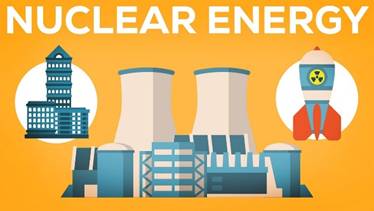
Nuclear energy is a
low-carbon, high-capacity power source derived from splitting atoms (fission)
or joining them (fusion)
to release immense heat, which is then used to generate electricity. It
is a reliable baseload source that produces zero emissions during
operation, providing roughly 10% of the world's electricity.
Key Aspects of Nuclear Energy
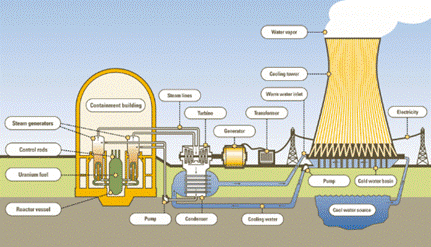
Most commercial nuclear
power plants use nuclear fission, where uranium atoms are split in a
reactor to release energy, which heats water to create steam and drive
turbines
-
Source:
Uranium is the primary fuel used, with major deposits in Australia,
Kazakhstan, and Canada.
-
Reliability:
Nuclear energy has a high capacity factor, often exceeding 90%,
meaning it runs consistently compared to intermittent renewables.
-
Environmental
Impact: Nuclear reactors do not
produce greenhouse gases or air emissions during operation. However,
they produce radioactive waste that requires secure long-term
storage.
-
Future Trends:
The industry is moving toward
Small Modular Reactors (SMRs), which are smaller, safer, and
easier to build.
Nuclear energy is a
crucial, though sometimes controversial, component of the global effort
to reduce reliance on fossil fuels.
CURRENT
STATUS OF NUCLEAR ENERGY IN CHINA
As of early 2026, China
is rapidly expanding its nuclear energy sector, operating 58–60 reactors
(second-largest fleet by units) and holding the top position globally
for reactors under construction, with over 30–40 new units underway
. China’s strategy aims
for 200 GW of capacity by 2035, utilizing advanced Hualong One reactors
and the world's first fourth-generation plant.
Key Aspects
of China's Nuclear Energy Status:
-
Rapid Expansion
& Capacity: With a total installed
capacity of roughly 62 GW as of early 2026, nuclear power generated
approximately 4.81% of China's electricity. The 14th Five-Year Plan
(2021-2025) target was 70 GWe, with significant new construction.
-
Leader in New
Build: China is responsible for about
half of the world's new nuclear reactors under construction,
ensuring it is on track to overtake the U.S. in total capacity in
the coming years.
-
Technological
Innovation: China is pioneering
next-generation technology, including the world's first
fourth-generation high-temperature gas-cooled reactor and leading in
small modular reactors [SMRs].
-
Strategic Goals:
The expansion is driven by the need to replace coal, improve air
quality, and enhance energy security.
-
Fuel Cycle
Self-Sufficiency: China has developed
a comprehensive domestic nuclear supply chain, aiming for a mix of
domestic and international uranium sourcing.
-
Projected
Growth: The China General Nuclear
Power Group has expressed a goal of reaching 200 GW by 2035.
The nation is heavily
investing in new, indigenous, and third-generation reactor designs such
as the Hualong One to reduce reliance on foreign technology.
WHY CHINA
LEADS THE WORLD IN NUCLEAR ENERGY
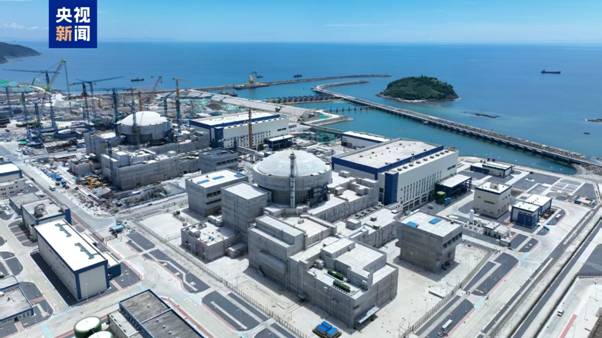
China leads global
nuclear energy expansion through massive, state-driven investment,
aiming for 120-150 GW of capacity by 2030. It commands nearly half of
all global new-build reactors, powered by standardized designs, lower
construction costs [$2/watt vs. $15/watt in the US], a secure and
complete supply chain, and urgent decarbonization goals to reduce coal
reliance.
Here is why China
dominates the nuclear sector:
-
Unmatched
Scaling and Speed: With 19+ reactors
under construction, China has more projects underway than any other
nation, driven by central planning and a "go global" policy for
exporting technology.
-
Standardization
and Cost Efficiency: Unlike Western
nations, China has perfected the mass production of reactors,
standardizing designs [like the Hualong One] to significantly lower
construction costs and timelines.
-
Rapid
Localization & Innovation: While
leveraging Western technology, China has localized the entire supply
chain and is now a leader in fourth-generation technology, including
pioneering work in
thorium molten salt reactors.
-
Strategic Energy
Security & Environment: The urgent
need to replace coal-fired plants for clean air, combined with
long-term climate goals, forces a fast-track approach to nuclear
adoption.
-
Regulatory
Environment: China's regulatory
culture supports building demonstration plants to refine, rather
than pausing to debate design, allowing faster deployment of new
technology.
-
Government
Leadership: Most important factor is
the government’s ability to develop and execute long term visions
successfully on time and on budget. Government policies and
expenditures are focussed on benefiting the country and its people
rather than special interests.
The majority of the Chinese government leaders are highly qualified
and experienced engineers and scientists
-
Massive
Scientific and Engineering Talent.
China produces more STEM students each year than the US and G7
countries combined. Most of the world’s top STEM
universities and research institutions are in China.
THORIUM MOLTEN SALT REACTOR (TMSR)
TECHNOLOGY
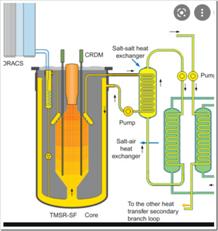 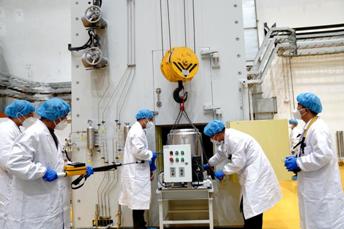
China leads in
thorium molten salt reactor (TMSR)
technology due to massive, state-backed investment in
Generation-IV, Gen-IV, reactors aimed at energy security, leveraging,
China's massive thorium reserves
to achieve carbon neutrality. By overcoming technical hurdles like,
corrosive salt mixtures, operating the first,
operational thorium reactor,
and building,
inland, water-efficient plants in
the Gobi Desert, China has taken a commanding lead in both
development and deployment.
Key Reasons for China's Leadership:
-
Abundant
Resources & Strategic Need: China
possesses,
the world's second-largest
thorium reserves behind India, which are estimated to be
enough to power the country for thousands of years. This reduces
reliance on imported uranium and supports its 2060 carbon neutrality
goal.
-
Decades of
Dedicated R&D: While other nations
paused research, China has consistently invested in this technology
since the 1970s, culminating in the operation of the first
thorium-based molten salt reactor.
-
Overcoming
Technical Challenges: Chinese
scientists successfully tackled the major obstacle of highly,
corrosive fluoride salts by developing specialized nickel-based
alloys capable of lasting over 10 years.
-
Superior Safety
and Flexibility: TMSRs operate at,
lower pressures than conventional reactors and feature passive
safety systems, such as, {Link: emergency drain tanks} that prevent
meltdowns.
-
Geographic
Advantage: Unlike traditional,
water-dependent nuclear plants, Thorium molten salt reactors can be
located in remote, arid inland areas, such as the Gobi Desert,
allowing for energy independence in resource-scarce regions.
-
State-Backed
Rapid Deployment: China's ability to,
quickly transition from experimental such as Link: 2-MW reactors to
Link: 10-MW pilot plants planned for 2030, highlights its efficient,
centralized approach to nuclear innovation.
-
Strategic Focus:
The Chinese government has prioritized fusion as a key energy source
to achieve "net-zero" goals, pushing for rapid, iterative upgrades
to their tokamak designs.
-
Industrial
Strength: A strong domestic
manufacturing chain (e.g., in superconducting materials) allows for
efficient, cost-effective development, such as with the
HL-3 tokamak and
other experimental reactors.
-
Massive Talent
Pool: Most importantly, more than half
of the world’s STEM talent are in China. 7 of the top 10 STEM
university are Chinese. China also leads the world in patent
registration and high impact research publications
-
Government
Leadership: Most important factor is
the government’s ability to develop, plan and execute long term
visions successfully on time and on budget. Government policies and
expenditures are focussed on benefiting the country and its people
rather than special interests.
-
Governance:
China is led by a highly capable meritocracy
government that is truly for the people, by the people and of the
people.
This strategic,
long-term commitment allows China to lead in bringing, Gen-IV nuclear
technology to commercialization, positioning it as a future leader in
clean energy production}
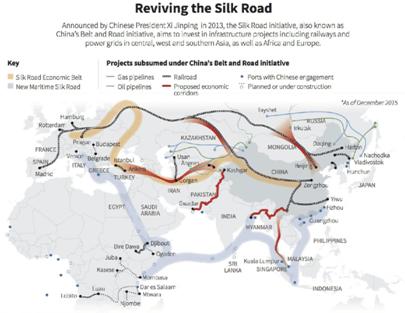
In addition to domestic
expansion, China is leveraging its technological advancements to export
reactors through the Belt and Road Initiative, securing a major role in
global nuclear governance.
FUTURE DIRECTIONS AND DEVELOPMENT FOR
CHINA NUCLEAR ENERGY SECTOR
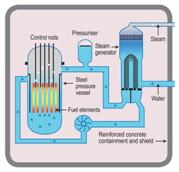  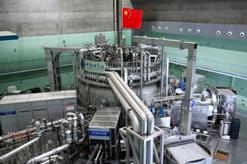
China's nuclear
energy sector is pursuing rapid, large-scale capacity expansion and
technological advancement through its "three-step" strategy: thermal
reactors, fast-neutron reactors, and fusion reactors. The primary goals
are securing domestic energy independence, phasing out coal, and
achieving peak carbon emissions before 2030.
1. Rapid Capacity Scaling
-
Aggressive
Approvals: China is the world’s fastest-expanding nuclear power
producer. With over 60 operational reactors and dozens under
construction, China accounts for nearly half of all new global
reactors being built.
-
Target
Milestones: The state has set a target of reaching 110 GW to 150 GW
of installed nuclear capacity by 2030, with a longer-term projection
aiming for 200 GW by 2035.
2. Next-Generation Technology
-
Indigenous
Reactors: China is moving away from imported designs by
mass-constructing its proprietary Generation III reactor, the
Hualong One (HPR1000), alongside CAP1000 models.
-
Small Modular
Reactors [SMRs]: Commercial deployment of SMR technology is
advancing rapidly, highlighted by the operation of the Linglong One
on Hainan Island. SMRs are designed to provide localized power for
industrial clusters, distributed AI data centers, and remote coastal
regions.
-
High-Temperature
Gas-Cooled Reactors: Demonstration projects such as the HTR-PM in
Shidaowan continue to operate with high thermal efficiency and
safety metrics.
3. Closed Fuel Cycle and Advanced Systems
-
Fast Breeder
Reactors: Under step two of its nuclear roadmap, China is solving
engineering challenges for Integral Fast Reactors [IFRs] to achieve
a closed fuel cycle. This will maximize uranium utilization and
significantly reduce high-level radioactive waste.
-
Reprocessing
Infrastructure: To support the closed fuel cycle, commercial-scale
demonstration reprocessing facilities are being constructed and
expanded in Gansu Province.
4. Nuclear Fusion Research
-
Frontier Research:
Fusion energy development is firmly embedded in China's national
strategic emerging industries plan.
-
Experimental
Milestones: Major research facilities, such as the Huanliu-3 [HL-3]
tokamak, are continually breaking records in ion temperatures and
electron retention, supported by newly established entities like the
China Fusion Energy Company.
5. International Export [Belt and Road
Initiative]
China is leveraging its
rapid deployment speeds and standardized, cost-effective manufacturing
capabilities to export reactor technology internationally. The country
is actively bidding to build and finance nuclear power units in
countries involved in its Belt and Road Initiative, such as in the
Middle East and neighbouring Asian nations
MAJOR PLAYERS IN CHINA’S NUCLEAR ENERGY
SECTOR
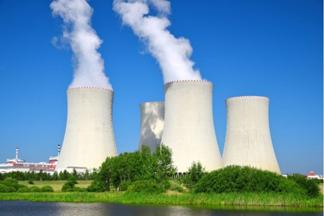
China's nuclear energy
sector is dominated by state-owned giants, primarily China General
Nuclear [CGN] and China National Nuclear Corporation [CNNC], which
control the majority of operation, construction, and technology
development. Other key players include State Power Investment
Corporation [SPIC[, Huaneng Group, and manufacturers like Dongfang
Electric, focusing on Hualong One (HPR1000) technology.
Major Nuclear Power
Operators & Developers
Key
Technology & Manufacturing
Industry Focus
-
Expansion:
Rapid expansion with a focus on Gen-III reactors (Hualong One) and
increasing investment in SMR (Small Modular Reactors).
-
R&D:
Focus on advanced technology, including high-temperature gas-cooled
reactors and nuclear fusion, with institutions like EAST setting
records.
-
Supply Chain:
China controls the entire industrial supply chain, from uranium
exploration (through firms like CGN) to fuel fabrication and waste
management.
|
