|
CHINA NANOTECHNOLOGY
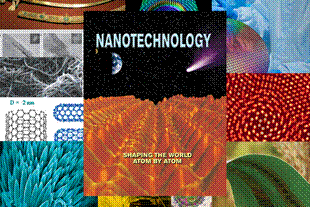 
Nanotechnology is the science of building and using things at a tiny
scale, specifically between 1 and 100 nanometers.
Key
aspects include manipulating individual atoms, changing material
properties, and creating advanced tech.
-
One
nanometer
is one billionth of a meter.
-
A
human hair
is about 80,000 to 100,000 nanometers wide.
-
A
single DNA strand
is only about 2.5 nanometers wide.
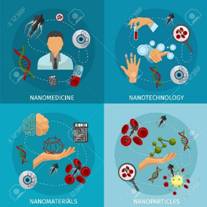
NANOTECHNOLOGY APPLICATIONS
Nanotechnology is used in many fields to make materials smaller,
stronger, and faster, with key areas including medicine, electronics,
and energy.
Medicine and Healthcare
-
Targeted Drug Delivery: Tiny carriers send medicine straight to
sick cells like cancer tumours without hurting healthy tissue.
-
Early
Diagnostics: Quantum dots and small sensors help find diseases
fast.
-
Wound
Care: Silver nanoparticles in bandages stop bacteria and help skin
heal.
Electronics and Computers
-
Faster Chips: Carbon nanotubes and nanowires replace old silicon to
make smaller, faster microprocessors.
-
Better Screens: Quantum dots create bright, clear, and flexible
displays for phones and TVs.
Energy
and Environment
-
Solar
Power: Special nanomaterials double how much sunlight turns into
electricity.
-
Better Batteries: Nanostructures help batteries charge faster and
hold more power.
-
Clean
Water: Nanofiltration systems and nanobubbles remove heavy metals
and dirt from water.
Everyday Products
CURRENT STATUS OF NONOTECHNOLOGY IN CHINA
 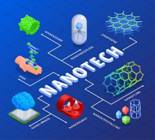 
China is
the world leader in nanotechnology, focusing primarily on advanced
coating materials, catalytic chemistry, and carbon-based semiconductor
devices. Backed by heavy state direction, the nation drives innovation
via major bodies like the National Center for Nanoscience and
Technology. China holds 43% of global authorized patents with over
34,500 enterprises and 9.92 million workers.
Key areas
of dominance include semiconductor devices, catalytic chemistry,
biomedicine, and new materials.
Patents
and Leadership:
China is ranked first globally with 464,000 patents granted between 2000
and 2025, surpassing the US, Japan, and South Korea combined.
Top
Institution:
The Chinese Academy of Sciences holds over 23,400 patents, leading
global holders.
Commercialization:
Patent licensing and transfer rates exceed 8%, showing strong movement
from labs to industry.
Core Research and Technological Focus
-
Carbon Nanotubes & AI Chips: Fabricating carbon nanotube transistors
that outperform silicon, including recent ternary logic chips
capable of multi-state data processing.
-
Catalysis & Materials: Designing molecule-level catalysts inside
carbon nanotubes and advancing high-strength, heat-resistant nano-coatings.
-
Biomedicine: Developing targeted nano-delivery systems and nanoscale
sensors for environmental and health tracking.
WHY CHINA LEADS THE
WORLD IN NANOTECHNOLOGY
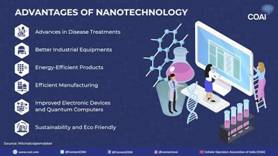 
-
Strategic Priority: Nanotechnology is a core pillar in national
five-year plans and long-term science guidelines.
-
Massive Patent Share: China secured over 464,000 nanotechnology
patents between 2000 and 2025 - more than the U.S., Japan, and South
Korea combined.
-
Top
Institutions: The
Chinese Academy of Sciences
ranks as the single largest global patent holder in the field with
over 23,400 filings.
How China Achieves This
-
State
Funding and Programs:
Direct financial backing drives major strategic programs managed
through centers like the
National Center for Nanoscience and Technology.
-
Industrial Application:
Over 34,500 enterprises employ nearly 10 million workers,
successfully translating lab discoveries into products.
-
Key
Focus Sectors:
Research heavily targets high-impact areas including semiconductor
devices, biomedicine, advanced coatings, and catalytic chemistry
-
"Made in China
2025": This initiative prioritizes
intelligent manufacturing, upgrading traditional industries with AI
and IoT to transform China into a "manufacturing superpower".
-
14th Five-Year
Plan (2021-2025): The strategy focuses
heavily on frontier technology infrastructure, with a 2026-2030
outlook heavily prioritizing R&D, innovation, and technological
security.
The 15th Five Year Plan will focus on nanotechnology +
-
Integration of
AI and
Big Data:
Chinese researchers are integrating artificial intelligence with
synthetic biology to speed up drug discovery and protein design from
months to weeks.
-
Government
Leadership: Most important factor for
China’s success is the government’s ability to develop, plan and
execute long term visions successfully on time and on budget.
Government policies and expenditures are focussed on benefiting the
country and its people rather than special interests.
The majority of the Chinese leaders are highly qualified and
experienced engineers and scientists with extensive experience in
administration, management and project development.
-
Massive
Scientific and Engineering Talent.
China produces more STEM students each year than the US and G7
countries combined. Most of the world’s top STEM
universities and research institutions are in China.
China is now the world leader in the publication of high impact and
frontier technology papers.
FUTURE
DEVELOPMENT AND DIRECTIONS FOR CHINA NANOTECHNOLOGY
 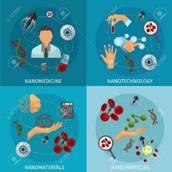 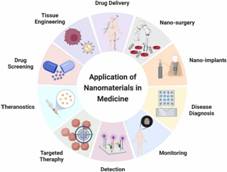
Future development and
directions for China's nanotechnology focus on achieving technological
self-reliance, advancing next-generation semiconductor alternatives, and
expanding biomedical applications. Key strategic areas include
carbon-based AI chips, biodegradable nanoparticles for targeted gene
editing, and advanced nanomaterials production.
Core Research Priorities
-
Carbon Nanotubes:
Scaling 3D integration of carbon-based electronics to surpass
traditional silicon limitations for artificial intelligence
workloads.
-
Nanomedicine:
Developing synthetic, biodegradable nanoparticles that deliver
CRISPR/Cas9 tools directly into cells to combat cancer and genetic
disorders.
-
Advanced
Manufacturing: Expanding output
across major industrial hubs like Suzhou's Nanopolis to
commercialize nano-coatings, catalysis, and energy storage.
Strategic Goals
-
Self-Reliance:
Driving proprietary intellectual property, having already secured
over 464,000 nanotechnology patents (43% of the global total).
-
Commercial
Scaling: Transitioning thousands of
registered nanotech enterprises from lab-scale research to
high-volume market production.
-
Interdisciplinary Integration:
Merging nanoscience with quantum computing, brain-computer
interfaces, and green energy applications
KEY
PLAYERS IN NANOTECHNOLOGY IN CHINA
 ![Burning Issue] NANOTECHNOLOGY - Civilsdaily](nanotech_files/image024.jpg) 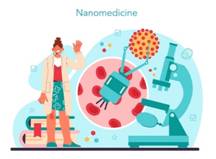
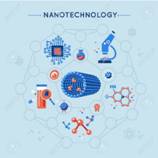
China's key players in
nanotechnology include the
National Center
for Nanoscience and Technology (NCNST), the
Chinese Academy
of Sciences (CAS), and elite universities like
Tsinghua
University and
Peking University,
alongside major industrial hubs like Suzhou's Nanopolis
Research
Institutions and Academia
-
Chinese Academy of
Sciences (CAS): Top global patent holder with over 23,400
nanotechnology patents.
-
National Center for
Nanoscience and Technology (NCNST): Leads fundamental research,
applied science, and national standardization in Beijing.
-
Peking & Tsinghua
Universities: Pioneering advanced breakthroughs, including
carbon-based AI chips and nanotube transistors.
Industrial Hubs and
Commercial Enterprises
-
Nanopolis Suzhou:
The world's largest dedicated nanotechnology industrial zone,
housing numerous startups and multinationals.
-
Semiconductor
Manufacturing International Corporation (SMIC): Incorporates
advanced nanotechnology into large-scale semiconductor fabrication.
-
Cnano Technology &
2D Carbon Tech: Commercial leaders scaling up production for carbon
nanotubes and graphene industrial applications.
|
