|
CHINA INFRASTRUCTURE
TECHNOLOGY
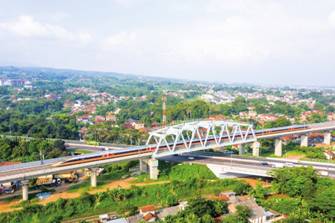
Infrastructure refers
to the fundamental, physical, and organizational systems -such as roads,
bridges, water supply, power grids, and telecommunications - necessary
for a city, nation, or organization to function. It includes both
"hard" structures [physical] and "soft" systems [services] that support
economic activity and daily life.
Infrastructure networks
ate the foundations and backbones of a modern economy and society.
Key Aspects of Infrastructure:
  
Industrial
infrastructure refers to the physical systems, facilities, and assets
necessary for producing, transporting, and distributing industrial
materials and goods. It forms the operational backbone of manufacturing
and industrial economies, including factories, utilities, specialized
transportation, and storage networks like pipelines and ports, designed
for efficiency, reliability, and safety.
Key
components of industrial infrastructure include:
Physical Facilities:
Factories, warehouses, assembly plants, refineries, and specialized
industrial parks.
-
Energy Infrastructure:
Power plants, electrical grids, substations, and fuel supply
systems needed for production.
-
Transportation Networks:
Heavy-duty roads, railways, ports, harbours, and airports designed
for cargo, logistics, and supply chain movement.
-
Utility Systems:
Water supply, sewage, drainage, and waste management
infrastructure.
-
Information Technology:
Data centers, communication networks, cloud computing, and
automation systems.
-
Storage & Distribution:
Pipelines, storage tanks, and specialized terminals.
Industrial
infrastructure is crucial for economic development, supporting the
manufacturing sector and enabling industrialization, which also includes
upgrading to sustainable, resilient, and, and high-tech facilities
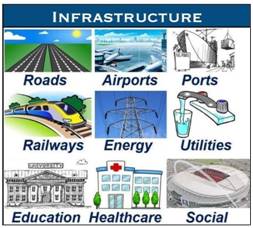
Infrastructure is
broadly classified into hard infrastructure (physical networks)
and soft infrastructure [institutional systems]. These systems
include transport [roads, rail, ports], utilities [water, energy],
communication [telecom], and social assets [hospitals, schools]. They
are essential for economic activity, productivity, and the maintenance
of modern society.
-
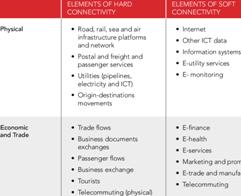
Hard Infrastructure [Physical]:
Tangible systems necessary for a modern industrial society,
including transportation (roads, bridges, tunnels, railways,
airports), utilities (water supply, sewerage, power
generation/grids, gas pipelines), and telecommunications (internet,
phone lines).
-
Soft Infrastructure [Services/Institutions]:
Systems required to maintain the economic, health, and social needs
of a population, such as education, healthcare, law enforcement,
financial systems, and emergency services.
-
Critical Infrastructure:
Assets defined by governments as crucial, often overlapping with
both hard and soft types, including hospitals, utilities, and
communication networks that, if destroyed, would have a debilitating
impact on safety or security.
-
Social/Community Infrastructure:
A subset of soft infrastructure focused on community well-being,
including public housing, schools, prisons, and community centers.
-
Strategic Infrastructure:
High-impact, often large-scale transport projects that shape city
development, such as major bridges, highways, and rail loops.
These assets are often
characterized by high barriers to entry, long-term contracts, and
essential service provision.
 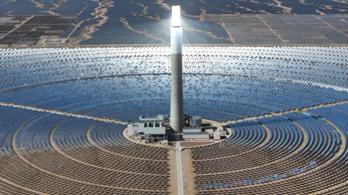
CURRENT
STATUS OF CHINA INFRASTRUCTURE
China operates the
world's largest, most advanced infrastructure network, shifting from
traditional construction to a tech-driven focus on 5G, AI, and green
energy
As of 2026, it holds
global leadership in high-speed rail, expressways, and digital
infrastructure [e.g., over 2.3 million 5G base stations]. Key trends
include integrating physical assets with digital sensors and smart city
management.
Key Aspects of
China's Infrastructure in 2026:
-
New Infrastructure Focus:
Significant investment in data centers, industrial internet
platforms, and, as of late 2025/early 2026, advanced robotics
platforms to boost manufacturing, logistics, and operational
autonomy.
-
Transportation Advancements:
The network includes over 190,000 km of expressways. New projects,
such as the Pingloo Canal, are designed to boost green logistics and
regional trade.
-
Smart Cities and Integration:
Traditional infrastructure is being upgraded with "smart"
technology—sensors and cameras integrated into digital networks,
such as in water management, energy grids, and disaster prevention.
-
Aerospace and Logistics:
Rapid airport expansion continues, exemplified by the opening of
new, high-capacity terminals like the T5 at Xi'an Xianyang
International Airport.
-
Strategic Expansion:
Infrastructure development, particularly in border regions and for
energy, is being used to enhance internal connectivity and, in some
cases, to assert regional influence.
Despite these
advancements, China faces challenges including regional disparities in
infrastructure quality between eastern and western regions, as well as
the need to balance rapid expansion with sustainability.
China is rapidly
advancing its "New Infrastructure" strategy, transitioning from
traditional hard assets to a hybrid of advanced physical networks and
digital, soft infrastructure
Key highlights include
world-leading 5G, high-speed rail, and smart city technologies, driven
by state-led investment to fuel innovation-driven economic growth and
digital transformation.
Hard
Infrastructure (Physical Assets)
-
Transportation:
China maintains the world’s largest high-speed rail network and
continues expanding its, airports, and highway networks.
-
Energy: The country
leads in renewable energy production, including solar, wind, and
hydropower, exemplified by the Three Gorges Dam.
-
Industrial/Digital:
Significant investment in "new infrastructure" includes 5G base
stations, data centers, and Internet of Things (IoT) devices,
enhancing productivity in industrial sectors.
projects. projects.
-
Digital Connectivity:
The "Broadband
China" policy has created robust fiber-optic networks and
extensive mobile communication systems, facilitating data-driven,
intelligent, and automated production.
-
Data & Smart Cities:
"Big
Data Pilot Zones" (BDPZ) focus on data analysis, cloud
computing, and AI integration for urban management.
-
Global Expansion:
Through the
Digital Silk Road,
China is promoting its technological standards (like Huawei's
proposed new internet protocols) abroad.
Infrastructure
Technologies & Trends
-
Innovation Focus:
China is shifting focus from traditional construction toward
technology-intensive "new infrastructure" to drive economic
modernization.
-
Digital Integration:
The integration of AI, big data, and cloud computing with physical
infrastructure allows for smarter, more efficient urban and
industrial systems.
-
Sustainability:
Development increasingly emphasizesgreen energy and environmental,
social, and governance (ESG) factors in infrastructure projects.
Current
Challenges & Strategy
-
Investment Shift:
The government is focusing on "moderately
advanced infrastructure investment" to stabilize economic
growth, moving away from purely resource-driven projects.
-
Geopolitical Focus:
China's Belt and Road Initiative (BRI) combine hard infrastructure
(roads, ports) with soft infrastructure (digital, financial) to
deepen global connectivity.
WHY CHINA
LEADS THE WORLD
China leads in global
infrastructure through a model of comprehensive centralized long-term
planning, massive state-driven investment and commitment, unparalleled
industrial scale and a strong desire by the Chinese government to
improve the socio-economic landscape for the Chinese people.
The government's five-year plans, coupled with rapid execution by
state-owned enterprises, allow for building high-speed rail, bridges,
and smart logistics networks [hard tech] and digital platforms [soft
tech] faster than other nations
Key Factors
Driving China's Infrastructure Leadership:
-
Centralized Planning & Execution:
The National Development and Reform Commission sets mandatory
five-year targets, ensuring long-term focus and nationwide
coordination.
-
Massive Financial Backing:
State-owned banks, such as the China Development Bank, provide
low-cost capital for projects like the Belt and Road Initiative
[BR]).
-
Unrivalled Industrial Ecosystem:
China possesses the world's only complete industrial chain, allowing
for rapid, localized sourcing of components such as steel, cement,
electronics and reducing construction time.
-
Rapid Innovation (Hard & Soft Tech):
China dominates in applying new technology to construction [e.g., AI
in logistics via LOGINK] and leads in R&D for new infrastructure and
new infrastructure technologies, including 5G-enabled smart cities.
-
Scale and Speed:
The ability to mobilize resources and labor allows China to complete
massive projects at a pace unmatched by Western countries, often
prioritizing speed without sacrificing essential quality.
-
Long-Term Strategic Vision:
Infrastructure is viewed as a foundational tool for economic growth,
regional development, and geopolitical connectivity.
-
Government Leadership:
Most important factor for China’s success is the government’s
ability to develop, plan and execute long term visions successfully
on time and on budget. Government policies and expenditures are
focussed on benefiting the country and its people rather than
special interests.
-
Massive Scientific and Engineering Talent.
China produces more STEM students each
year than the US and G7 countries combined. Most of the
world’s top STEM universities and research institutions are in China
China's approach
integrates "hard" physical assets such as dams, bridges, high-speed rail
etc. with "soft" digital infrastructure such as logistics platforms and
financial systems, enabling them to lead in both construction quality
and technological integration.
FUTURE
DIRECTIONS AND DEVELOPMENT
China's infrastructure
strategy is undergoing a "DeepSeek moment" - a shift from traditional,
heavy-investment concrete projects toward a hybrid model of advanced
"hard" and AI-driven "soft" infrastructure, designed to secure
technological self-reliance and global leadership.
Moving into the 15th
Five-Year Plan period (2026–2030), the focus is on integrating AI,
quantum technology, and green energy into the national backbone to
foster a "smart economy and a smart country".
Future Directions for Hard Infrastructure
[Physical & Digital] include:
-
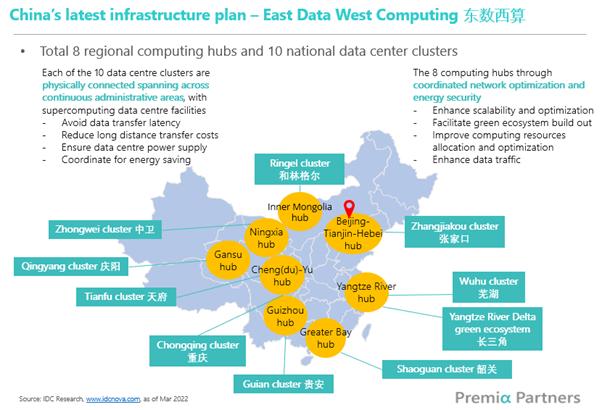
"East Data, West Computing" Integration:
China is accelerating its "East Data, West Computing" initiative,
which involves transferring data from high-demand eastern hubs to
western regions with better energy resources, underpinned by
400-gigabit computing channels.
-
AI-Driven Data Centers:
Data centers are being redesigned for AI, requiring much higher
power density [over 100 kilowatts per rack] and integrated cooling
systems.
-
6G & Satellite Internet:
While 5G covers over 90% of administrative villages as of 2024, the
next five years will focus on 6G trials, space-air-ground integrated
networks, and massive satellite constellation deployment.
-
Smart Transportation & Energy:
Development of autonomous driving-friendly highways, smart ports,
and high-speed rail networks, combined with a 40% renewable energy
grid goal by 2030.
-
Robotic Construction:
Large-scale projects are utilizing AI-powered machines for
autonomous paving and building.
Future Directions for Soft Infrastructure
[Data & Standards]
-
National Data Market & Sovereignty:
Establishing an "open, shared, and secure national integrated data
market" to use data as a production factor, under strict state
oversight and cybersecurity protocols.
-
"AI Plus" Initiative:
Weaving AI into traditional sectors such as manufacturing,
agriculture and health to upgrade productivity, rather than treating
it as a separate industry.
-
Digital Identity Systems:
Launching a unified national digital identity system to enhance the
state's capability to track online activities and secure
transactions.
-
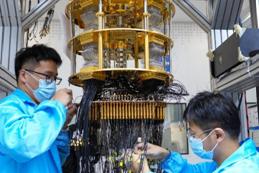
Quantum Communication Networks:
Scaling up city-level quantum key distribution [QKD] and connecting
them to 6G networks for top-tier security in finance and
governance.
Construction
Industry Technology Trends
-
"Industrialized" Construction:
Shift toward modular, pre-fabricated, and 3D-printed building
techniques to address labor shortages and increase speed.
-
Digital Twins & BIM:
Widespread adoption of Building Information Modeling [BIM]
integrated with AI for real-time monitoring, clash detection, and
carbon footprint tracking.
-
Green & Resilient Design:
Increased investment in low-carbon materials and infrastructure
designed to withstand climate-related disasters.
Key Policy
Drivers (2026–2030)
-
15th Five-Year Plan Focus:
The 2026-2030 plan emphasizes technological self-reliance
(semiconductors, AI, advanced manufacturing) to mitigate
geopolitical risks.
-
Industrial Upgrading:
Moving from rapid expansion to high-quality development, focusing on
consolidating industries and setting national standards.
-
Dual Circulation & Green Growth:
Continued reliance on domestic demand ["internal circulation"] and
achieving peak carbon emissions by 2030
KEY
INFRASTRUCTURE PLAYERS IN CHINA
Major players in
China's infrastructure landscape, as of 2026, are dominated by
state-owned enterprises [SOEs] focusing on integrating physical
construction with advanced digital, AI-driven, and IoT technologies. Key
giants include
Key Players
in Hard & Soft Infrastructure
Global Expansion:
These firms, supported by state funding, dominate both domestic and
international Belt and Road Initiative (BRI) projects. |