|
CHINA HYPERSONICS
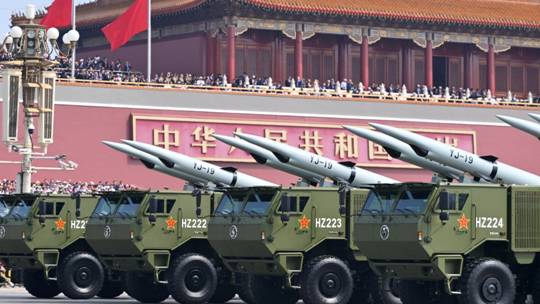
Hypersonic technology
refers to the engineering and physics associated with flight at speeds
greater than Mach 5 - five times the speed of sound, or
approximately 3,800+ miles per hour (6,100+ km/h). Unlike ballistic
missiles that follow a predictable, arched trajectory, hypersonic
vehicles are designed to fly at lower altitudes, manoeuvre mid-flight,
and maintain extreme speed, making them exceptionally difficult to
detect and intercept by existing defense systems.
At present, only China
and Russia have successfully deployed hypersonic weapons.
Key
Aspects of Hypersonics
-
Speed:
Above Mach 5 [up to Mach 20+ for some glide vehicles that China has
deployed].
-
Manoeuvrability:
Ability to change trajectory unpredictably during flight.
-
Thermal
Management: Atmospheric friction at
these speeds generates extreme heat, requiring advanced materials
like ceramics and carbon composites, as well as active cooling
systems.
-
Propulsion:
Often uses scramjets [supersonic combustion ramjets], which
scoop oxygen from the atmosphere to burn fuel, providing higher
efficiency than traditional rockets.
Types of Hypersonic
Systems
-
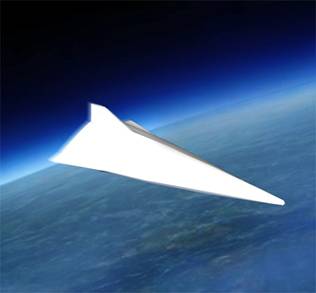
Hypersonic Glide
Vehicles (HGVs):
These are launched from a rocket booster before gliding at high
speed and manoeuvring to their target.
-
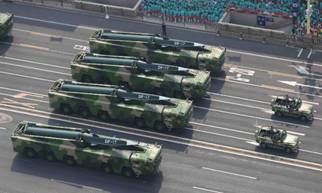
Hypersonic Cruise
Missiles:
Powered by air-breathing scramjet engines throughout their flight,
maintaining high speed and altitude.
-
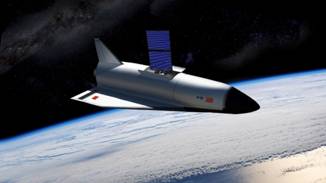
Spacecraft Re-entry
Vehicles:
Capsules and planes returning to Earth, such as the Space Shuttle,
which reach hypersonic speeds during atmospheric entry.
Applications of Hypersonic
Technology
-
Military
Offensive Capabilities:
-
Unstoppable
Strike Weapons: Hypersonic
missiles [e.g., Russian Zircon and Avangard and China’s DF and
YJ hypersonic missile series] are viewed as "game-changers" due
to their ability to evade current missile defenses, such as the
Patriot system.
-
Rapid Global
Strike: These weapons can deliver
conventional or nuclear payloads across the globe in minutes.
-
Maritime
Target Destruction: Designed for
rapid, long-range attacks on ships and carrier strike groups.
-
Military
Defensive Capabilities:
-
Aerospace and
Civilian Applications:
-
Rapid Space
Access: Using scramjet technology
for two-stage-to-orbit vehicles, reducing the cost of launching
small satellites.
-
High-Speed
Passenger Travel: Research into
hypersonic planes that could, for example, fly from London to
Sydney in four hours.
Key Challenges
The primary challenges in developing this technology include managing
extreme thermal loads [which can cause materials to melt], achieving
reliable communication (as a plasma sheath forms around the vehicle),
and developing precise guidance, navigation, and control systems
CHINA HYPERSONICS
China is a global
leader in hypersonic technology, being the first country having achieved
operational capability with multiple systems designed to evade, detect,
and destroy modern missile defenses.
China’s currently
deployed systems include the DF-17 hypersonic glide vehicle, YJ-19/YJ-20
anti-ship missiles, and the long-range CJ-1000 and the Fractional
Orbital Bombardment Systems [FOB] , with ongoing development of advanced
prototypes, including "morphing" missiles capable of in-flight shape
changes.
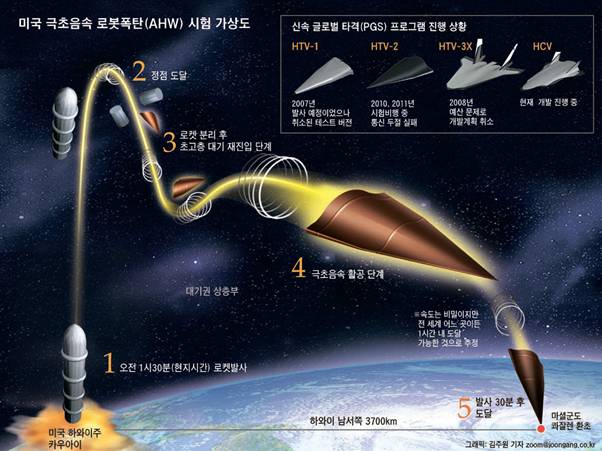
FOB
Hypersonic orbital
bombardment combines the limitless range of space-based deployment with
the terrifying speed and manoeuvrability of atmospheric hypersonic glide
vehicles (HGVs). By placing weapons in low Earth orbit before sending
them plunging toward targets, these systems defy traditional
early-warning radar networks and drastically compress defensive response
times.
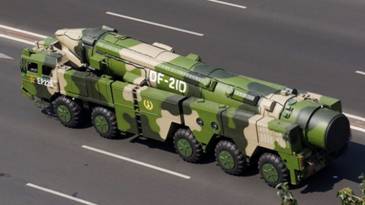
The concept generally
materializes through two distinct methods:
· Fractional
Orbital Bombardment Systems (FOBS): First developed during the Cold
War, this approach places a nuclear or conventional warhead into a low
Earth orbit to circle the globe. Just before reaching the target, the
payload performs a retrograde burn to de-orbit.
-
The Hypersonic
Evolution: Modern iterations (such as those tested by China) pair a
FOBS with a hypersonic glide vehicle. Instead of falling on a
predictable ballistic arc, the HGV detaches and glides through the
upper atmosphere at speeds exceeding Mach 5 while manoeuvring toward
its target.
-
Evading Detection:
By approaching from unexpected vectors—such as over the South Pole
instead of the traditional northern routes—these systems bypass
conventional northern-facing radar arrays
Key Aspects of China's
Hypersonics:
-
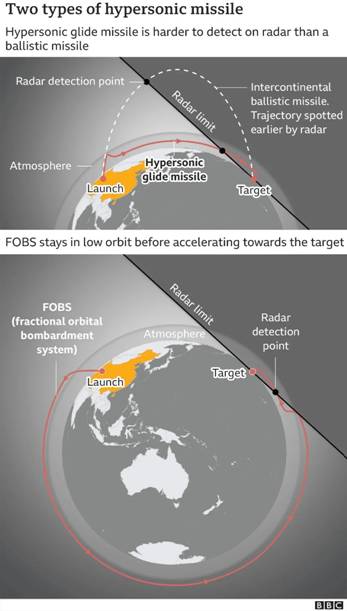
Operational
Systems: China has moved beyond
testing to deploying hypersonic weapons, such as the DF-17 glide
vehicle and CJ-1000 cruise missiles.
-
Sea-Based
Capabilities: China has equipped Type
039B submarines with YJ-19 hypersonic anti-ship missiles and Type
055 cruisers with YJ-20s, allowing for launch from standard torpedo
tubes and vertical systems.
-
"Morphing"
Technology: Recent reports indicate
prototypes of a missile capable of changing its shape during flight
- retracting wings to manage heat and drag at high Mach speeds, then
extending them for manoeuvrability.
-
Scramjet
Development: China is advancing
air-breathing scramjet technology, exemplified by the CJ-1000 and
the Xingkong-2 [Starry Sky-2] waverider, capable of Mach 5+
sustained flight.
-
Rapid
Development Focus: Beijing has
invested heavily in these technologies to counter regional,
primarily US, naval and air defenses, focusing on high speed and
unpredictable flight paths.
-
Civilian
Applications: Beyond military use,
companies like Lingkong Tianxing Technology are testing civilian
hypersonic planes, such as the Yunxing, with goals for high-speed,
long-distance, commercial travel.
China's rapid,
sustained investment has positioned China as the leader in this field,
with many experts considering its arsenal the most advanced in terms of
deployment.
WHY CHINA
LEADS THE WORLD IN HYPERSONIC TECHNOLOGY
China’s leadership in
hypersonic technology is achieved through two decades of intense,
focused investment, resulting in the world's most advanced, deployed
arsenal.
By leveraging
Military-Civil Fusion,
advanced
wind tunnel testing,
AI integration, and
heavy STEM education investment,
China has surpassed the US in both development and deployment, utilizing
hypersonic glide vehicles (HGVs),
cruise missiles and FOB system for strategic, manoeuvrable strike
capabilities.
Key
Reasons for China's Leadership in Hypersonics:
-
Intense
Investment and Strategy: China has
prioritized this technology for over 20 years, treating it as a
strategic necessity to counter US dominance, particularly in the
Pacific.
-
Military-Civil
Fusion: The nation eliminates barriers
between its civilian, academic, and military sectors to accelerate
development.
-
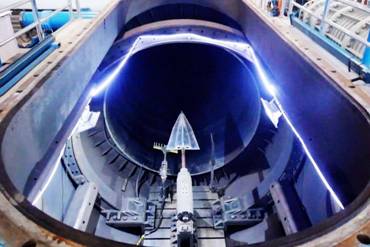
Infrastructure
Superiority: China possesses
world-leading test infrastructure, including the world’s most
advanced and specialized wind tunnels and advanced AI tools to
design and test missiles faster than humans.
-
Rapid
Deployment: Unlike the US, China has
already deployed multiple types of hypersonic weapons, such as the
YJ19, the glide vehicle-equipped DF-17 and FOB systems.
-
Technological
Advancements: Chinese researchers have
made breakthroughs in using materials like stainless steel for,
thermal protection and in developing boron-based fuels.
-
System
Integration: China integrates
hypersonic weapons with advanced satellite systems (BDS-3) for
improved targeting and navigation.
-
Human Capital:
A massive, focused STEM education system produces more than half of
the world’s engineers and researchers specializing in aerospace,
often augmented by talent acquisition programs. Most of the world’s
top STEM universities and research institutions are in China
-
Government
Leadership: Most important factor for
China’s success is the government’s ability to develop, plan and
execute long term visions successfully on time and on budget.
Government policies and expenditures are focussed on benefiting the
country and its people rather than special interests.
These efforts allow
China to create weapons that travel at over Mach 5, with superior
manoeuvrability designed to evade existing missile defense systems
FUTURE
DIRECTIONS AND DEVELOPMENT
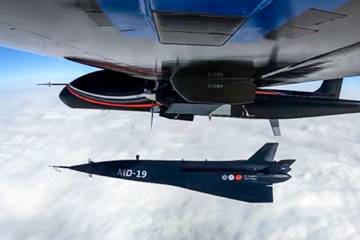
China is accelerating
the development and operational deployment of hypersonic technologies
(Mach 5+), focusing on shifting from purely high-speed manoeuvring to
"smarter," more versatile, and longer-range systems.
By 2026, Chinese
advancements have shifted focus toward air-breathing scramjet engines,
AI-integrated guidance, and "morphing" vehicles to defeat existing
missile defense networks, notably strengthening Anti-Access/Area-Denial
(A2/AD) capabilities in the Pacific
Key Future Directions and
Technological Developments
-
Scramjet
Propulsion Leadership: China has moved
to a leading position in scramjet technology, evidenced by the 2026
appearance of the CJ-1000 land-based cruise missile.
Scramjets allow sustained hypersonic flight, longer ranges, and
lower, harder-to-detect trajectories compared to boost-glide
vehicles.
-
"Morphing" and
Shape-Shifting Missiles: Researchers
are testing missiles capable of altering their aerodynamic shape
mid-flight (e.g., retractable wings) to optimize for both high-speed
drag reduction and terminal, low-speed manoeuvring.
-
AI and
Autonomous Targeting: Future systems
are incorporating Artificial Intelligence for autonomous, real-time
manoeuvring to track and target moving vessels or to adjust
trajectories instantly to evade defenses.
-
Advanced Thermal
Management: To solve the extreme heat
challenges of prolonged hypersonic flight, China is developing new
materials and cooling methods to maintain vehicle integrity at
speeds exceeding Mach 15-20.
-
Miniaturization:
Development is underway for ultra-small, high-speed missiles,
including options that could be launched from standard air-defense
guns.
Key Applications and
Strategic Roles
-
Carrier Killer
Upgrades (YJ-21/KD-21): The YJ-21
(ship-launched) and KD-21 (air-launched) represent a new
generation of hypersonic ballistic anti-ship missiles [ASBMs],
designed to target US aircraft carrier strike groups, with terminal
speeds reportedly reaching Mach 10.
-
Decapitating
Strikes and A2/AD: Hypersonic weapons
are designed to destroy critical command and control centers,
airfields, and hardened infrastructure early in a conflict to deter
foreign intervention, particularly in Taiwan or South China Sea
scenarios.
-
Long-Range
Precision Strike [CJ-1000]: The
CJ-1000 provides long-range precision strikes [estimated 2,500+ km
range] that can bypass traditional defenses.
-
Space-Based
Launch/Fractional Orbital Bombardment:
Testing of Hypersonic Glide Vehicles [HGVs] launched via rockets
into orbit [e.g., Fractional Orbital Bombardment System – FOBS]
allows attacks from unexpected vectors.
Expected Evolution
[2026–2030]
-
Full Operational
Capability [IOC] of New Systems:
Continued fielding of advanced HGVs and scramjet missiles through
the 15th Five-Year Plan period (2026-2030).
-
Massive
Production: Shift from prototyping to
high-cadence production of systems like the CJ-1000 and J-35A
integration, bolstering the PLA's strike arsenal.
-
Space-to-Ground
Platforms: Research is continuing on
platforms that can be launched from space, aiming for global reach
within 30 minutes.
-
Commercial
Synergy: Increased cooperation between
military research, universities, and private firms [Example:
Lingkong Tianxing's suborbital airliner] to foster faster technology
adoption.
Despite these rapid
advancements, challenges remain regarding terminal-phase communication
bandwidth, structural endurance, and the ability to track targets with
high precision during extreme manoeuvring.
MAJOR
HYPERSONIC PLAYERS IN CHINA
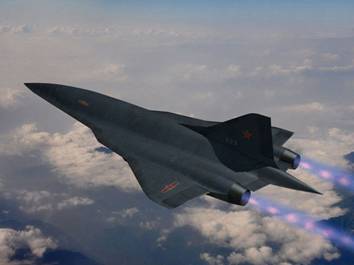
China is a global
leader in hypersonic technology, driven by state-owned enterprises [SOEs],
elite universities, and military research institutes focused on boosting
regional deterrence [e.g., against U.S. carrier groups] and defeating
missile defenses and the massive talent pool of hypersonic scientists
and engineers.
Key
Players in China's Hypersonics Ecosystem
Key Programs and
Applications
-
DF-17 & DF-ZF:
The DF-17 is a widely recognized operational hypersonic glide
vehicle (HGV) launched on a missile, capable of manoeuvring to evade
defenses.
-
YJ-21/YJ-20:
Hypersonic anti-ship missiles deployed on Type 055 destroyers,
designed for long-range, high-speed, and high-manoeuvrability
strikes.
-
CJ-1000 &
Scramjets: Development of scramjet
technology for high-speed, atmospheric flight [e.g., Mach 7+ tests].
-
Shape-Shifting
Missiles: Emerging R&D into missiles
capable of altering their shape/wings during flight to change
between speed and manoeuvrability.
Development Focus
-
Advantage
Pursuit: China aims to create an
asymmetric advantage, bypassing U.S. missile defenses with weapons
that are both fast and agile.
-
Advanced Testing
Infrastructure: China possesses
world-class, large-scale hypersonic wind tunnels for testing
components.
-
Material
Science: Research into materials that
can withstand extreme temperatures that are critical for hypersonic
flight.
|
