|
CHINA HYDRO ELECTRICITY TECHNOLOGY
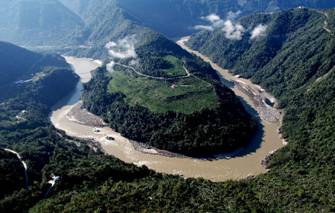
Hydroelectricity is a
renewable energy source that generates electricity by using the force of
falling or flowing water to spin turbines, which drive generators. It is
a mature technology, typically utilizing dams on rivers to control water
flow, that provides reliable, low-carbon, and flexible power.
Key Aspects of
Hydroelectricity:
-
Generation
Process: Water from a reservoir flows
through a pipe called a
penstock,
pushing against turbine blades to rotate a shaft, which powers a
generator.
-
Energy
Components: Power output depends on
the volume of water flow and the height of the fall
-
Types of
Systems:
-
Impoundment:
Dams store water in a reservoir to release on demand.
-
Run-of-river: Utilizes the natural
flow of a river with little or no water storage.
-
Pumped Storage:
Functions like a battery, pumping water to a higher reservoir
when demand is low and releasing it to generate power during
high demand.
-
Advantages:
It is a renewable, low-emission, and reliable energy source that can
rapidly respond to demand.
-
Environmental/Other Impacts: While
low-carbon, large projects can impact local ecosystems and
communities through flooding. Beyond electricity, it provides
benefits like flood control and irrigation.
CHINA HYDRO
ENERGY
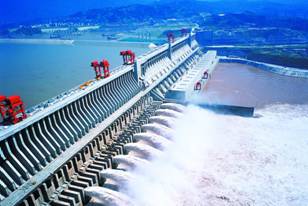
China is the world's
largest producer of hydroelectricity, with an installed capacity of
approximately GW in 2024, representing about of global capacity. The
sector is rapidly shifting focus toward massive pumped-storage projects
to support grid stability, alongside constructing mega-dams in Tibet for
long-term renewable energy goals.
Current
Status and Key Trends:
-
Capacity
Expansion: China continues to lead
global hydropower development, adding 14.4 GW of new capacity in
2024. Total installed capacity has grown significantly from GW in
2011 to over GW by early 2025.
-
Focus on Pumped
Storage: Due to the intermittency of
other renewables, China is heavily investing in pumped storage, with
installed capacity for this purpose reaching GW in 2024. The country
aims to exceed 120 GW of pumped storage by 2030.
-
Major Projects:
The
Three Gorges Dam remains the world's largest power station. New
developments include a massive project on the Yarlung Zangbo River
in Tibet, which is expected to be operational in the 2030s.
-
Challenges and
Outlook: Despite growth, hydropower's
share of total electricity generation has decreased in some years
due to rapid expansion of solar and wind, as well as changing
weather patterns affecting water flow. However, it remains vital for
China's carbon neutrality goals.
China operates several
of the world's largest hydroelectric dams, led by the 22.5 GW Three
Gorges Dam on the Yangtze River, which is the largest power station in
the world by capacity. Other major projects include the 16 GW Baihetan
Dam, the 13.86 GW Xiluodu Dam, and the 3 GW Lianghekou Dam. These
projects are central to China’s renewable energy and flood control
strategies, with new, massive, and controversial projects like the
planned 60 GW Medog Dam on the Yarlung Tsangpo River currently under
development.
Major
Operating Hydroelectric Dams
-
Three Gorges Dam
(Yangtze River): The world's largest hydro project, with 22,500
MW capacity, completed in 2006 for electricity, flood control, and
navigation.
-
Baihetan Dam
(Jinsha River): The world's second-largest, with 16,000 MW
capacity, known for its high efficiency and advanced technology.
-
Xiluodu Dam
(Jinsha River): A major dam with 13,860 MW capacity,
contributing significantly to China's west-to-east power
transmission.
-
Lianghekou Dam
(Yalong River): A high-altitude dam (295 meters) with 3,000 MW
capacity, crucial for regulating water flow across multiple years.
-
Wudongde Dam
(Jinsha River): A high-capacity dam that ranks among the top in
the world, often mentioned alongside Baihetan and Xiluodu.
Upcoming
Mega-Projects
-
Medog (Motuo) Hydropower
Project (Yarlung Tsangpo River): A planned
60,000 MW, $137 billion project in Tibet, set to be the world's
largest, with construction beginning in 2025. It is expected to
produce three times more energy than the Three Gorges Dam.
Key Impacts
and Characteristics
-
Energy &
Environment: These dams provide
massive amounts of renewable energy, replacing millions of tons of
coal annually.
-
Controversies:
Projects often involve massive resettlement of populations (e.g.,
1.4 million for Three Gorges) and significant ecological disruption.
-
Geopolitical
Concerns: Projects on the Yarlung
Tsangpo (Brahmaputra) river raise concerns in India and Bangladesh
regarding water flow control.
-
Engineering
Marvels: The dams are designed to
withstand earthquakes and manage severe flood risks, with some, like
the Lianghekou, also supporting solar and wind integration
WHY CHINA
LEADS IN HYDRO ELECTRICITY GENERATION
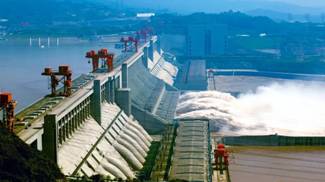
China leads the world
in hydroelectricity generation due to its massive, mountainous terrain
with enormous untapped river potential, particularly in the southwest,
combined with unparalleled state-driven investment and engineering
prowess. China boasts the world's largest installed capacity, operating
four of the six largest dams (including the Three Gorges) and accounting
for nearly 60% of new global capacity in 2024.
Key Reasons
for China's Leadership:
-
Massive
Geographical Potential: Southwest
China possesses the greatest concentration of hydropower potential
on the planet, featuring steep, fast-flowing rivers.
-
Unprecedented
Infrastructure Development: China has
developed a vast network of dams, with 2024 installed capacity
reaching 426 GW. Key projects like the Three Gorges Dam (22.5 GW)
and Baihetan Dam (16 GW) dominate global rankings.
-
Strategic Energy
Independence: Faced with limited
domestic fossil fuels and high pollution, the government prioritizes
renewables for energy security,, pushing to reduce reliance on coal
imports.
-
Technological
Innovation & Scale: China excels in
producing massive, advanced hydro turbines and, as of late 2025, has
more than 91 GW of new pumped-storage projects under construction to
manage energy, contributing to, according to the International
Hydropower Association, about half of global renewable growth.
-
Integrated
Project Planning: Many Chinese dams
are designed for multiple purposes, including flood control and
irrigation, making them essential infrastructure projects that are
heavily funded by the state.
-
Government
Leadership: Most important factor for
China’s success is the government’s ability to develop, plan and
execute long term visions successfully on time and on budget.
Government policies and expenditures are focussed on benefiting the
country and its people rather than special interests.
-
Massive
Scientific and Engineering Talent.
China produces more STEM students each year than the US and G7
countries combined. Most of the world’s top STEM
universities and research institutions are in China
China is expected to
remain the world's largest hydropower market through 2030, driven by
continued investment and the need for renewable energy to support its
massive economy.
FUTURE
DIRECTIONS AND DEVELOPMENT
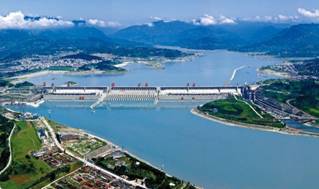
China, the global
leader in hydropower, is rapidly pivoting its hydroelectric strategy
from expanding conventional large-scale dams to prioritizing pumped
storage for grid flexibility and ultra-large, high-altitude
projects in Tibet. This shift is driven by the need to balance
intermittent renewable energy sources (wind/solar) and meet
"dual-carbon" targets, with significant focus on technological
innovation and regional development.
Here are the future
directions and developments in China's hydroelectricity:
1. Shift to
Pumped Storage Hydropower (PSH)
As the primary area of
growth, China is expanding its PSH capacity to support the integration
of wind and solar, creating a more stable, "new" power system.
-
Massive
Expansion Targets: China's PSH
capacity is projected to increase from 50 GW in 2023 to 120 GW by
2030, and over 400 GW by 2035.
-
Technological
Focus: Development focuses on
variable-speed pumped storage units (VSPSUs), which offer better
power regulation and grid stability than traditional fixed-speed
units.
-
Key Projects:
In August 2024, the 3.6 GW Fengning Pumped Storage Power Station in
Hebei, the world's largest, was completed.
-
Regional Growth:
While North and East China remain key areas, PSH construction is
expanding into the northwest to support large renewable energy
bases.
2.
High-Altitude Mega-Projects
Following the
completion of major dams like Baihetan (2021), the focus is moving to
the upper reaches of major rivers, particularly in Tibet.
-
Yarlung Zangbo
River Project: China is developing a
60 GW, $167 billion-plus, multi-stage hydropower project on the
lower reaches of the Yarlung Zangbo River (Brahmaputra) in Tibet. It
is expected to be three times more powerful than the Three Gorges
Dam.
-
Construction
Method: Unlike traditional dams, this
project primarily involves tunneling through the Himalayan canyons
to harness the river's rapid drop (2,000 meters over 30 miles).
-
Strategic
Purpose: The project is intended to
support China's long-term economic and technological goals,
including AI, data centers, and the electric vehicle network.
-
Timeline:
Construction has commenced, with major operations expected in the
2030s.
3.
"Hydro-Wind-Storage" Integration
Hydropower is being
integrated into larger, cleaner, and more efficient, multi-energy
systems.
-
Multi-Energy
Bases: Projects are increasingly
designed to combine hydropower, wind, and solar, with hydro
providing the necessary, rapid-response, load-following capacity to
ensure grid stability.
-
Hybrid Systems:
The 1,200 MW Yangqu station in Qinghai, commissioned in 2024, is
part of a larger hybrid cascade project on the Yellow River.
-
Smart Grid
Dispatch: The use of AI-driven
"cloud-brain" platforms is being expanded to manage these complex
systems, optimizing operations.
4. Key
Challenges and Future Trends
-
Environmental
and Social Concerns: The construction
of dams in sensitive areas, particularly in the Himalayas, raises
concerns about seismic risks, biodiversity loss, and the
displacement of local populations.
-
Transboundary
Water Issues: Large-scale dams on the
Yarlung Zangbo raise concerns from downstream countries (India and
Bangladesh) regarding water flow, sediment, and ecological impact.
-
Grid
Infrastructure: To move electricity
from the resource-rich west to the energy-intensive east, China is
aggressively investing in ultra-high voltage (UHV) transmission
lines.
-
International
Cooperation: Despite regional
concerns, China is actively exporting its hydropower technology and
construction capabilities along the "One Belt One Road" initiatives,
particularly in Africa, and South/Southeast Asia.
GLOBAL AND
CHINA MARKET SHARE
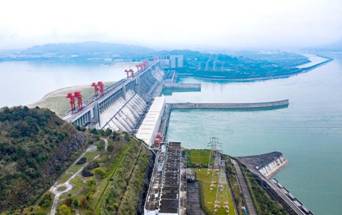
China is the undisputed
global leader in hydroelectricity, commanding approximately
30–31% of total global
hydropower generation capacity. In 2023, China added nearly two-thirds
of the world's new hydropower capacity, solidifying its dominant
position. Globally, hydropower produces about 15% of all electricity,
with China holding the largest share.
Global
Hydropower Landscape
-
Total
Generation: Hydropower accounts for
roughly 15% of global electricity production.
-
Key Players:
Behind China, top producers include Brazil, Canada , the United
States and Russia.
-
Growth Trends:
While China dominates, global growth is slowing due to environmental
constraints on new large projects.
China's
Hydroelectricity Sector
-
Market Share:
China accounts for roughly 29% to over 30% of global hydropower
capacity.
-
Production
Level: In 2022, China produced 1,303
TWh to 1,318 TWh of hydro-electricity.
-
Growth:
In 2023, China added 8 GW of capacity, representing two-thirds of
all global growth.
-
Capacity:
Total installed capacity surpasses 400 GW.
-
Significance:
Hydroelectricity makes up about 15% of China's total energy mix.
Key Trends
-
Declining Growth
Share: Although China still leads, its
share of global capacity additions dropped from nearly 60% in
2001–2010 to 40% in recent forecasts.
-
Rise of Pumped
Storage: Reservoir-based systems held
54.25% of the market in 2025, but pumped-storage is growing rapidly.
-
Ownership:
Approximately 70% of global capacity is publicly owned, even though
private firms operate many plants.
MAJOR PLAYERS
IN CHINA HYDRO ELECTRICITY INDUSTRY
China is the world's
largest producer of hydroelectricity, accounting for over 400GW of
installed capacity and holding roughly one-third of the global total.
The sector is dominated by state-owned enterprises (SOEs) that manage
massive, centralized projects, alongside major manufacturers.
Here are the major
players in China's hydropower generation sector:
Top Power
Generation Utilities
These companies own and
operate the majority of large-scale hydropower assets:
-
China Three
Gorges Corporation (CTGC): As the
owner of the Three Gorges Dam (the world's largest power station)
and other major stations like Baihetan and Xiluodu, CTGC is the
dominant player in China's hydropower industry.
-
China Yangtze
Power Co., Ltd. (CYPC): A listed
subsidiary of CTGC, this company manages the operation of the
"world's largest clean energy corridor" along the Yangtze River,
including Three Gorges, Gezhouba, Xiluodu, and Baihetan.
-
State Power
Investment Corporation (SPIC): One of
the five largest state-owned power generation groups, with a heavy
investment in clean energy, including significant hydropower assets.
-
SDIC Power
Holdings Co., Ltd.: A major investor
and developer of large-scale hydropower projects, particularly in
southwest China.
-
China Energy
Investment Group (CHN Energy): Formed
by the merger of China Guodian and Shenhua, this is the world's
largest power utility in terms of installed capacity, with a
substantial hydro portfolio.
Key Equipment
Manufacturers & Construction
-
POWERCHINA
(Power Construction Corporation of China):
The dominant engineering force, having designed and constructed over
65% of China's medium and large-scale hydropower stations and over
50% of the world's total.
-
Harbin Electric
Corporation (HEC): A leading
manufacturer of large-scale hydro turbines and generators.
-
Dongfang
Electric Corporation (DEC): A major
provider of hydro power plant equipment, contributing to key
projects like the Three Gorges and Baihetan dams.
-
Shanghai
Electric Group Co., Ltd.: A
large-scale state-owned manufacturer involved in the development of
high-capacity hydropower equipment.
-
Voith Hydro
(China) Co., Ltd.: A subsidiary of the
international Voith Group, heavily involved in supplying turbines
for major Chinese projects like the Three Gorges and Wudongde.
Regional and
Provincial Players
-
Sichuan and
Yunnan Provincial Government Entities:
Due to the high concentration of resources in these regions, local
government-backed firms are major stakeholders.
-
Guangdong Energy
Group (formerly Yuedian): A key
regional player focused on clean energy and pumped-storage
projects.
Key Projects
Driving the Market
-
The "Clean
Energy Corridor" (Yangtze River):
Comprises Three Gorges, Baihetan, Wudongde, Xiluodu, Xiangjiaba, and
Gezhouba dams.
-
Jinsha River
Project: A massive, multi-phase
project on the upper Yangtze, including the 16,000 MW Baihetan Dam.
-
Fengning Pumped
Storage Power Station: The world's
largest pumped-storage plant, completed in 2024 to support grid
stability.
The industry is currently focused on expanding pumped
storage capacity to 80 GW by 2027 and developing new mega-dams in Tibet,
such as the Yarlung T
|
