|
CHINA HIGH SPEED TRAIN TECHNOLOGY
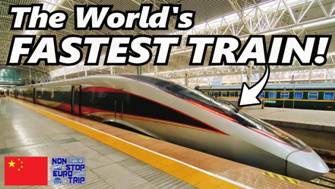
High-speed rail (HSR)
technology comprises advanced, integrated systems allowing passenger
trains to operate at speeds typically over 200–250 km/h (125–155 mph).
It utilizes specialized, dedicated tracks with minimal curves, electric
propulsion, aerodynamic lightweight trainsets, and advanced signalling
(like ETCS/ATC) for safety and high-frequency, sustainable travel, often
serving as a, competitive alternative to short-haul flights.
Key Components of High-Speed
Rail Technology
-
Infrastructure:
Dedicated, continuously welded, rails on high-tolerance concrete
ballast, allowing for smooth, high-speed, movement without gaps.
-
Rolling Stock:
Aerodynamically designed trains constructed from lightweight
materials (aluminium alloys/composites) for speed and efficiency.
-
Propulsion & Power:
Primarily electric, using overhead catenary wires, with some systems
utilizing magnetic levitation (Maglev) to achieve higher speeds.
-
Signalling & Control:
Real-time, automatic train control systems (ATC/ETCS) that allow for
safe operation at high speeds.
-
System Integration:
A holistic approach, where, train design, infrastructure, and
control systems are developed to work in tandem.
Common HSR Systems
-
Wheel-on-Rail: The
traditional, most common HSR, such as Japan's Shinkansen, France's
TGV, and Germany's ICE.
-
Maglev (Magnetic Levitation):
Systems that use magnetic force to lift and propel the train above
the track, eliminating, friction.
Benefits and Challenges
-
Benefits: Increased
travel efficiency, lower carbon emissions per passenger, and
improved connectivity.
-
Challenges:
Extremely high construction costs, land acquisition, and, the need
for, dedicated, grade-separated, corridors.
Examples
-
Asia & Europe:
Leading in HSR technology, with extensive, networks operating, at
speeds up to 355 km/h.
-
Australia:
Planning, to, connect, major, east, coast cities
(Brisbane–Sydney–Melbourne) with high-speed rail
CHINA HIGH
SPEED TRAIN
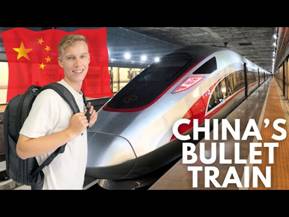
As of early 2026, China
dominates global high-speed rail (HSR) with over 50,000 km of
operational track, accounting for more than 70% of the world's total
. The network is
expanding rapidly, aiming for 70,000 km by 2035, while focusing on
advanced, autonomous, and energy-efficient technologies, far outpacing
international competitors.
China's HSR Status
and Technology
-
Unmatched Network Scale:
China has built more HSR in the last decade than the rest of the
world combined. By the end of 2025, the network exceeded 50,000 km,
largely completing the "Eight
Vertical and Eight Horizontal" network.
-
Technological Advancements:
-
Speed & Efficiency:
Standard operating speeds reach 350 km/h, with advanced,
intelligent manufacturing and high-speed, durable, and reliable
train technology.
-
Next-Gen Systems:
Development of new generation train control systems integrated
with the BeiDou Navigation Satellite System for enhanced
precision.
-
Innovation:
Focus on "60N" rail profile and specialized grinding technology
ensures high-quality wheel-rail interaction.
-
Development Goals:
The 15th Five-Year Plan (2026-30) prioritizes strengthening this
infrastructure, improving connectivity, and upgrading operational
safety and efficiency.
Global HSR Status
and Trends
-
Dominance vs. Other Nations:
Following China, top countries in operational kilometers are Spain,
France, and Germany, though their networks are significantly
smaller.
-
Global Development:
While over 64,000 km of HSR exist globally across 22 countries,
expansion is slow elsewhere due to high costs, as evidenced by
Australia's long-term planning efforts and the limited operating HSR
in the U.S..
-
Technology Transfer & Competition:
China has largely pushed European producers out of its domestic
market and now sets international standards for high-speed rail
equipment.
Key Challenges and
Outlook
-
Financial Sustainability:
While fostering economic development, China's rapid expansion has
led to significant debt ($839 billion) due to low ridership on some
newer lines.
-
Future Trends:
Development is shifting toward even higher speeds, including
magnetic levitation (maglev) technologies, and integrating green,
low-carbon, and smart technologies across the network.
WHY CHINA
LEADS THE WORLD IN HIGH-SPEED TRAIN TECHNOLOGY
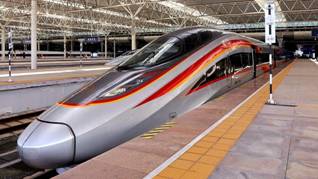
China leads the world
in high-speed rail (HSR) due to unmatched government commitment, massive
long-term investment, and rapid technological innovation, resulting in
over 50,000 km of track by late 2025. Leveraging early technology
transfers, China developed indigenous capabilities, building advanced,
standardized, and extensive networks (eight vertical/horizontal lines)
faster than any other nation.
Key Reasons for China's HSR
Dominance:
-
Strong Government Commitment & Planning:
The Chinese government treats HSR as a national priority within its
"Five-Year Plans" ensuring consistent funding, rapid
decision-making, and minimal legal or bureaucratic delays.
-
Massive Investment & Scale:
Since 2008, China has invested hundreds of billions, constructing a
network that links 75% of cities with over 500,000 people, often
building entire networks in 15 years.
-
Technological Self-Reliance & Innovation:
After initially adopting foreign technology, China mastered it and
now holds intellectual property for core components, including
advanced brake control systems and, soon, the 400 km/h CR450 train.
-
Rapid, Standardized Construction:
Using specialized techniques like prefabricated ballastless tracks,
Chinese engineers build high-quality, durable, and low-maintenance,
high-speed lines in varied environments.
-
Economic Strategy:
HSR functions as a catalyst for regional economic integration and
urbanization, serving as a cornerstone for growth.
-
Government Leadership:
Most important factor for China’s success is the government’s
ability to develop, plan and execute long term visions successfully
on time and on budget. Government policies and expenditures are
focussed on benefiting the country and its people rather than
special interests.
-
Massive Scientific and Engineering Talent.
China produces more STEM students each
year than the US and G7 countries combined. Most of the
world’s top STEM universities and research institutions are in China
As of late 2025, with a
network exceeding 50,000 km, China’s HSR is unparalleled, with plans to
expand further to 70,000 km by 2035.
FUTURE
DIRECTIONS AND DEVELOPMENT
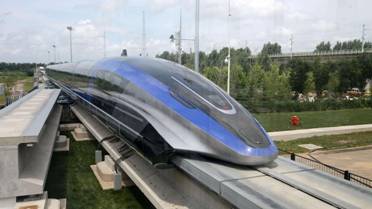
China's high-speed rail
(HSR) development is transitioning from rapid network expansion to a
focus on speed, intelligence, sustainability, and international
integration. Key future directions include
launching the CR450
train to reach 400 km/h commercial speeds by 2026, expanding the total
HSR network to 70,000 km by 2035, and deploying 600 km/h maglev
technology to fill the gap between rail and aviation.
1. Future Network Expansion
(2030–2035)
-
Target Mileage: The
network, which reached 50,400 km by the end of 2025, is projected to
grow to 60,000 km by 2030 and 70,000 km by 2035.
-
Coverage Goals: By
2035, the HSR network will cover all cities with urban populations
exceeding 500,000, ensuring nearly nationwide connectivity.
-
Key Projects: Focus
is on completing the "Eight Vertical and Eight Horizontal"
corridors, alongside new strategic corridors into Xinjiang, Tibet,
and border regions.
-
Integrated Logistics:
Future infrastructure emphasizes connecting rural areas to urban
centers, promoting regional economic balance.
2.
Technological Advancements & The CR450 Program
-
CR450 Trainset: As
part of the 14th Five-Year Plan, the next-gen CR450 EMU is designed
for an operational speed of 400 km/h (compared to 350 km/h
now) and has achieved test speeds of 450 km/h.
-
Improved Efficiency:
The CR450 is designed to be 10% lighter and 20% more
energy-efficient than the current CR400, reducing overall resistance
by 22%.
-
Smart Operations & AI:
Artificial Intelligence is being fully integrated into the network,
using over 200 terabytes of data for AI-driven predictive
maintenance, which has reduced minor track faults by 80%.
-
Advanced Safety:
The network is adopting 4,000+ sensors per train and enhanced
Automatic Train Control (ATC) systems for better stability and
shorter braking distances.
3.
Ultra-High-Speed Maglev and Future Modes
-
600 km/h Maglev:
China is accelerating the commercialization of its self-developed
600 km/h high-speed maglev, aiming to bridge the speed gap between
350 km/h HSR and aviation (800-900 km/h).
-
Test Records: In
late 2025, a superconducting maglev test vehicle achieved a record
700 km/h in just two seconds, showcasing advanced magnetic
levitation technology.
-
Commercial Routes:
Potential routes for 600 km/h maglev include Shanghai-Hangzhou and
Guangzhou-Shenzhen.
-
Vacuum Tube Trials:
Research into low-vacuum tube (Hyperloop-style) transport is
progressing, with tests aiming to achieve speeds of 1,000 km/h.
4. Green
Technology and Sustainability
-
Environmental Impact:
With 76% of China’s railways electrified, HSR is critical for
reducing emissions.
-
Renewable Energy Power:
The network is integrating with China's growing ultra-high-voltage (UHV)
power lines to run trains on green energy, with plans to reduce
transport emissions by 12% by 2050.
-
Eco-Friendly Design:
New trains focus on lowering interior noise by 2 decibels and
improving passenger comfort while optimizing energy use.
5.
International Expansion (Belt and Road)
-
Global Impact:
China is exporting its HSR standards, with projects like the
Jakarta-Bandung high-speed line in Indonesia and the Hungary-Serbia
railway acting as benchmarks.
-
Interconnectivity:
Future plans include linking domestic networks with Southeast Asia,
Central Asia, and Russia, facilitating international travel and
trade.
MAJOR PLAYERS
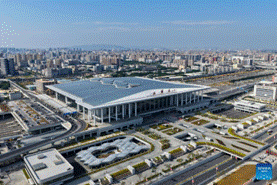 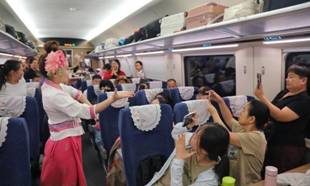
The high-speed rail (HSR)
sector in China is dominated by state-owned enterprises (SOEs) that
manage the entire, massive, and rapidly growing network - comprising
over 50,000 km of operational lines as of late 2025.
The major players are
highly centralized, focusing on constructing, operating, and
manufacturing the "Fuxing Hao" and "Hexie Hao" train series, as well as
advancing next-generation 400-600 km/h technologies.
Primary
Operator & Manager
-
China State Railway Group Co., Ltd. (China
Railway / CR): The sole owner and
operator of the national high-speed railway network, including
infrastructure, trains, and services.
Major
Manufacturers (Rolling Stock)
Major Construction & Engineering
-
China Railway Construction Corporation (CRCC):
A leading SOE heavily involved in building HSR infrastructure,
including domestic projects and international projects like the
Whoosh line in Indonesia.
-
China Railway Engineering Corporation (CREC):
A major state-owned corporation responsible for a significant
portion of HSR infrastructure construction.
Technology & Component
Players
-
China Railway Signal & Communication Corporation
(CRSC): Dominates the signaling and
control software systems for the HSR network.
-
Foreign Partners (Historical/JV):
While China has developed domestic technologies, early development
involved crucial technology transfers from Alstom, Siemens,
Bombardier and Kawasaki.
Key Future Technologies
-
600 km/h Maglev:
Developed by CRRC Qingdao Sifang, with trials conducted to prepare
for future commercial operation.
-
CR450 EMU: A new,
faster, more energy-efficient prototype unveiled in late 2024 by
CRRC Sifang and CRRC Changchun.
The industry's focus is
currently shifting toward upgrading the network (the 8+8 grid plan) and
expanding internationally through initiatives like the Belt and Road, as
seen in projects in Southeast Asia and Europe.
|
