|
CHINA FINTECH
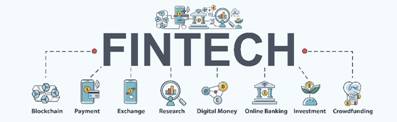 
Fintech means
financial technology, combining digital tools, software, and mobile apps
to deliver and manage financial services such as mobile banking, digital
payments, and online investing.
Key Areas of Fintech
-
Digital
Payments:
Mobile wallets and apps that let you pay instantly using your phone.
-
Online
Banking:
Virtual banks that let you open accounts and manage money without
visiting a physical branch.
-
Investing
and Wealth:
Apps that use automated software or simple interfaces to buy stocks
or grow savings.
Common Examples
-
Payment
Apps:
Services like Apple Pay, Google Pay, PayPal, and Alipay, WeChat Pay,
UnionPay, QuickPass and JD Pay in China.
-
Lending
Platforms:
Online tools for fast peer-to-peer loans.
-
Crypto and
Blockchain:
Digital money and secure online ledger networks
CURRENT STATUS OF FINTECH IN CHINA
China's fintech
market is valued at roughly $59.39 billion, driven by robust digital
payment systems, strict state supervision, and inclusive lending
integration.
The ecosystem
is characterized by regulatory recalibration, an expanding digital yuan,
and a focus on financial stability.
CHINA
FINTECH AND THE BRI AND INTERNATIONALIZATION OF THE RMB
 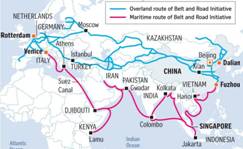
Fintech acts as the core technical engine for the Belt and Road
Initiative (BRI) and yuan internationalization by enabling alternative
payment rails, cutting transaction costs, and bypassing traditional
Western-dominated financial networks.
Key mechanisms include Cross-Border Interbank Payment System (CIPS)
expansion, mBridge blockchain corridors, and Central Bank Digital
Currencies (CBDCs).
Infrastructure and Bypassing Western Rails
-
Alternative
Settlement: Fintech platforms move trade processing off standard
dollar and SWIFT networks, reducing exposure to Western financial
sanctions.
-
Digital
Currencies (e-CNY): The digital yuan provides programmable, instant
settlement capabilities across borders, facilitating direct
bilateral trade along the Digital Silk Road.
-
Blockchain
Integration: Multi-CBDC platforms like the mBridge Project link
participating central banks to execute near-instantaneous
cross-border clearing without correspondent banking middlemen.
Cost Reduction and Efficiency
-
Lower Fees:
Digital channels and direct local currency clearing cut transaction
and foreign exchange conversion costs significantly for BRI
merchants.
-
Supply
Chain Finance: Embedded digital banking and AI-powered risk
management tools streamline trade finance and lending for emerging
markets along the BRI corridor.
Strategic Statecraft
-
Financial
Sovereignty: Digital financial statecraft allows China to project
monetary influence and tie sovereign debt or project milestones
directly to smart contracts.
-
Data
Migration: Off-rail and digital platform transactions obscure
conventional volume visibility, accelerating independent renminbi
adoption in trade invoicing
CHINA FINTECH AND BRICS
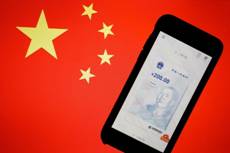 
China uses
fintech within BRICS to build alternative cross-border payment systems
and promote local currency settlement, featuring key initiatives like
BRICS Pay and mBridge. These tools aim to reduce reliance on
Western-dominated rails like SWIFT and the U.S. dollar.
Alternative
Payment and Messaging Systems
-
BRICS Pay:
A decentralized retail and B2B payment framework intended to link
national systems such as China’s CIPS, India’s UPI, and Brazil’s Pix
-allowing transactions without Western infrastructure.
-
CIPS
(Cross-Border Interbank Payment System): China's proprietary system
used to clear and settle cross-border renminbi transactions for
international trade.
Central Bank Digital Currencies (CBDCs)
-
mBridge
Project:
A multi-CBDC platform connecting the central banks of China,
Thailand, the UAE, and Saudi Arabia to facilitate instantaneous
cross-border wholesale settlements.
-
Digital
Renminbi (e-CNY):
China’s state-backed digital currency, which serves as a
technological foundation that Beijing seeks to integrate into
broader BRICS digital settlement discussions
Market Growth and Core Segments
-
Digital
Payments: Retains dominance, accounting for nearly 60% of the market
share via entrenched platforms like Alipay and WeChat Pay.
-
Digital
Currency: The e-CNY (digital yuan) continues its gradual rollout
into tier-2 and tier-3 cities, aligning retail wallets with a
deposit-like framework.
-
Inclusive
Lending: Big data and supply chain finance fill persistent financing
gaps for micro, small, and medium-sized enterprises (MSMEs).
Regulatory and Operational Shifts
-
Tighter
Supervision: Following multi-year crackdowns and restructuring of
major tech giants, oversight has transitioned to routine, stable
compliance.
-
Data
Security: Strict cross-border data transfer rules and localization
mandates govern financial information flows.
-
State
Integration: Major fintech platforms are tightly integrated with
formal financial rails and central bank clearing houses (such as
NetsUnion).
WHY CHINA LEADS THE WORLD IN FINTECH
 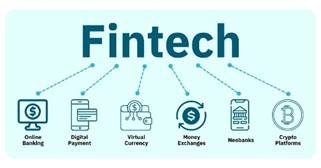
China leads the
world in fintech driven by three key factors: massive mobile adoption,
underserved traditional banking sectors, and early tech giant ecosystem
development.
Mobile Payment Dominance
-
Ubiquitous
platforms like Alipay and WeChat Pay each captured roughly 1 billion
users, leapfrogging traditional credit card infrastructure.
-
Everyday
commerce shifted rapidly to a largely cashless society driven by
surging public demand for QR-code transactions.
Underserved Markets and Innovation
-
Small-to-medium enterprises and ordinary consumers historically
lacked access to traditional bank loans, creating vast demand for
alternative digital credit.
-
Big data,
artificial intelligence, and cloud computing enabled firms to assess
credit risk instantly at near-zero marginal costs.
Patents and Infrastructure
-
China
accounted for over 38 percent of global fintech patent filings
between 2016 and 2025, leading both in volume and structural
quality.
-
State
support for digital financial infrastructure paired with aggressive
private sector scaling cemented long-term dominance.
FUTURE DIRECTIONS AND DEVELOPMENTS OF FINTECH IN CHINA
 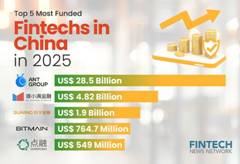
Future
directions for fintech in China focus on artificial intelligence
integration, stringent regulatory compliance, and green digital finance.
The sector is shifting from an unregulated, rapid-growth model toward a
structured, scenario-driven digital ecosystem.
Strategic
Plans and Core Focus
-
Artificial
Intelligence Integration: Deep deployment of large language models
and generative AI to optimize automated risk control, marketing, and
customer service.
-
Enhanced
Governance and RegTech: Implementation of the government's official
blueprint to balance technology innovation with strict data privacy,
anti-fraud measures, and regulatory supervision.
-
Green and
Low-Carbon Finance: Building energy-efficient data centers and
integrating eco-friendly financing frameworks to align with national
carbon-neutrality goals.
Market
Evolution and Applications
-
Inclusive
Rural Finance: Expanding digital banking services and micro-lending
to unbanked or underserved populations in rural regions.
-
Digital
Infrastructure: Deepening the application of blockchain and core
technologies to support secure digital asset management and
internet-native financial markets
KEY FINTECH PLAYERS IN CHINA
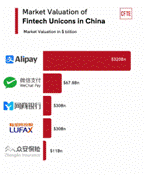  
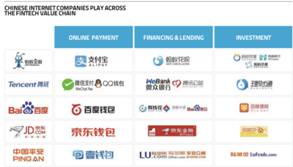
China's major
fintech sector is led by dominant giants such as
Ant Group,
Tencent, and JD Technology. These companies shape the digital economy
through mobile payments, consumer credit, and wealth management.
Market
Leaders
-
Ant Group:
Operates Alipay, the dominant mobile payment platform, alongside
MYbank and consumer lending services like Huabei.
A standalone financial and lifestyle platform by Alibaba with over 1
billion users, widely favored by travellers for its straightforward
setup and broad service range
-
Tencent:
Drives digital transactions via WeChat Pay and QQ Pay, deeply
embedded in its social media ecosystem.
A digital wallet built directly into WeChat, China's top messaging
app, used for both social chatting and scanning merchant QR codes.
-
JD
Technology:
Provides supply chain finance, digital credit, and cloud-driven tech
solutions for businesses and consumers.
A specialized digital wallet tailored for shoppers on the e-commerce
site JD.com
-
Ping An
Group:
Blends traditional insurance and banking with advanced fintech and
insurtech innovations through Ping An Technology.
-
Du Xiaoman
Financial:
Formerly Baidu's financial services arm, specializing in online
micro-lending and credit AI solutions
Alipay
and WeChat Pay handle over 90% of all digital transactions. Together,
they function as "super apps" that nearly every local and visitor uses
for daily life.
|
