|
CHINA ELECTRIC VEHICLES [EV] TECHNOLOGY
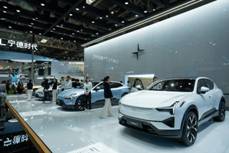 
An electric vehicle [EV] is defined as a car powered by one or more
electric motors, using energy stored in rechargeable battery packs
instead of burning fuel. Unlike traditional cars, they have no tailpipe
emissions, require less maintenance, and are charged by plugging into an
electrical outlet.
Key details
about EVs:
-
Types:
The most common type is the Battery Electric Vehicle (BEV), which is
100% electric. Other types include Plug-in Hybrids (PHEVs), which
combine a battery with a gas engine.
-
Charging:
EVs can be charged at home using a standard socket or dedicated wall
box, or at public fast-charging stations.
-
Benefits:
Lower running costs, zero tailpipe
emissions, instant torque (acceleration), and less maintenance (no
oil changes).
-
Driving Experience:
They are generally quieter and smoother to drive than internal
combustion engine (ICE) vehicles.
-
Range:
While early EVs had limited range, modern EVs often have ranges over
400 km
CURRENT STATUS OF EV IN CHINA
As of early 2026, China is the world's
leading "electro-state," commanding over 60% of global manufacturing
capacity in solar, wind, and battery technologies, alongside rapid
adoption of electric vehicles (>50% of new car sales). Driven by massive
state investment and strategic planning, China dominates the electric
tech stack - from raw material refining to high-speed rail and 4th-gen
nuclear - achieving unparalleled scale and lower costs.
Key Status and
Technological Trends (2026)
-
Clean Energy Leadership:
China holds 60% of global manufacturing capacity in solar, wind, and
battery technology, significantly reducing global prices.
-
Massive Electrification:
The nation is undergoing the largest electrification project in
history, with >50% of new cars sold being electric, alongside
massive investment in grid infrastructure and high-speed rail.
-
Battery & EV Dominance:
China holds a 30% faster development speed in EVs than Western
competitors and dominates battery production, with 65.4% of
high-impact research publications in electric batteries.
-
Grid Technology:
China has made major strides in Ultra-High Voltage (UHV)
transmission to move energy from renewables-heavy regions to coastal
cities.
-
Nuclear Advancements:
China leads in 4th-generation nuclear reactor deployment, estimated
to be 10–15 years ahead of the U.S. in scaling these technologies.
-
Industry Drivers:
State-backed initiatives (e.g., "Made in China 2025") and
investments in semiconductors (SMIC) and smart manufacturing are
designed to ensure self-reliance and global domination in key tech
sectors.
Outlook
Over the next five years, the country will promote the application of
artificial intelligence in the transport sector, and work to advance the
development of smart highways, smart ports, and smart shipping, Liu said
on the sidelines of the annual session of the national legislature.
The country will also promote the development of zero-carbon transport
corridors and stations as part of efforts to boost low-carbon
development of the transport sector, Liu said, adding that China will
step up the application of clean energy transportation equipment such as
new energy vehicles and vessels during the period.
The war in the Middle East conflict that
resulted in the uncertain future of fossil fuel supplies will greatly
increase the demand for EVs and Green energy by the majority of the
countries in the world. China will play a central role in global green
energy transition
China’s state-planned and supported
end-to-end industrial model will continue to foster rapid innovation,
allowing it to compete with or surpass Western peers such as Tesla in
both quality and cost
WHY CHINA’S EV INDUSTRY
DOMINATES THE WORLD
China leads the global electrical industry
and technology through a combination of massive state-backed investment,
unmatched manufacturing scale, and a strategic focus on renewable energy
and electrification. China has heavily subsidized green tech - producing
>60% of the world's solar panels and batteries—while dominating EV
manufacturing through companies like BYD, resulting in significantly
lower costs and rapid infrastructure deployment.
Key reasons for China's
leadership include:
-
Massive State Investment &
Strategy: The
Chinese government has poured hundreds of billions into clean tech,
far exceeding investment from the US and Japan, specifically to
dominate wind, solar, and battery sectors.
-
Economies of Scale & Supply Chain
Control: China
controls a vast, integrated supply chain, particularly for
lithium-ion batteries and solar PV components, allowing for cheaper
production than in the West.
-
Rapid Electrification Policy:
China’s electrical sector is expanding fast, with 28% of its total
energy consumption coming from electricity (higher than the US or
EU). This includes aggressive development of 5G, data centers, and
EV infrastructure.
-
Manufacturing Infrastructure:
Hubs like Shenzhen act as "Asia's Silicon Valley," providing a
massive network of suppliers, tech start-ups, and a large, skilled
STEM workforce.
-
High-Tech Focus ("New Productive
Forces"): China
is focusing on high-tech, AI-driven manufacturing and robotics to
maintain a cost advantage while upgrading its technological
capabilities.
-
Government Leadership:
Most important factor for China’s success is the government’s
ability to develop, plan and execute long term visions successfully
on time and on budget. Government policies and expenditures are
focussed on benefiting the country and its people rather than
special interests.
-
Massive Scientific and Engineering
Talent. China
produces more STEM students each year than the US and G7 countries
combined. Most of the world’s top STEM universities and
research institutions are in China
As of 2023, China added more renewable
energy to its grid than the rest of the world combined, cementing its
role as the dominant player in clean technology and infrastructure.
FUTURE FOCUS OF CHINA EV INDUSTRY
The future development of China’s
electrical industry and technology in 2026–2030 will be defined by a
massive shift toward "green, smart, and secure" systems,
transitioning from rapid, capacity-driven growth to high-quality,
efficient modernization under the 15th Five-Year Plan. Key directions
include the integration of AI into energy systems, massive upgrades to
grid infrastructure, and securing a dominant global position in
renewable technology exports.
1. Power Grid Modernization: The "New
Power System"
-
Massive Investment:
China’s State Grid will invest 4 trillion yuan (approx. US$574
billion) in grid upgrades between 2026–2030, a 40% increase over the
14th Five-Year Plan, aiming to create a "new power system" capable
of supporting high-tech industrial demand.
-
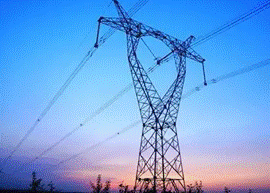
Ultra-High Voltage (UHV)
Expansion: The
focus is on expanding UHV lines to transport electricity from the
resource-rich, sparsely populated west to the energy-hungry eastern
cities, increasing cross-regional capacity by over 30% from 2025
levels.
-
Grid-Forming Energy Storage:
Grid-forming Energy Storage Systems (ESS) will become standard to
smooth out fluctuations from renewable sources (wind/solar),
ensuring grid stability.
-
Smart Grid & Digitalization:
The grid will move toward full digitalization, using AI for
real-time monitoring, automated diagnostics, and predictive
maintenance.
2. Renewable Energy Technology: Shift from
Quantity to Quality
-
Dominance of Renewables:
By 2026, non-fossil energy sources (wind/solar) are expected to
account for 63% of the power mix, with solar capacity surpassing
coal.
-
PV and Wind Synergy:
Future systems will focus on "PV+wind+ESS" (solar+wind+storage),
making renewable energy predictable and stable.
-
High-Density Devices:
Power density of photovoltaics and inverters is expected to increase
by over 40% in the coming years.
-
Off-grid and Microgrids:
Expansion of distributed, local-level energy solutions will
complement the centralized UHV system.
3. AI and "Energy-Plus" Integration
-
AI-Native Energy Systems:
Power generation, grid management, and storage will transition from
"AI-enabled" to "AI-native," with intelligent agents managing
operations to achieve full automation.
-
Unified National Market:
2026 marks the beginning of a stronger, state-guided,
market-oriented power system, with centralized monitoring of
provincial energy behavior.
-
Dual Control of Carbon:
Policies will shift from capping total energy consumption to
controlling total carbon emissions, pushing for higher efficiency
and lower coal reliance.
4. Key Technology Frontiers and Strategic
Focus
-
Next-Generation Energy:
Continued, heavy investment in hydrogen energy and, significantly,
nuclear fusion research.
-
Electric Vehicles (EVs) & Battery
Tech: While the
domestic market shifts towards consolidation (fewer, stronger
players), China is focusing on battery management systems and
expanding exports to become the dominant global supplier.
-
Energy Security and Autonomy:
Self-reliance in core components—such as advanced semiconductor
materials for inverters and high-efficiency solar cells—is
prioritized to mitigate risks from Western restrictions.
5. Global Positioning and Export Strategy
-
Green Tech Export Hub:
With domestic capacity for solar and batteries reaching unparalleled
levels, China is leveraging its $80 billion+ in overseas green
technology investments to dominate global markets.
-
Influence through Standards:
China is setting technical standards for 5G, AI, and smart grid
technology (China Standards 2035), ensuring its technology defines
the global green infrastructure landscape.
CHINA EV GLOBAL AND DOMESTIC MARKET SHARE

China dominates the global electric
vehicle (EV) industry, controlling over 70% of global production and
over 60% of global sales as of 2024-2025
Domestically, Chinese brands hold over 80%
market share, with EV penetration reaching nearly 50% of new car sales.
China also leads in EV technology, particularly batteries and vertical
integration.
China Domestic Market
-
Market Share:
Chinese automakers (OEMs) command over 80% of their home market.
-
Sales & Penetration:
In 2024, China sold approximately 11–12.9 million EVs. As of 2025,
over 50% of all passenger vehicles sold in China are electric.
-
Key Players:
BYD
dominates with over 34% market share, followed by companies like
Wuling and other local brands.
Global Market Share & Exports
-
Production Dominance:
China produces more than 70% of the world's electric cars.
-
Sales Share:
Chinese brands accounted for 62%–69% of global EV sales in 2024.
-
Exports:
Over 1.25 million vehicles were exported in 2024, with significant
market capture in Southeast Asia and Latin America.
-
Regional Strength:
In 2024, Chinese brands held 85% of the EV market in Brazil and
Thailand.
EV Technology Leadership
-
Battery Technology:
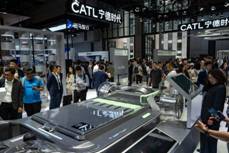
China controls 37.9% of the global EV battery market. Companies like
CATL lead in battery
technology, including 5-minute charging and
LFP battery
innovations.
-
Innovation Speed:
Chinese EV companies develop and release new models 30% faster than
Western counterparts (1.6-year average vehicle age vs. 5.4 years).
-
Supply Chain:
China holds substantial advantages in raw material processing and
vertical integration, controlling the majority of the battery supply
chain.
Key 2026 Trends
-
Growth:
China is projected to generate over $533 billion in EV revenue in
2026.
-
Expansion Barriers:
Despite high tariffs [e.g., 100% in the US, up to 35.3% in the EU],
Chinese manufacturers are establishing local production in Southeast
Asia, Brazil and BRI countries to circumvent barriers
Key Market Share Statistics [2025-2026]:
-
Electric
Vehicles (EVs):
Accounted for over 70% of global production and 67% of global sales
in 2024.
-
EV Batteries:
Controls nearly 85% of global production capacity.
-
Clean Energy:
Chinese companies hold around 75% of global clean energy patent
applications.
-
Consumer
Electronics: Produces
70% of global smartphones and 60% of laptops.
-
Electrical
Equipment: Holds a
leading share in manufacturing, with high-tech components like
semiconductors rapidly growing in market share.
-
Power
Generation: Produces
over 10,000 TWh annually, with 53.9% of its capacity in renewables
(as of 2023).
China's dominance is driven by integrated
supply chains, massive scale, and high-tech investment, holding a 33%
share in consumer electronics and machinery exports as of 2025. Despite
challenges like geopolitical tensions and rising labor costs, China
remains the world's leading manufacturer in this sector.
MAJOY PLAYERS IN CHINA’S EV AND CONSUMER
ELECTRONICS INDUSTRY

China's electrical and technology industry
is dominated by massive, vertically integrated firms driving innovation
in 5G, AI, EVs, and consumer electronics. Top players include Huawei
(telecom/tech), BYD (EVs/batteries), CATL (battery tech),
Xiaomi (IoT), and BOE (displays). These giants, alongside
suppliers like Foxconn, define global hardware and smart device
manufacturing.
Here are the major players categorized by
sector:
1. Consumer Electronics,
Telecommunications & AI
-
Huawei:
A leading global provider of telecom infrastructure, 5G technology,
and consumer devices.
-
Xiaomi:
A major consumer tech firm focusing on smartphones, AI, and IoT
devices.
-
Lenovo:
One of the world's largest PC manufacturers and a leader in
server/data center technology.
-
DJI:
Dominates the global drone and aerial imaging market.
-
Oppo / Vivo:
Leading smartphone manufacturers.
-
TCL
/
Skyworth:
Major producers of TVs and smart appliances.
2. Electric Vehicles (EV) and Battery
Technology
3. Electrical Equipment, Components &
Semiconductor
4. Manufacturing & ODM
Key industrial hubs powering these
companies include Shenzhen (consumer tech), the Greater Bay
Area (innovation), and Shanghai (EVs/semiconductors).
|
