|
CHINA CLOUD COMPUTING
Cloud computing is the
on-demand delivery of IT resources - servers, storage, databases, and
software—over the internet with pay-as-you-go pricing. Instead of owning
physical data centers, companies rent access to these services from
providers, enabling faster innovation and lower, flexible operating
costs.
Key Aspects of Cloud
Technology
Benefits and Use
Cases
Cloud computing offers high scalability, allowing businesses to scale
resources up or down, improve disaster recovery, and enable
collaboration. It powers modern technologies like AI, machine learning,
and IoT, transforming business operations through agility and efficiency
Cloud
Computing in China

China’s cloud computing
and technology sector is expanding rapidly, projected to reach USD 61.19
billion in 2026, driven by intense state-backed digital transformation,
AI-native
workloads, and the "East Data West Computing" project.
China leads the world
in cloud infrastructure growth, with major providers like Alibaba and
Huawei dominating the domestic market, while actively investing in
Southeast Asia.
Key Status & Developments
-
Market Growth &
Scale: The Chinese cloud computing
market is experiencing high growth, with the market size estimated
to grow from $50.47 billion in 2025 to over $61 billion in 2026,
representing a 21.25% CAGR.
-
Infrastructure &
Strategy: The "East
Data West Computing" project is a central, nation-wide
initiative, shifting heavy data center workloads from the coastal
east to the energy-rich west.
-
Market Leaders:
Alibaba Cloud, Huawei Cloud, Tencent Cloud, and Baidu AI Cloud are
the dominant players, accounting for a massive share of the market.
-
Price Wars &
Competition: Intense competition,
fueled by state-backed enterprises (SOEs) and private firms, has led
to significant price cuts in 2023-2024, squeezing margins but
accelerating cloud adoption.
-
Technological
Focus: While strong in Infrastructure
as a Service (IaaS), the market is pushing towards AI-native
services, edge computing, and green, efficient data centers.
-
Global
Positioning: Some analysts indicate
China is outpacing the US in
cloud and edge computing
research and deployment, although, as of early 2026, it
is seen as still trailing in
top-tier, frontier AGI chip
capabilities.
-
Expansion:
Chinese tech giants are expanding their footprint in Southeast Asia,
providing services in Indonesia, Thailand, and Malaysia.
Challenges & Future Trends
-
Sector
Divergence: While public cloud grows,
there is a high reliance on private cloud (expected to reach 42% by
2025).
-
Energy
Constraints: The massive data center
expansion has raised national electricity consumption by 31%
year-on-year, pushing for more efficient cooling and green energy
solutions.
-
AI Ambition:
With an estimated $98 billion in AI capital expenditure for 2025,
the country is rapidly integrating AI into manufacturing and daily
life.
Why China Dominates the World in Cloud
Computing

China leads in cloud
computing and technology by leveraging massive state-driven investment
(e.g., $1.4 trillion in tech initiatives), unparalleled 5G
infrastructure, and rapid AI integration. Major players like
Alibaba Cloud,
Huawei Cloud, and
Tencent Cloud dominate,
supported by the "East
Data West Computing" project, which connects eastern
processing hubs with western resource centers.
Key Factors Driving
China's Cloud Leadership:
-
Massive
Infrastructure Investment: China is
building a nationwide computing network, ranking second globally in
total computing power. The "East Data West Computing" initiative
aligns with this, aiming to revolutionize data processing.
-
5G and
Connectivity: As of late 2023, China
had over 3.377 million 5G base stations, providing the necessary
infrastructure to power cloud-based AI and edge computing services.
-
Strategic
Government Support: Beijing has
committed over $1.4 trillion to tech, treating cloud and AI as
essential national infrastructure. This includes promoting a
"national agglomeration zone" for the digital economy.
-
Rapid AI
Integration & Self-Sufficiency: In
response to U.S. export restrictions, China invested $98 billion in
AI in one year alone, building its own server farms, silicon, and AI
models to ensure independence.
-
Market Scale &
Ecosystem: Alibaba and Tencent have
created a parallel tech universe, expanding rapidly into Southeast
Asia, the Middle East, and Latin America, offering both cloud
services and AI-driven analytics.
With over 60% of IT
workloads projected to be in the cloud by 2025, China's focus on
integrating cloud with traditional manufacturing and finance reinforces
its position as a global leader.
Future Directions and Development

China's cloud computing
market is rapidly evolving toward a hybrid model, with significant
growth in
sovereign cloud and
AI integration, driven by
government-led
digital transformation
initiatives. Future developments focus on
localizing core hardware,
expanding
cross-regional data center hubs,
and enhancing
security standards, with
public cloud expanding at over 30% annually.
Key Future
Directions and Trends:
-
Hybrid Cloud
Dominance: By 2025, while public cloud
grows, a substantial portion of the market (expected to reach 42%)
will remain in
private/hybrid clouds, driven by data security concerns and the
need for customized, on-premise infrastructure.
-
Government-Driven Infrastructure ("Eastern Data, Western
Computing"): The government is
promoting a massive project to shift computing needs from the
developed eastern coast to western regions, utilizing telecom
operators like China Telecom and China Mobile to build robust data
center networks.
-
AI and Advanced
Computing Integration: Cloud services
are becoming the primary backbone for AI adoption, with platforms
increasingly offering integrated AI and big data tools to support
industrial digitalization.
-
Security and
Localization: Strict regulations
(e.g., GB/T 31168-2023) require high-level, government-approved
encryption, particularly for state-related entities. This promotes
the development of "sovereign cloud" solutions.
-
Industry-Specific Cloud Solutions:
Focus is shifting toward specialized services for sectors like
manufacturing, government, and finance, moving away from generic
infrastructure services to high-value, industry-specific PaaS
(Platform as a Service) and SaaS (Software as a Service).
Development Challenges and Focus Areas:

-
Talent
Development: Long-term strategies
involve building specialized cloud and AI research centers in
universities to bridge the talent gap.
-
Hardware
Independence: A critical focus is
reducing reliance on foreign hardware by developing domestic,
high-performance chips and storage devices.
-
Multi-Cloud
Management: As enterprises adopt
diverse cloud services, there is a rising need for sophisticated
tools to manage, secure, and integrate across different vendors.
The market is expected
to remain highly competitive, led by domestic giants like Alibaba Cloud,
Huawei Cloud, and Tencent Cloud, with increasing participation from
state-owned telecom providers
Alibaba Cloud dominates
China's cloud infrastructure market with a 33%–36% share as of early
2025, leading a sector driven by rapid AI integration and a 24% YoY
growth rate in Q3 2025. Huawei Cloud (16%–18%) and Tencent Cloud
(9%–10%) follow as key competitors, while the market, expected to exceed
1 trillion yuan, heavily favors domestic providers.
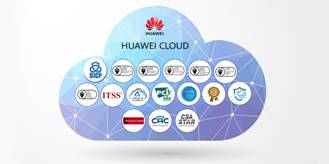
Key Players and Market Share (Cloud
Infrastructure, 2025)
Market Trends and
Dynamics
-
AI Surge:
The Chinese AI cloud service market is expected to more than double
in 2025 to 51.8 billion yuan.
-
Growth Drivers:
The market is driven by AI demand, with Q3 2025 showing a 24%
year-on-year growth to $13.4 billion.
-
Segment Mix:
In 2025, public cloud held 62.55% of the revenue share, with IaaS
accounting for 67.4%.
-
Policy Support:
Strong government backing for digital infrastructure, data
sovereignty, and smart city projects reinforces domestic, high-tech
dominance
China’s cloud computing
market is the world's second-largest and fastest-growing, with, as of
2026, major players like Alibaba (approx. 4% global share, 4th largest),
Huawei (16% domestic share Q3 2025), and Tencent (10% domestic share Q2
2025) leading, driven by state-backed AI and digital transformation. The
market is rapidly expanding, with 2026 projections reaching USD 61.19
billion.
Key Aspects of
China's Cloud Computing Market (2025-2026):
-
Global Market
Share: Alibaba Cloud has maintained a
consistent ~4% share of the global cloud market, consistently
ranking as a top-five global provider, with CRN www.crn.com noting
its 4% share in Q4 2025.
-
Domestic Market
Leadership: In China, the market is
dominated by "CN Cloud" players. As of Q3 2025, the market is led by
Alibaba, followed by Huawei (16% share), and Tencent (9% share).
-
Rapid Growth &
AI Focus: The market is expected to
grow at a 21.25% CAGR from 2026 to 2031. Generative AI and
"state-backed digital transformation" are major drivers, with AI
cloud services in China growing by 55%.
-
Regional
Strategy: The "DataCube
Research Eastern Data, Western Computing" program is shifting
high-density data centers to western provinces to save energy,
Mordor Intelligence reports.
-
Market
Structure: While public cloud is
dominant, there is a strong demand for hybrid and private cloud
solutions, partly due to regulatory compliance, note Mordor
Intelligence and
McKinsey & Company.
Major Cloud Players in China

China's cloud computing
market is dominated by local, "national champion" firms—primarily
Alibaba Cloud, Huawei Cloud, Tencent Cloud, and
Baidu AI Cloud—which collectively hold the majority of market share.
These providers focus on AI-driven cloud services, hybrid cloud
solutions, and infrastructure supporting government and enterprise
digital transformation, with Alibaba maintaining the largest share.
Top China Cloud
Computing Players:
-
Alibaba Cloud
(Aliyun): The market leader with roughly 34% share, providing
comprehensive services like Elastic Compute Service (ECS), ApsaraDB,
and strong AI capabilities.
-
Huawei Cloud:
The fastest-growing major player (approx. 19% share), known for its
hybrid cloud solutions, strong enterprise focus, and self-developed
Kunpeng & Ascend processors.
-
Tencent Cloud:
Holds around 16% share, specializing in gaming, media, and social
media solutions, and is deeply integrated with the WeChat ecosystem.
-
Baidu AI Cloud:
Focuses heavily on AI-driven services, autonomous driving, and smart
city solutions.
-
State-Owned Providers:
China Telecom Cloud, China Unicom Cloud, and China Mobile Cloud are
major players, particularly in the government and public sector, due
to their strong infrastructure.
Key
Trends & Technology:

-
AI Dominance:
Large language models and AI cloud services are driving market
growth, with a focus on generative AI and agentic AI.
-
Geopolitical
Impact: Due to security and regulatory
factors, domestic providers dominate, with foreign firms like AWS
and Azure having a minimal footprint.
-
Global Expansion:
While focused on China, top players like Alibaba and Huawei.
|
