|
CHINA BRAIN-COMPUTER
INTERFACE [BCI]
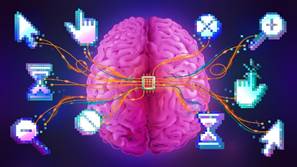
Brain-computer
interface (BCI) technology establishes a direct, real-time communication
pathway between neural activity and external devices, enabling users to
control computers or prosthetic limbs using only their thoughts. Using
biosensors (like EEG or implants) and AI decoders, BCIs translate brain
signals into digital commands, primarily restoring autonomy to
individuals with paralysis or neurological disorders.
Key Aspects of BCI Technology:
-
How it Works:
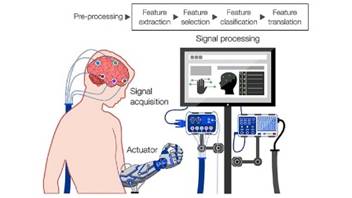
BCI systems consist of three main components: a sensor to detect
neural signals (EEG for non-invasive, electrodes for invasive), an
amplifier to boost signals, and an AI-powered decoder to interpret,
for example, motor intentions or thought patterns.
-
Types of
Interfaces:
-
Non-Invasive: Headsets or caps
with EEG electrodes sit on the scalp to detect brain activity.
-
Invasive/Partially Invasive:
Electrodes are surgically implanted on or into the brain for
higher resolution signals, such as
Neuralink or ECoG devices.
-
Advanced
Chips: Emerging devices like the
BISK chip offer high-bandwidth, wireless recording from
thousands of neurons to treat conditions like epilepsy and motor
impairment.
-
Key
Applications:
-
Medical
Rehabilitation: Restoring mobility
in paralysed patients via robotic limbs, restoring vision, and
assisting in communication for conditions like ALS.
-
Cognitive &
Sensory: Research into improving
memory, treating ADHD, and providing sensory feedback to
amputees.
-
Emerging
Uses: Potential applications in
gaming, education, and, in some cases, military use for
hands-free drone control.
Current
Trends & Limitations:
While groundbreaking, the technology is still largely experimental.
Challenges include the need for, or risk associated with, surgical
implantation for high-fidelity signals, as well as the need for better
algorithms to accurately decode the "silent monologue" in the human
head. Recent developments show successful decoding of thoughts with up
to 74% accuracy.
CURRENT
STATUS BRAIN-COMPUTER INTERFACE TECHNOLOGY IN CHINA
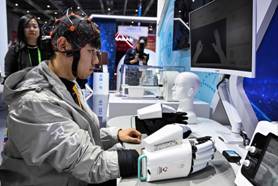
China is rapidly
accelerating its Brain-Computer Interface (BCI) technology, achieving
over 50 flexible, invasive, and non-invasive clinical trials by early
2026, positioning itself as a major rival to U.S. companies like
Neuralink. Key focuses include motor decoding, language synthesis, and
stroke rehabilitation, with strong government support accelerating
commercialization.
-
Clinical
Success: Chinese BCI companies, such
as NeuroXess, have successfully enabled quadriplegic patients to
control computer cursors through thought, performing over 54 implant
surgeries by Feb 2026.
-
Key
Advancements: Researchers have
demonstrated high-throughput implantable flexible BCI systems for
real-time Chinese language synthesis and completed in-orbit tests of
wireless BCI.
-
Government &
Industry Support: A 11.6 billion yuan
($1.7 billion) fund was unveiled to support the sector in late 2024.
Beijing Tiantan Hospital established the first BCI clinical and
translational ward to accelerate trials.
-
Target Areas:
Development focuses on medical applications (stroke rehab,
paralysis) and extending into consumer/industrial areas like
wearable devices and brain-controlled robots.
-
Industry
Players: In addition to firms like
NeuroXess, major tech players are integrating AI with neuroscience,
with over 20 BCI startups currently operating in China.
The industry is moving
quickly from "science fiction" to clinical reality, aiming to lead in
both implantable and non-invasive technologies within the next few
years.
FUTURE
DIRECTIONS AND DEVELOPMENT OF BRAIN-COMPUTER INTERFACE IN CHINA
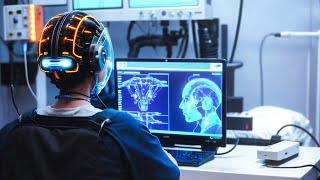
China is accelerating
its Brain-Computer Interface (BCI) technology development through 2030,
targeting breakthroughs in invasive and non-invasive devices,
AI-integrated algorithms, and high-performance neural chips. With strong
state backing, key goals include establishing 2-3 globally competitive
enterprises, promoting medical (rehabilitation) and industrial
applications, and creating a secure, standardized industry ecosystem by
2030.
Future
Highlights (2025–2030)
-
Key Milestones:
By 2027, China aims for breakthroughs in core components
(electrodes, chips) and 3-5 approved medical products. By 2030, it
plans for large-scale application, serving over 100,000 patients
annually and creating a multi-billion RMB industry.
-
Technological
Focus:
-
Invasive vs.
Non-invasive: Rapid advancement in
both, including
interventional BCI
for restoring motor functions and closed-loop systems.
-
AI
Integration: Utilizing artificial
intelligence for faster signal processing and decoding.
-
Neural
Chips: Developing high-density,
low-power EEG acquisition chips.
-
Application
Areas:
-
Healthcare:
Focus on treating neurological disorders, rehabilitation
robotics, and brain-controlled prosthetics.
-
Consumer &
Industry: Expanding into gaming,
education, and, in the long term, industrial safety and
efficiency.
-
Industrial
Ecosystem & Governance:
-
Strategic
Clusters: Building 2-3 major
industry clusters, specifically in regions like Shanghai and
Guangdong.
-
Standards &
Ethics: Establishing national
standards for BCI devices, with the first, focused on
medical-grade devices, taking effect in January 2026.
-
Security:
Strengthening ethical, privacy, and data security frameworks to
manage brain data.
China's brain-computer
interface (BCI) market is rapidly expanding, with a market size of 3.2
billion RMB in 2024, projected to grow at an annual rate of 20% to reach
~5.58 billion RMB by 2027
The sector is driven by
strong government policy, a focus on non-invasive tech (82% of current
market), and rapid development of invasive, medical-grade devices.
MARKET
DYNAMICS AND KEY DATA

-
Market Growth:
The market is experiencing high growth, with a 18.8% year-on-year
increase in 2024 and projected growth rates of around 20% in the
coming years.
-
Segment Share:
Non-invasive BCI devices (wearables) currently hold the dominant
market share, accounting for about 82% of the total market, while
invasive, implanted BCI technology is expected to gain significant
traction, reaching 25% by 2027.
-
Government
Focus: China has formally designated
BCI as a strategic sector, aiming to develop a full supply chain and
globally competitive firms by 2030.
-
Leading Regions:
Beijing, Guangdong, Tianjin, and Zhejiang are the top regions for
BCI patents and company concentration.
-
Key Players &
Developments: Major Chinese firms such
as BrainCo,
NeuCyber,
Neuracle Technology,
and
NeuroXess are
competing in the field.
StairMed, an
invasive, electrode-based startup, is a key player, with other firms
like NeuroXess focusing on surface-based implants.
Regional and
Global Context
-
Global Position:
China is a leading player in the Asia-Pacific BCI market, which is
considered the fastest-growing region.
-
Market Drivers:
The growth is driven by advancements in medical applications, such
as neural, bionic, and rehabilitation devices, coupled with a large
patient base and strong government investment.
MAJOR
BRAIN-COMPUTER INTERFACE PLAYERS IN CHINA

China's brain-computer
interface (BCI) industry is rapidly accelerating, driven by startups
like
NeuroXess,
BrainCo, and
StairMed, aiming
to rival U.S. leaders with both invasive and non-invasive technologies.
Key players focus on clinical trials for medical rehabilitation (e.g.,
controlling bionic arms), with strong support from state policies and
investors like Sequoia China.
Key Players
in Chinese BCI Technology:
-
NeuroXess
(脑虎科技):
A major player focusing on implantable, flexible, high-bandwidth
electrode interfaces, positioning itself as a top competitor to
Neuralink.
-
BrainCo
(强脑科技):
Specializes in non-invasive BCIs, particularly wearable devices for
health and education, and bionic limbs, with significant market
share and funding.
-
StairMed
Technology (阶梯医疗):
Focuses on invasive, ultra-flexible, semi-invasive implants, with
successful human trials initiated in 2025.
-
Neuracle
Technology (脑联泰康):
Develops both invasive and non-invasive BCI systems, with focus on
clinical rehabilitation.
-
Gestala:
A newer startup utilizing ultrasound-based, non-invasive BCIs for
treating conditions like chronic pain and depression.
-
Zhiran Medical
(至然医疗):
Specializes in high-performance flexible electrodes for long-term
implantation.
-
Other Key
Startups:
Include
Flexolink (柔灵科技),
NeuralMatrix (北脑科技),
ECon (念通智能),
and Bo Rui Kang Tech.
-
Research &
Institutional Backing: Key
institutions include the Tianjin Brain Science Center, Tsinghua
University, and hospitals like Beijing Tiantan Hospital, which are
crucial for clinical trials.
Industry
Trends:
-
Dual Approach:
Development splits between invasive, high-precision implants and
non-invasive, consumer-oriented, or medical-grade wearables.
-
Market Growth:
The industry is expected to grow at 20% annually, with a focus on
medical applications like stroke rehabilitation and controlling
artificial limbs.
-
Policy Support:
China aims to foster "world-class" BCI firms by 2030, with 2026
expected to be a major financing year for the sector.
|
