|
CHINA BLOCKCHAIN

Blockchain technology is a decentralized, distributed, and public
digital ledger used to record transactions across many computers,
ensuring the data cannot be altered retroactively. It secures data
through cryptographic hashing, making it tamper-resistant and
transparent. It allows peer-to-peer, trustless transactions without
central authorities.
Key Features of Blockchain Technology
-
Decentralization:
Unlike traditional databases, there is no central authority (like a
bank) managing the ledger; instead, it is shared across a network of
computers (nodes).
-
Immutability:
Once data is added to a block and linked in the chain, it is nearly
impossible to change or delete.
-
Cryptographic Security:
Each block contains a unique hash (code) of the previous block,
creating a secure, chronological chain.
-
Transparency:
All participants (nodes) in the network have access to the same
data, ensuring a single source of truth.
-
Consensus Mechanism:
Transactions are validated through agreement among participants
rather than a third party.
How Blockchain Works
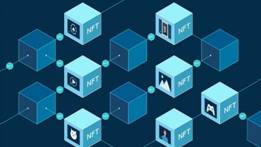
-
Transaction:
A transaction is requested and broadcast to a P2P network.
-
Validation:
Network nodes validate the transaction using algorithms.
-
Grouping:
Validated transactions are combined into a "block".
-
Hashing:
The new block is given a unique cryptographic hash and linked to the
previous block.
-
Finalization:
The block is added to the chain, and the update is distributed
across the network.
Common Uses
-
Cryptocurrencies:
Enabling digital assets like Bitcoin and Ethereum.
-
Smart Contracts:
Self-executing contracts with terms directly written into code.
-
Supply Chain Management:
Tracking products for authenticity and transparency.
-
Digital Identity:
Securely verifying user identity without central storage.
Blockchain is considered a foundational technology for Web3 and
distributed applications.
CURRENT STATUS OF BLOCKCHAIN TECHNOLOGY IN
CHINA

As of early 2026, China
is aggressively advancing state-backed blockchain technology while
strictly prohibiting cryptocurrency, positioning it as a core national
infrastructure for industrial, financial, and judicial efficiency
. The government is
pushing Web3.0 development, integrating blockchain for supply chain,
data exchange, and the
digital yuan (e-CNY).
Key aspects of China's
blockchain status include:
-
State-Driven Development:
Blockchain is a central pillar of China’s national strategy, with
massive investments in permissioned, non-public blockchains, notably
the Blockchain-based Service Network (BSN).
-
Digital Yuan (e-CNY) Expansion:
As of November 2025, the e-CNY recorded over 3.48 billion
transactions, marking it as the world’s largest central bank digital
currency experiment, with potential for a full-scale, nationwide,
and international launch.
-
Industrial Application:
The technology is actively used to streamline supply chain finance,
such as the BCTrade platform, which has processed over 1 trillion
yuan in trade finance.
-
Judicial & Regulatory Tech:
Blockchain is utilized for "smart courts" to ensure immutable
digital evidence storage, as well as by regulators for monitoring
transaction data.
-
Prohibition of Public Crypto:
Despite embracing the technology behind it, China maintains a strict
ban on decentralized, public cryptocurrencies.
-
Key Initiatives:
Key focus areas include
digital currency, decentralized identification, and cross-border
trade finance.
-
Challenges:
Strict regulations on data, security, and cryptography present high
compliance costs for adopting firms.
WHY CHINA LEADS THE WORLD IN BLOCKCHAIN
China leads in
blockchain technology primarily due to high-level state prioritization,
treating it as a national strategic imperative to drive digital
transformation across finance, industry, and governance. By promoting
the
Blockchain-based Service Network
(BSN), fostering extensive R&D, and implementing centralized
regulatory frameworks, China encourages rapid, large-scale,
enterprise-level adoption rather than focusing on decentralized
cryptocurrency.
-
Top-Down National Strategy:
President Xi Jinping identified blockchain as a crucial breakthrough
for independent innovation. It is officially integrated into
long-term strategic goals for national digital infrastructure.
-
Blockchain-based
Service Network (BSN):
China developed the BSN as a "one-stop shop" for deploying
blockchain applications, designed to make development cheaper and
more efficient while ensuring interoperability across different,
mainly permissioned, chains.
-
Focus on Enterprise & Utility:
Unlike many countries focused on public cryptocurrencies, China
emphasizes "consortium" or permissioned blockchains. This allows
state-controlled, efficient, and secure application in industries
like supply chain, e-commerce, and digital payments.
-
China's Blockchain Market:
Valued at USD
1.5 billion in 2024, is projected to grow at a 91.4% CAGR to reach
USD 71.9 billion by 2030, driven by rapid adoption in supply chain,
finance, and government sectors. China currently holds a
significant global position, accounting for 22% of global blockchain
companies and over 60% of original patents
-
High Research & Patent Output:
China leads globally in blockchain research papers and patents,
largely driven by tech giants like Alibaba and state-backed research
initiatives. China graduates more STEM students each year than the
US and EU combined.
-
Central Bank Digital Currency (CBDC):
The rapid development and testing of the digital yuan (e-CNY)
demonstrate practical, large-scale implementation of blockchain
technology.
-
Regulatory Control &
Standardization:
China has created a, legal framework (including encryption laws)
that ensures security and alignment with state standards, often
prioritizing "controllable" blockchain, infrastructure over fully
decentralized models.
This approach allows
China to leverage the benefits of blockchain efficiency while
maintaining state control and, ensuring that digital tools fit within
their broader, centralized digital economy framework.
FUTURE DIRECTIONS AND DEVELOPMENT OF
BLOCKCHAIN IN CHINA

China is aggressively
pursuing a state-backed, centralized approach to blockchain technology,
pivoting from early experimental stages to systematic, large-scale
deployment to bolster its digital economy and infrastructure. While
strictly banning cryptocurrency,
Beijing aims to become
the world leader in blockchain by 2025–2030, leveraging permissioned
systems, the Blockchain-based Service Network (BSN), and the digital
yuan (e-CNY) to enhance industrial efficiency and national data
sovereignty.
Future Directions (2026–2030)
-
National Data Infrastructure
Foundation:
Blockchain is now core to China's national data strategy, with an
estimated $54.5 billion in annual investment aimed at building a
unified national data market by 2029.
-
"Blockchain Plus" Integration:
The government is pushing to merge blockchain with AI, Big Data, and
IoT to create smart cities, optimize industrial chains, and enhance
"social credit" systems.
-
International "Digital Belt and
Road": The BSN,
particularly BSN Spartan, is expanding into the Middle East, Africa,
and Southeast Asia to provide a Chinese-standard digital backbone
for trade.
-
Regulatory Focus on RWA:
While banning speculative crypto, China is developing a legal
framework for Real-World Asset (RWA) tokenization to facilitate
secure digital finance, a significant step in the 2026 regulatory
landscape.
Key Application Areas
-
Cross-Border Payments (mBridge):
Project mBridge—a collaborative CBDC platform involving China,
Hong Kong, Thailand, and the UAE—reached a "Minimum Viable
Product" (MVP) stage in 2024, processing significant
cross-border, non-dollar, payments to challenge existing
international settlement systems.
-
Logistics and Supply Chain Finance:
Using permissioned chains for anti-counterfeiting, traceability,
and paperless, real-time settlement in logistics, particularly
in port shipping and agricultural supply chains.
-
Government Services and Data Sharing:
Implementing blockchain to secure data exchange across
departments and regions, reducing, fraud, and improving
administrative efficiency.
-
Green
Energy/Carbon Tracking:
Utilizing distributed ledger technology (DLT) for monitoring
carbon credits and managing green energy initiatives.
-
Supply
Chain & Logistics:
Major adoption for product authentication and traceability.
-
Finance (BFSI):
High adoption in trade finance and cross-border payments.
-
Digital Economy:
Integration with AI for smart cities and the digital yuan (e-CNY)
initiative.
Development Strategy and Characteristics
-
"One Chain, One Network, One
Platform": A
strategy focusing on creating a secure, independently controlled
"next-generation" blockchain, with massive, scalable,
high-performance, cross-chain-enabled infrastructure.
-
Permissioned "Chinese
Characteristics":
Unlike Western decentralized models, Chinese blockchain applications
prioritize, mandatory real-identity registration, state content
monitoring, and the ability to roll back transactions.
-
Standardization and Talent:
China is heavily influencing international standards bodies (ISO,
ITU) and has established initiatives to train 500,000+ blockchain
professionals.
-
Rise of "Boring" Blockchain:
By 2026, the focus has shifted from high-hype, consumer-driven
crypto to industrial-scale adoption in supply chain finance and
trade, prioritizing efficiency over speculation.
Summary Timeline
-
2024–2026 (Phase 1):
Focus on piloting standardized protocols and unified, secure
identity systems in key industries.
-
2027–2028 (Phase 2):
Scaling of successful pilots across major urban centers and
inter-regional networks.
-
2029 (Phase 3):
Full operational status of a national, integrated blockchain-powered
data infrastructure.
-
2030–2035:
Deep, seamless integration with AI and IoT, with a comprehensive,
"world-leading" ecosystem by 2035.
China's blockchain
landscape is dominated by tech giants (BATX: Baidu, Alibaba, Tencent,
Xiaomi), state-owned enterprises (China Mobile, UnionPay), and
specialized platforms like BSN, focusing on enterprise applications,
supply chains, and finance, largely separated from public cryptocurrency
markets
KEY PLAYERS IN BLOCKCHAIN TECHNOLOGY AND
DEVELOPMENT IN CHINA

Key players prioritize
infrastructure for secure, permitted, and regulated DLT (Distributed
Ledger Technology).
Key Technology Giants (BATX & Others)
-
Alibaba
& Ant Group: A leader in blockchain patent filings, using it for
supply chain management, healthcare, and finance.
-
Tencent:
Focuses on blockchain applications for digital identity,
intellectual property, and enterprise solutions.
-
Baidu:
Develops large DLT platforms, with a focus on fintech and
trust-based blockchain technologies.
-
Huawei:
Involved in blockchain-as-a-service (BaaS) and integrating
blockchain into cloud infrastructure.
-
WeBank:
A major player under Tencent that developed Fisco Bcos, a top
open-source blockchain platform in China.
State-Owned & Institutional Players
Specialized Blockchain Firms
-
NEO:
Often referred to as China's original public chain, focusing on
smart contracts and digital assets.
-
OriginTrail:
Specializes in supply chain integrity and data interoperability.
These players are
developing a "Chinese-style" blockchain ecosystem that emphasizes
security, compliance with national data standards, and government
oversight.
|
