|
CHINA BATTERY TECHNOLOGY
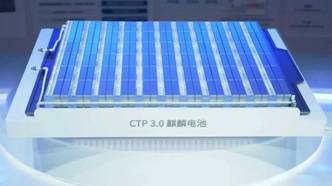
The
battery industry encompasses the design, manufacturing and recycling of
electrochemical energy storage devices, driven by surging demand for
electric vehicles (EVs), portable electronics, renewable energy grid
storage and the demand of data centers.
Key
technology focuses include enhancing Lithium-ion, developing solid-state
batteries, using silicon anodes, and improving charging speeds.
Technology and Chemistry:
-
Lithium-ion (Li-ion):
The dominant technology, used in phones, laptops, and EVs,
involving lithium extraction, processing, and cell assembly.
-
Next-Gen Technologies:
Development of metal-air batteries such as lithium-air and
aluminium-air that promise up to ten times the energy density of
current cells.
-
Advanced Components:
Utilizing 100% active silicon anodes for higher capacity and
faster charging (up to 50% in 15 minutes).
-
Battery Management Systems (BMS):
Sophisticated electronics that monitor, manage, and secure
battery modules to prevent unsafe operation.
Industry Drivers and Applications:
-
Electric Vehicles (EVs):
The primary driver, expected to account for the bulk of demand
by 2030.
-
Stationary Storage:
Large-scale, grid-connected batteries (LSBS) for storing
renewable energy, along with residential, small-scale storage.
-
Portable Electronics and Tools:
Powering wearables, phones, and high-energy devices.
Manufacturing and Supply Chain:
-
Value Chain:
Ranges from raw material extraction (lithium, graphite) to cell,
module, and pack production.
-
Sustainability:
Focusing on recycling, reusing batteries, and creating a
circular economy.
-
Manufacturing Innovation:
Adopting digitalized, intelligent production processes to
improve quality, throughput, and reduce costs.
Sodium-ion Batteries
(SIBs)
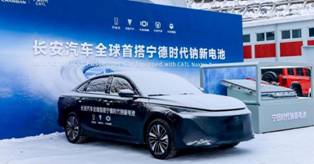
The next
generation of battery technology will be SIBs.
SIBs are
rechargeable energy storage devices that use sodium ions as charge
carriers, functioning similarly to
lithium-ion
batteries
but using abundant, low-cost salt instead of lithium. They are highly
sustainable, operate well in extreme temperatures, and are ideal for
stationary grid storage and small electric vehicles.
Key
Aspects of Sodium Batteries:
·
Materials & Cost:
Because sodium is abundant in seawater, these batteries are cheaper and
more environmentally friendly to produce than lithium-ion alternatives.
·
Performance:
They generally have a lower energy density, meaning they are heavier and
larger for the same capacity. However, they offer better safety and
cold-weather performance.
·
Technology:
They utilize a "rocking chair" mechanism where ions move between a hard
carbon anode and a cathode.
·
Applications:
Primarily targeted at stationary energy storage systems (ESS), home
backups, and low-speed electric vehicles.
While
they are not yet as widely available as lithium-ion batteries, major
manufacturers like
CATL and BYD
are pioneering in the development of this technology
China is
leading the global race in sodium-ion battery (SIB) commercialization,
with major manufacturers like CATL and BYD scaling production for
electric vehicles and grid storage in 2025-2026. These cost-effective
batteries, offering superior low-temperature performance, are being
deployed to reduce reliance on lithium.
Market
Drivers and Advantages
-
Cost
Efficiency:
Sodium-ion materials are estimated to be 30–40% cheaper than
lithium-ion, making them ideal for budget-friendly, short-range EVs
and stationary storage.
-
Performance in Cold:
Sodium batteries maintain >90% capacity at -20°C, outperforming
lithium-ion (~80%), making them suitable for cold climates.
-
Safety and Charging:
They exhibit better thermal stability and, as demonstrated by CATL,
can achieve an 80% charge in 15 minutes.
Industry Outlook
Global sodium-ion shipments reached ~9 GWh in 2025, a 150% increase
year-on-year. With 20 GWh plants being announced and national standards
for certification (GB 38031-2025) now in place, China is accelerating
the transition from lab to mass-market applications for electric cars
and scooters
CURRENT STATUS OF BATTERY TECHNOLOGY AND DEVELOPMENT IN CHINA
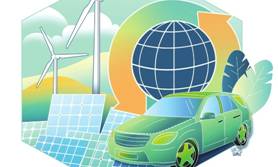
Chinese
battery technology and NEVs is rewriting the global automotive and
energy storage landscape and will play a crucial part in global green
transition.
More significantly, these technological
advancements are transcending national borders and collectively becoming
a crucial driver in the worldwide effort to combat climate change.
China now
dominates the global battery industry, producing over 80% of all cells
in 2024-2025 and controlling 65% of lithium processing
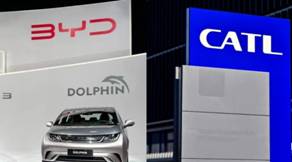
Led by
giants like CATL and BYD, China excels in
Lithium Iron
Phosphate (LFP)
batteries, rapid, low-cost manufacturing, and advanced R&D in
solid-state and sodium-ion technologies.
INDUSTRY STATUS & MARKET POSITION
-
Production Dominance:
China manufactured over 80% of global battery cells in 2025.
-
Supply Chain Control:
China controls 65-85% of key supply chain components, including
mineral processing, cathode/anode production, and cell
manufacturing.
-
Price
Advantage:
Manufacturing advances and efficiency has enabled battery prices in
China dropped roughly 30% in 2024, remaining 20-30% lower than in
Europe and North America. This price competitiveness is not due to
government subsidies as many western countries claim.
-
Key
Players:
CATL, BYD, Gotion High-Tech, and Envision lead the market.
-
Global Expansion:
Chinese manufacturers are expanding into Europe (e.g., CATL in
Germany) to localize production.
Technological Advancements
-
LFP
Dominance:
China has perfected cost-effective, long-cycle LFP batteries, which
now power most Chinese EVs.
-
Ultra-Fast Charging:
New tech from companies like BYD, Xpeng, and Huawei enables 400 km
range with 5 minutes of charging.
-
Next-Gen Batteries:
China is ahead in commercializing 400-600 Wh/kg lithium-metal
batteries and is actively deploying sodium-ion batteries to
diversify away from lithium.
-
Solid-State Development:
Advanced, semi-solid-state batteries are already moving from
prototypes to street-level applications in China
WHY
CHINA LEADS THE WORLD IN BATTERY TECHNOLOGY
-
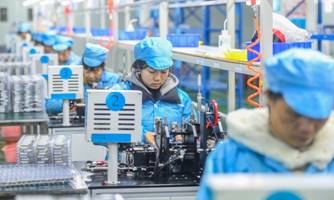
Vertical Integration:
Chinese companies control every step of the entire chain, from
mining to manufacturing. China controls over 80% of battery cell
production and refining a majority of critical minerals like
lithium, cobalt and graphite.
-
Government Support:
Substantial state support and industrial policy have built immense
economies of scale. Strategic planning has made China the world's
largest consumer and producer of electric vehicles (EVs) and
batteries
-
Talent Pipeline:
Immense talent pool in battery technology. Nearly 50 graduate
programs focus on battery chemistry/metallurgy. Seven of the top 10
STEM universities are in China and China is the global leader in
patent registration and publication of high impact research papers,
many of which are in the area of battery technology.
-
Technological Innovation:
Chinese firms are not just factories, but global innovation hubs,
leading in LFP (lithium-iron phosphate) and sodium-ion technologies,
making batteries safer and more affordable.
-
Scale
and Speed:
China’s manufacturing know-how allows them to build battery
factories (gigafactories) in 1–2 years, compared to 5–6 years
elsewhere.
-
Intense Competition:
With over 100 producers, fierce domestic competition drives
innovation and keeps manufacturing costs low.
FUTURE
OUTLOOK
China's
dominance is expected to remain for decades to come, with market share
potentially reaching 80-85% by 2030. The industry is shifting toward
further cost reductions and as a backup, rapidly developing sodium-ion
batteries to hedge against lithium price volatility.
China's
battery industry is shifting rapidly from rapid capacity expansion to
high-quality innovation, focusing on
solid-state
batteries,
cost-effective
lithium iron
phosphate (LFP)
upgrades, and enhanced recycling. By 2026, the industry will emphasize
superior safety, energy density exceeding and integrating AI into
manufacturing to maintain global dominance, with LFP dominating domestic
demand.
Key
Future Directions and Developments Include:
-
Next-Generation Technology:
Major focus on solid-state batteries (SSB) by leaders like CATL and
BYD. Semi-solid cells are already entering commercial
applications. Commercialization of solid-state batteries will move
from pilot lines to wider adoption, targeting improved thermal
stability and safety.
-
Cost
and Efficiency:
As of 2025, Chinese battery prices dropped nearly 30%, remaining
20-30% cheaper than in North America and Europe. Future efforts
focus on further reducing costs via improved LFP and, in the long
term, Sodium-ion batteries.
-
Supply Chain Control:
Despite increasing global trade restrictions, China is securing its
supply chain, particularly for raw materials like nickel, while
enhancing technological self-reliance.
-
Charging and Infrastructure:
The industry is moving toward a, "charging + swapping" model,
alongside integrating Vehicle-to-Grid (V2G) technology, solar power,
and energy storage systems.
-
Recycling and Sustainability:
As the first generation of EVs approach end-of-life, scaling up
comprehensive recycling, safety, and resource recovery systems is a
top priority to ensure long-term environmental sustainability.
MAJOR
PLAYERS IN CHINA BATTERY TECHNOLOGY AND DEVELOPMENT
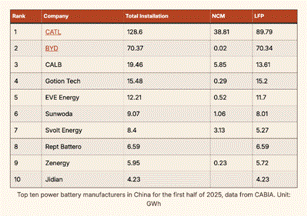
Over 70%
of all EV batteries are produced in China, driven by superior
manufacturing efficiency and scale.
Major
Players in China's Battery Industry
-
CATL
(Contemporary Amperex Technology Co., Ltd.):
The undisputed world leader in EV and energy storage batteries,
focusing on high-density lithium-ion and pioneering sodium-ion
technology. In conjunction with BYD, controls 37-41% of market
share.
-
BYD (FinDreams
Battery):
Leverages deep vertical integration with its own EV production,
famous for the "Blade Battery" (lithium iron phosphate/LFP).
-
CALB
(China Aviation Lithium Battery):
A major player in high-performance lithium batteries for EVs.
-
Gotion High-tech (Guoxuan High-Tech):
Specializes in LFP and high-energy-density ternary batteries.
-
EVE
Energy:
Focuses on advanced, high-performance lithium batteries.
-
SVOLT
Energy Technology:
Known for cobalt-free battery technology.
-
Others:
Sunwoda Electronic, Farasis Energy, and REPT Battero.
Key
Technological Focus Areas
-
Sodium-ion Batteries:
CATL is pushing this technology for lower costs, higher safety,
better cold-weather performance, and longer lifespans compared to
conventional batteries.
-
Blade Battery (LFP):
BYD's proprietary LFP technology, offering high safety and
structural integrity.
-
Solid-state Batteries:
Major investment areas for leading firms to boost energy density and
safety.
-
Circular Economy & Recycling:
Companies like GEM are crucial for the supply chain, focusing on
battery material recycling.
|
