|
CHINA ARTIFICIAL SUN
TECHNOLOGY
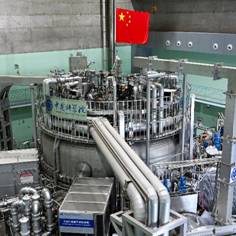
"Artificial Sun" refers
to experimental nuclear fusion reactors designed to replicate the
natural fusion process of the Sun to generate clean, limitless energy on
Earth.
These devices, like
China’s
Experimental Advanced
Superconducting Tokamak (EAST), heat plasma to temperatures
over 100 million° C - six times hotter than the sun's core—to fuse
hydrogen isotopes, aiming for a zero-carbon power source.
Key
Objectives of Developing Artificial Sun Technology:
-
Goal:
The primary objective is to create a sustainable, clean, and nearly
limitless energy source using fuel derived from seawater.
-
Methodology:
The reactor, often a donut-shaped tokamak, uses magnetic
fields to confine and heat hydrogen plasma to extreme temperatures,
forcing atoms to fuse and release vast amounts of energy.
-
Key Global
Projects: China's EAST, based in
Hefei, is a leading example, having set records for sustaining
high-temperature plasma. Other global projects include the
ITER project in France,
which is a massive international collaboration.
-
Significance:
By achieving these, scientists aim to move beyond fossil fuels,
offering a potential solution to climate change without creating
long-lived radioactive waste.
Main Challenges:
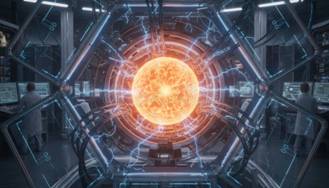
Maintaining the
required temperature and plasma stability over long periods remains the
biggest hurdle for making fusion power a commercial reality
Current Status of China
Artificial Sun Development
China's "artificial
sun," the Experimental Advanced Superconducting Tokamak (EAST), is
currently breaking world records for sustained high-temperature plasma,
achieving a 1,056-second hold in early 2025. Recent 2026 breakthroughs
include surpassing the
Greenwald density limit,
crucial for stable, high-density fusion reactions.
Key Status
2025–2026:
-
Performance
Record: In early 2025, EAST maintained
a stable plasma for 1,066 seconds (over 17 minutes), exceeding its
previous record of 403 seconds set in 2023.
-
Density
Breakthrough (Jan 2026): Researchers
broke the Greenwald limit, achieving stable plasma densities 1.3 to
1.6 times higher than previously thought possible for sustainable
fusion. This allows for more, higher-density fuel, leading to
significantly higher energy production.
-
Technology
Upgrades: The reactor utilizes
advanced superconducting magnets, enhanced heating systems, and
"self-cleaning" techniques to manage impurity, keeping the plasma
stable at extreme temperatures.
-
Planned Future
Milestones:
-
2027:
Projected first plasma experiment for new, next-generation
facilities.
-
~2030:
Development of full design capabilities for the China Fusion
Engineering Test Reactor (CFETR).
-
~2035:
Completion of the CFETR construction.
-
Global
Collaboration: China is a key partner
in the international ITER project and uses EAST to provide data to
accelerate global fusion energy development.
The focus is now
shifting from simply achieving high temperatures to sustaining
high-density, stable plasmas for longer durations to make commercial
fusion energy viable.
KEY REASONS FOR CHINA’S
ARTIFICIAL SUN SUCCESS
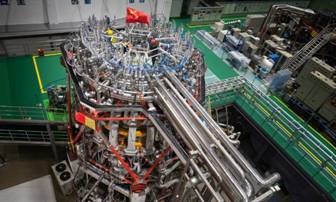
China leads the world
in "artificial sun" technology - specifically nuclear fusion due to
massive, consistent state planning and investment exceeding $1.5
billion, and rapid advancements by the
Experimental Advanced
Superconducting Tokamak (EAST).
By breaking records in
plasma stability and operating temperatures [over 100 million C], China
has created a sustainable, high-tech platform for fusion research.
Some of the Key reasons
for China's global dominance position:
-
Sustained
Records: The EAST reactor has achieved
unprecedented milestones, including maintaining plasma at over 100
million C for 1,056 seconds in 2021, and more recently, sustaining
high-temperature operation for over 1,000 seconds, crucial for
future commercial reactors.
-
High Investment
& Infrastructure: China's rapid
progress is backed by strong government support and immense
financial investment, allowing them to accumulate more patents and
build infrastructure faster than competitors.
-
Advanced
Technology: China has developed
independent intellectual property for critical components, such as
high-power neutral beam heating systems and high-voltage power
supplies, boosting efficiency and control.
-
Strategic Focus:
The Chinese government has prioritized fusion as a key energy source
to achieve "net-zero" goals, pushing for rapid, iterative upgrades
to their tokamak designs.
-
Industrial
Strength: A strong domestic
manufacturing chain (e.g., in superconducting materials) allows for
efficient, cost-effective development, such as with the
HL-3 tokamak and
other experimental reactors.
-
Massive Talent
Pool: Most importantly, more than half
of the world’s STEM talent are in China. 7 of the top 10 STEM
university are Chinese. China also leads the world in patent
registration and high impact research publications
-
Government
Leadership: Most important factor is
the government’s ability to develop, plan and execute long term
visions successfully on time and on budget. Government policies and
expenditures are focussed on benefiting the country and its people
rather than special interests.
Most of the Chinese government leaders are highly qualified and
experienced engineers and scientists
-
Governance:
China is led by a highly capable meritocracy
government that is truly for the people, by the people and of the
people.
Unlike many western
countries – China shares its technology with the world. China is a key
player in the international
ITER project in France,
which leverages the experience gained from their own domestic projects.
FUTURE DIRECTIONS OF CHINA
ARTIFICIAL SUN DEVELOPMENT
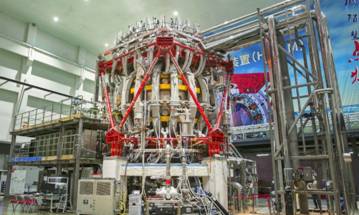
China's "artificial
sun" program, cantered on magnetic confinement fusion devices like the
Experimental Advanced Superconducting Tokamak (EAST) and the new HL-3,
is advancing rapidly, aiming to move from experimental milestones to
commercial energy production by the middle of the century.
Key future directions
include achieving a net energy gain, developing self-sufficient,
large-scale engineering reactors, and integrating advanced AI, AI-driven
digital twins, and high-temperature superconductors to ensure long-term,
stable plasma operations.
Summary of Key Future
Directions and Development Strategies:
-
Engineering Test
Reactor (CFETR): China is moving
towards constructing the China Fusion Engineering Test Reactor (CFETR),
designed to bridge the gap between experimental devices (like
EAST/HL-3) and commercial power plants. The goal is to start
construction around 2035.
-
BEST Initiative:
The Burning Plasma Experimental Superconducting Tokamak (BEST) is
set for completion around 2027, aiming to achieve 20–200 megawatts
of fusion power to demonstrate practical, grid-connected fusion.
-
Commercialization Goal: China aims to
achieve industrial-scale, commercial fusion power by the middle of
the century (around 2050).
-
Industrialization via State Enterprise:
China Fusion Energy Co., Ltd., established in July 2025, will
centralize R&D, focusing on system design, technology validation,
and commercialization of fusion energy.
-
High-Temperature
Superconductors (HTS): Future reactors
are shifting toward using HTS magnets to create stronger, more
efficient, and compact magnetic fields, significantly reducing
reactor size and cost.
-
AI and Digital
Twins: The implementation of AI for
real-time plasma control, along with digital twin technology (e.g.,
in HL-3), is being used to predict instabilities and optimize
performance.
-
Tritium
Self-Sufficiency: Research is focusing
on advanced divertor technology, such as that developed at the
Comprehensive Research Facility for Fusion Technology (CRAFT), to
increase the tritium breeding ratio by over 3%, aiming for fuel
self-sustainability.
Recent Milestones Driving
Future Work:
-
Record-Breaking
Plasma Duration: EAST successfully
kept plasma stable for 1,066 seconds (over 17 minutes) in early
2025.
-
Achieving
"Density-Free" State: In 2026, Chinese
researchers achieved a major milestone by stabilizing plasma in a
"density-free" state, surpassing previous limits.
-
High Temperature
Operation: The HL-3 tokamak achieved
an electron temperature of 160 million degrees Celsius in early
2025.
KEY PARTICIPANTS IN
ARTIFICIAL SUN TECHNOLOGY DEVELOPMENT IN CHINA
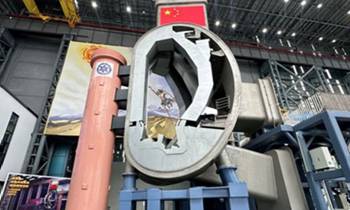
China's "artificial
sun" projects, primarily the Experimental Advanced Superconducting
Tokamak (EAST) and the HL-2M/HL-3 Tokamak, are spearheaded by
a combination of state-backed research institutes and major energy
corporations in the form of civilian-military fusion. These entities
focus on achieving, sustaining, and engineering practical, clean nuclear
fusion energy.
Here are the key
players in China's artificial sun initiatives:
1. Key Research
Institutions (Scientific Brains)
-
Institute of
Plasma Physics, Chinese Academy of Sciences (ASIPP):
Located in Hefei, Anhui Province, this is the premier research body
behind the development, operation, and experimental success of the
EAST reactor. ASIPP is responsible for the recent, repeated
world-record breakthroughs in long-pulse, high-temperature plasma,
including the 1,066-second record.
-
Hefei Institutes
of Physical Science (HFIPS): The
parent organization of ASIPP, coordinating the broader, long-term
research for fusion energy.
-
Southwestern
Institute of Physics (SWIP): Under the
China National Nuclear Corporation (CNNC), this institute in Chengdu
(Sichuan Province) designed and operates the HL-2M and
HL-3 "new-generation" tokamaks.
2. Major State-Owned
Enterprises [Developers & Constructors]
-
China National
Nuclear Corporation (CNNC): A primary
driver of China's nuclear energy technology, CNNC is heavily
involved in the engineering and construction of fusion reactors. It
plays a leading role in the HL-3 project and the construction
of the ITER (International Thermonuclear Experimental
Reactor) components.
-
China Nuclear Power
Engineering Co., Ltd. (CNPE): A subsidiary of
CNNC, this company leads the Sino-French consortium tasked
with the core installation (vacuum vessel, etc.) of the ITER
project, demonstrating China's capability in building large-scale
tokamaks.
3. Key Projects and
Platforms
-
EAST
(Experimental Advanced Superconducting Tokamak):
Located in Hefei, this is a fully superconducting, non-circular
tokamak aimed at testing long-term, high-confinement plasma
operations.
-
HL-2M/HL-3
(Huanliu-2M/3): The new-generation
tokamaks developed by CNNC in Chengdu, designed to achieve higher
plasma currents and temperatures than previous models.
-
CFETR (China
Fusion Engineering Test Reactor): A
future, larger-scale engineering reactor planned to bridge the gap
between experimental devices (like EAST) and commercial fusion power
plants.
4. International
Collaboration
-
ITER
Organization (International Thermonuclear Experimental Reactor):
China is a major member of this international consortium (along with
the EU, India, Japan, South Korea, Russia, and the US) building the
world's largest tokamak in France. Chinese institutions, notably
CNNC and ASIPP, are critical contributors, responsible for ~9% of
the project.
These organizations are
driving China toward a goal of having a functional industrial prototype
fusion reactor by roughly 2035 and large-scale commercial use by 2050.
|
