|
CHINA ARTIFICIAL INTELLIGENCE TECHNOLOGY
Artificial intelligence (AI) is technology that enables computers and
machines to simulate human learning, comprehension, problem solving,
decision making, creativity and autonomy.
Applications and devices equipped with AI can see and identify objects.
They can understand and respond to human language. They can learn from
new information and experience. They can make detailed recommendations
to users and experts. They can act independently, replacing the need for
human intelligence or intervention. A classic example being a
self-driving car.
Generative AI that can create text, images, video and other content
based on machine learning and deep learning is now a major focus of AI
research and application.
In general, generative
AI operates in three phases:
-
Training
to create a foundation model.
-
Tuning
to adapt the model to a specific application.
-
Generation,
evaluation and more tuning to improve
accuracy.
Machine
learning
involves creating models by training an algorithm to make predictions or
decisions based on data. It encompasses a broad range of techniques
that enable computers to learn from and make inferences based on data
without being explicitly programmed for specific tasks.
Deep
learning
is a subset of machine learning that uses multilayered neural networks,
called deep neural networks, that more closely simulate the complex
decision-making power of the human brain.
Deep
neural networks include an input layer, at least three but usually
hundreds of hidden layers, and an output layer, unlike neural networks
used in classic machine learning models, which usually have only one or
two hidden layers.
These
multiple layers enable unsupervised learning. They can automate the
extraction of features from large, unlabelled and unstructured data
sets, and make their own predictions about what the data represents.
A neural network
consists of interconnected layers of nodes such as analogous and neurons
nodes that work together to process and analyse complex data. Neural
networks are well suited to tasks that involve identifying complex
patterns and relationships in large amounts of data.
AI Applications Include:
-
Natural language
processing [NLP]: NLP allows
computers to understand and generate human language. This technology
is used in a variety of applications, such as machine translation,
spam filtering, and sentiment analysis.
-
Computer vision:
Computer vision allows computers to identify and interpret visual
content. This technology is used in a variety of applications, such
as self-driving cars, facial recognition, and object detection.
-
Machine learning
[ML]: ML allows computers to learn
from data and improve their performance over time. This technology
is used in a variety of applications, such as predictive analytics,
fraud detection, and recommendation systems.
-
Robotics:
Robotics is the branch of AI that deals with the design,
construction, and operation of robots. Robots are used in a variety
of applications, such as manufacturing, healthcare, and space
exploration.
Benefits of AI include
-
Automation of
repetitive tasks.
-
More and faster
insight from data.
-
Enhanced
decision-making.
-
Fewer human errors.
-
24x7 availability.
-
Reduced physical
risks.
CHINA AI
STATUS

China is the world leader in AI. It is
not surprising as China is now the most innovative
country in the world. Innovation has become the engine of developing
new quality productive forces. China had had a massive 2,292 million
high value patents in 2025 and 70% of these were concentrated in
strategic emerging technologies and industries.
China has been leading the world in IP power and inventions for many
years and in 2025 with a staggering 5.32 million registered invention
patents – many of them are related to AI. China now accounts for 60% of
global AI patents and 2/3 global fillings for robotics.
Moving forward – China
looks to accelerated optimization of the innovation ecosystem, enhancing
patent quality and promotion of technology commercialization –
particularly in the application of AI to all emerging technologies and
industries and everyday life of its population.
Key Application
Focus in Chinese Manufacturing Include
-
Smart Quality Control:
AI, particularly machine learning and computer vision, is used for
real-time defect detection, replacing slow and error-prone human
inspection.
-
Predictive Maintenance:
Algorithms analyse machine sensor data to forecast failures,
significantly reducing downtime and maintenance costs.
-
Production Optimization:
AI optimizes energy consumption, material usage, and production
scheduling to increase efficiency.
-
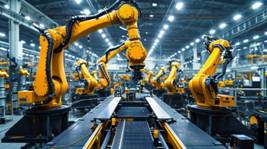
Robotics & Automation: With high investment in
industrial robots, AI enables smarter, more adaptable robots for
complex assembly and manufacturing.
-
Supply Chain Management: AI improves demand
forecasting and inventory management, enhancing responsiveness to
market changes.
China Policy and Strategic Goals Include
-
"AI+
Manufacturing and Industrial Transformation" Plan:
By 2027, the goal is to lead the world in the development of open
and widely used general-purpose large AI models in manufacturing,
100 high-quality datasets, and 500+ typical application scenarios.
AI Plus" Strategy & Industrial Transformation: The focus is
on implementing "AI Plus," a ten-year plan (to 2035) that integrates
AI into traditional sectors like manufacturing, agriculture, and
healthcare to boost productivity.
-
Economic Growth:
The "AI+" initiative aims to transform traditional industries into
"intelligent economies," focusing on new quality productivity.
-
Infrastructure &
Data: China is leveraging its massive
industrial data, gathered from having the world's largest factory
base, to train AI models.
-
Electricity
Generation: As AI and data centers
operations require massive amount of electricity on demand and power
storage facilities – The Chinese government will ensure there is
plentiful of electricity transmitted and available to the numerous
AI, computer and data centers around China. As of 2025 – China
generates more electricity than the US and Europe combined. One of
the key reasons US can not compete with China in AI development is
poor electricity and electricity transmission infrastructure and the
inability to produce sufficient electricity needed for AI and data
centers.
Some Key Industries & Trends in AI

-
Electric
Vehicles (EVs) & Batteries: High
adoption of AI in manufacturing lines for quality checking and
assembly.
-
Textiles &
Traditional Manufacturing: AI is
reducing sample production times from days to hours.
-
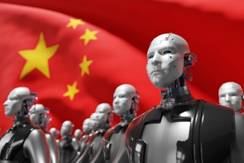
Humanoid Robots:
Increasing investment in AI-powered, versatile robots for both
civilian and military applications.
-
Industrial
Digital Twins: Creating virtual
replicas of factories to simulate, monitor, and optimize physical
production in real-time.
By 2030, China aims for
over 90% AI integration in key domains, solidifying its position as a
global leader in AI-driven manufacturing.
AI in Defense and Military
Applications

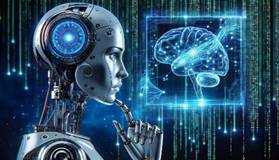
China is actively
integrating AI into its national defense to achieve "intelligentized
warfare," focusing on unmanned systems, decision-support, and autonomous
weapons. Key applications include
AI-driven drones, robot
dogs, and undersea vehicles, aimed at enhancing speed, precision, and
battlefield situational awareness.
Key Application
Areas:
-
Unmanned Combat
Systems (UAVs/UGVs): China is
developing AI-powered, autonomous drones and vehicles for
reconnaissance, target acquisition, and assault, often using AI for
swarm intelligence.
-
Intelligent
Decision Support Systems (AI-DSS):
The PLA is investing in AI to analyze vast battlefield data,
providing faster decision-making for commanders to identify targets
and simulate combat scenarios.
-
Targeting and
Intelligence: AI is applied to
identify and track targets, including in space, and to automate
target classification, specifically for counteracting U.S.
capabilities.
-
Electronic
Warfare & Cyber: AI is used to improve
signal detection and analysis in contested environments, enhancing
electronic surveillance and defense capabilities.
-
Logistics and
Maintenance: AI systems are deployed
for predictive maintenance, analyzing sensor data to detect
equipment failures before they occur.
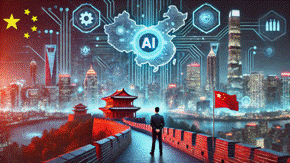
Key factors driving China's AI leadership include:
-
Military-Civil
Fusion: The PLA leverages the rapid
advancements in China's civilian AI sector to accelerate military
applications, bypassing traditional procurement bottlenecks.
-
Massive Data and
Population Advantage: With 1.4 billion
mobile users, China possesses vast datasets, which are essential for
training AI models faster and more effectively.
-
Government-Backed Strategy: The state
actively funds AI infrastructure, including data centers,
high-capacity servers, and chips. This centralized support, combined
with a focus on national security and economic growth, allows for
rapid, coordinated advancement.
-
Talent and
Research: China holds roughly 47% of
the world's top AI researchers and more than 50% of AI patents. The
government has established numerous new AI centers, professorships
and university programs to cultivate talent.
Seven of the top 10 STEM universities are in China
-
Focus on
Efficiency and Deployment: In response
to U.S. export restrictions, China has pioneered cost-efficient,
"lighter" AI models. Companies focus on bringing AI to market
quickly, aiming for practical, high-impact applications in sectors
like robotics and manufacturing.
-
Rapid Adoption
and Ecosystem: A mature ecosystem of
startups, combined with rapid consumer adoption, drives continuous
improvement.
China's approach is
designed to achieve technological independence, aiming to dominate
global AI by emphasizing speed, scale, and integration into the broader
economy
Key Future Directions and Developments for China AI
Include:
-
Self-Reliant
Hardware & Infrastructure: Facing U.S.
export controls, China is prioritizing "independent and
controllable" technology, with massive investment in domestic AI
chips (led by Huawei) and a National Integrated Computing Network.
-
Generative AI
and Model Development: China is
rapidly developing its own Large Language Models (LLMs) and, in
2025, achieved significant breakthroughs, such as DeepSeek-R1,
demonstrating potential to close the gap with the US. China now has
more LLMs than the US.
-
Infrastructure-Led Growth: The
government is pushing for the deployment of AI as a public
good/utility (e.g., smart, interconnected, and autonomous systems),
rather than solely focusing on generative AI.
-
Regulatory
Frameworks: China is actively
regulating the industry with measures targeting AI security, ethics,
and generative AI services (e.g., the 2023 Interim Measures) to
ensure alignment with state goals.
|
