|
CHINA AEROSPACE TECHNOLOGY
 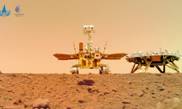 
Aerospace refers to the
industry, technology, and engineering behind vehicles that operate in
Earth's atmosphere (aeronautics) and outer space (astronautics). It
involves designing, manufacturing, operating, and maintaining aircraft,
helicopters, satellites, missiles, spacecraft and space stations for
commercial, industrial, and military purposes.
Key aspects of the aerospace
field include:
-
Aerospace
Engineering: A technical field focused
on the development of flight vehicles, incorporating aerodynamics,
material science, and avionics to improve performance and safety.
-
Industry Scope:
The sector includes major manufacturers like Boeing, Airbus, and
SpaceX, as well as defense contractors developing advanced flight
systems.
-
Key Components:
Involves both aeronautics (flight within the atmosphere) and
astronautics (flight outside the atmosphere, beyond the
Kármán line).
Common applications
include drones, commercial airliners, satellites for communication, and
space exploration vehicles
transportation, defense,
satellite communication, and scientific exploration. It enhances daily
life through GPS, internet, and efficient air travel, while propelling
innovation in AI and sustainable energy. The industry also plays a key
role in national security and economic growth.
Key Areas of
Impact:
-
Global
Connectivity and Commerce: Aerospace
engineering enables safe, efficient air travel and
communication/navigation systems, including satellites that
facilitate global,
GPS tracking and
Internet services.
-
Defense and
Security: The sector is crucial for
national defense, producing advanced aircraft, surveillance systems,
and satellites that maintain security and aid in disaster
management.
-
Technological
Innovation: Aerospace drives R&D in
materials science, propulsion, and AI, resulting in technologies
that often benefit other industries like automotive.
-
Space
Exploration and Scientific Discovery:
The field is foundational for exploring the universe, including
robotic probes and human missions to the Moon and Mars.
-
Sustainability:
Engineers are developing eco-friendly fuels and improving engine
efficiency to reduce the environmental impact of aviation.
The aerospace industry
is a high-growth sector providing stable, high-paying jobs and shaping
the future of transportation and,
space travel.
CHINA
AEROSPACE STATUS
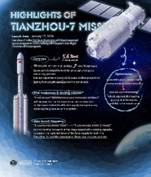 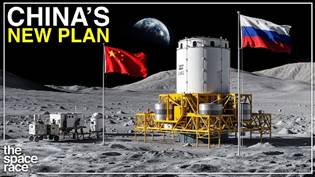
China’s aerospace
sector in 2026 is experiencing rapid growth, ranking second globally
with over 120 remote-sensing satellites launched in 2025 and a goal of
60+ annual launches from its new Hainan commercial site
Key developments
include the active Tiangong space station, lunar, and Mars
exploration, with significant growth in private rocket firms and
satellite internet constellations.
Key Aspects
of China's Aerospace Status:
-
Commercial Space
Growth: Private companies like
LandSpace and iSpace are gaining prominence, with the sector
projected to be worth over US$900 billion by 2029. The Hainan
commercial launch site is enabling high-frequency launches to rival
global commercial competitors.
-
Space
Infrastructure & Exploration: In 2025,
China continued to operate the ultra-modern Tiangong space
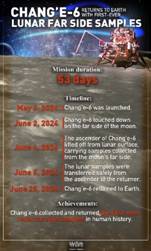
station with regular crew rotations. Following the Chang'e-6
mission, which returned samples from the moon's far side, China is
actively pursuing lunar and Mars sample return missions.
-
Satellite
Technology & Networks: China launched
over 120 remote-sensing satellites in 2025, bringing its total to
over 640. The
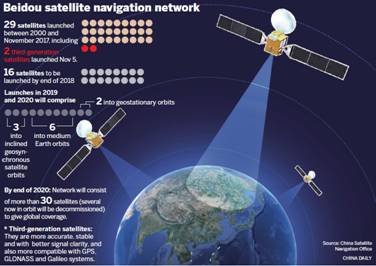
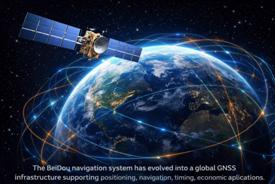
BeiDou navigation system
is fully operational and competing globally, while new satellite
internet projects are being deployed.
-
Launch
Capabilities: The Long March
rocket family provides reliable heavy-lift capabilities. The
industry is focused on reusable rocket technology to compete with
international standards.
-
Strategic Goals:
China aims to complete its current 14th Five-Year Plan by the end of
2026, focusing on advanced military, civilian and commercial
applications. China aims to surpass Space X and develop the largest
internet installations in the world.
WHY CHINA
LEADS THE WORLD IN AEROSPACE TECHNOLOGY AND DEVELOPMENT
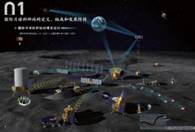 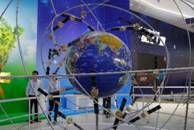 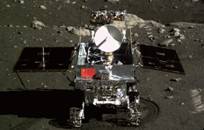
China leads in
aerospace through a combination of long-term planning, massive
state-directed investment, a "military-civil fusion" strategy, and
rapid, large-scale industrial manufacturing.
Driven by the needs of
national security and independence, China accelerates innovation in
satellite systems, space exploration such as the Tiangong space station,
and commercial aviation (C919), aiming to surpass Western dominance and
technology blockade – particularly US.
Key drivers
of China's aerospace leadership include:
-
Strategic Government Support:
Immense funding and targeted policies drive rapid development in
both civil and military sectors.
-
Military-Civil Fusion:
The state merges military and civilian capabilities to accelerate
breakthroughs in key technologies.
-
Rapid Innovation & Scale:
Leveraging massive, efficient manufacturing, China produces
high-quality components at scale, similar to its success in other
advanced industries.
-
Major Milestones:
Key successes include the Tiangong space station, lunar exploration
(far side of the moon), Mars rover missions, and advancements in the
C919 passenger aircraft.
-
Self-Reliance Goal:
China strives for independence in critical aerospace technologies,
reducing dependence on foreign suppliers.
-
Massive talent pool
and highly skilled workers.
China graduates more STEM students each year than the US and G7
countries combined. Seven of the top 10 global STEM research
universities are in China. China also leads the world in high
impact research publications.
-
Government
Leadership: Most important
factor is the government’s ability to develop and execute long term
visions successfully on time and on budget. Government policies and
expenditures are focussed on benefiting the country and its people
rather than special interests.
The majority of the Chinese leaders are highly qualified and
experienced engineers and scientists with extensive experience in
administration, management and project development.
As of early 2026, China
is a dominant global space power, conducting a record-breaking 93
launches in 2025 and aiming to become a top-tier space power by 2045
Key efforts focus on
achieving a crewed lunar landing by 2030, developing fully reusable
rockets to lower costs, and expanding their permanently occupied
Tiangong space station.
CURRENT STATUS OF CHINA AEROSPACE TECHNOLOGY
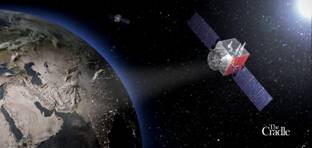 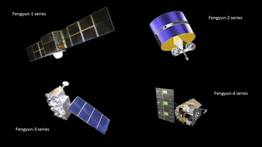
-
Launch
Capabilities & Reusability: China is
rapidly maturing its commercial space sector and testing reusable
technologies. Despite a setback with a reusable rocket test in late
2025, they are advancing vertical takeoff and landing (VTOL)
capabilities.
-
Space Station:
The Tiangong space station is fully operational, hosting continuous
six-month crew rotations.
-
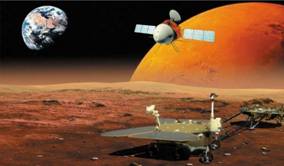
Deep Space
Exploration: In 2024, Chang'e-6 became
the first mission to return samples from the Moon's far side.
-
AI and
Satellites: China is launching
AI-driven satellite constellations, such as the
Three-Body Computing
Constellation in 2025, aimed at creating high-speed space
computing.
-
Rockets:
The new
Long March 10 (CZ-10) rocket
is in development to support future crewed lunar missions.
Plans for
Space Exploration
-
Crewed Lunar
Landing (2029-2030): A top priority,
aiming to land two astronauts on the moon using the Mengzhou
spacecraft and Lanyue lander.
-
Lunar
Exploration (Phase 4): Launch of the
Chang'e 7 probe to
the moon's south pole to search for water ice.
-
Deep Space
Missions: Continued missions including
asteroid sample-return (launched 2025) and planned probes to Mars
and Jupiter.
-
Space Tourism &
Infrastructure: Development of
commercial space tourism and the enhancement of space-based data
centers.
China's rapid expansion
is driven by the
China Aerospace Science and
Technology Corporation (CASC), supported by growing private
sector participation to challenge U.S. leadership in space.
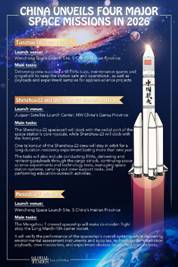
In 2026, China's
aerospace sector is advancing rapidly with major missions, including the
Shenzhou-22/23 crewed flights and
Tianzhou-10 cargo mission. Following a record 92 launches in
2025, focus is on low-Earth orbit internet satellites, lunar exploration
(Chang'e-7), and developing a reusable rocket industry, strengthening
its position as a major global space power.
KEY 2025-2026
SPACE DEVELOPMENTS
-
Intensive
Missions: 2026 will see the
Tianzhou-10 cargo mission and Shenzhou-22/23 crewed missions, with
plans to build the
International Lunar Research
Station by 2035.
-
Satellite
Constellations: Over 120
remote-sensing satellites were launched in 2025, with China ranking
second globally in total in-orbit.
-
Commercial
Growth: Rapid growth of private firms
through new STAR Market tiers for technology companies.
-
Deep Space
Exploration: Future plans include the
Tianwen-2 asteroid sampler (2025), and future missions to Mars
(Tianwen-3) and Jupiter (Tianwen-4).
-
Space Policy:
China maintains its focus on the peaceful use of space, opposing the
weaponization of space.
Key Industry
Players:
As of early 2026, the
Global Times highlights that China's space-based infrastructure
is accelerating, specifically in Low-Earth Orbit (LEO) internet
satellite deployment.
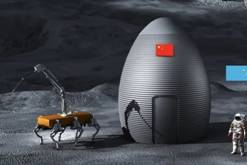
China and Russia are
deepening strategic cooperation in space exploration, focusing on
creating a rival to US-led initiatives through joint projects like the
International Lunar Research Station (ILRS)
Their partnership
merges China’s high funding and technological advancements with Russia's
long-standing aerospace expertise, particularly in nuclear power, aiming
to build a lunar base by the 2030s.
Key Areas of
Cooperation:
-
International Lunar Research
Station (ILRS): Initiated in 2021, this is
the flagship joint project, planning a robotic, later crewed, base
at the lunar south pole by the 2030s.
-
Lunar Nuclear Power Plant:
In 2025, they partnered to construct a nuclear reactor on the moon
to power the ILRS, leveraging Russia’s extensive nuclear experience.
-
Satellite Navigation (BeiDou/GLONASS):
A robust partnership involving the interoperability of China's
BeiDou and Russia's GLONASS systems, including ground station
exchanges.
-
Space Security and Debris
Monitoring: Agreements in 2018 established
data sharing on space debris and tracking, which, due to its
dual-use nature, enhances military space surveillance capabilities.
-
Joint Scientific Missions:
Collaboration includes exploring deep space, such as missions to
the moon and asteroids.
Strategic and
Economic Drivers:
-
Countering US
Influence: The partnership acts as a
counterbalance to the NASA-led Artemis program.
-
Resource
Sharing: China provides significant
funding ($14.15 billion in 2023) to support the collaboration, while
Russia contributes technical expertise, despite sanctions
restricting its own budget.
-
Military-Civil
Fusion: Cooperation often blends
scientific research with potential military applications, such as
improving anti-satellite capabilities and strategic surveillance.
-
Commercial
Aviation: The COMAC C919 is
transitioning from introduction to mature operations. Airbus is
expanding its Tianjin facility to build a second A320 final assembly
line (FAL) to meet local demand.
-
Space
Exploration & Infrastructure: China is
advancing its space station, lunar, and Mars programs, with heavily
integrated, state-led manufacturing. The industry is shifting toward
developing more cost-effective, reusable launch vehicles.
-
Private Space
Sector: A growing number of private
firms, often supported by government initiatives, are enhancing
capabilities in satellite manufacturing and launching, including the
"Thousand Sails" (Qianfan) constellation.
-
Technology &
Supply Chain: China is leveraging its
technological advancements in AI, materials, and digital
manufacturing, while simultaneously using its rare earth dominance
to impact international aerospace supply chains.
-
Market Growth:
China is on track to become the world's largest aviation services
market by 2043, driven by a surge in, and modernization of, its
passenger and cargo aircraft fleets.
FUTURE
DIRECTIONS FOR CHINA AEROSPACE DEVELOPMENT
China's aerospace
industry is pivoting toward total independent innovation, rapid
commercialization, and deep-space exploration to become a leading global
space power by 2030–2050. Key trends include deploying massive satellite
internet constellations, developing reusable rockets, establishing lunar
bases, and accelerating AI-driven, sustainable aviation.
Key Future
Directions and Technologies:
-
Commercial Space
& Satellite Networks: China is scaling
up its commercial space sector, establishing regulatory bodies to
manage rapid growth. A primary focus is building massive, low-Earth
orbit (LEO) constellations for global communications, navigation,
and surveillance to compete with Western systems.
-
Reusable Launch
Systems: To reduce costs, China is
heavily investing in reusable rocket technology and new-generation
engines (like the Long March 9). This includes advancements in
high-thrust solid-fuel rockets and sea-launch capabilities.
-
Deep Space
Exploration: The nation aims to
transition from Earth orbit to a sustainable presence on the Moon
(International Lunar Research Station) and is prioritizing ambitious
missions for Mars sample return and exploration of Jupiter and
beyond.
-
Next-Generation Aviation &
Technology: The industry is focusing on smart
aviation through AI, robotics for manufacturing, and sustainable
technologies like electric/hybrid propulsion. The
C919 aircraft is a
primary example of fostering domestic alternatives to Western
technology.
-
Military-Civil
Fusion: Aerospace advances are closely
tied to national security, with,
China focusing on hypersonic
technology and satellite intelligence to secure
information dominance.
By 2030, China aims for
a 2-trillion-yuan low-altitude economy, integrating,
satellite-based IoT and space
tourism into its growing economic ecosystem
MARKET SHARE
China's aerospace
industry is a rapidly growing global powerhouse, projected to become the
world's largest aviation services market by 2043
As of 2024-2025, China
commands over 11% of the global aerospace & defense MRO market, 14% of
civil aircraft deliveries, and roughly 11.5% of the global space
technology market. Driven by massive state investment and commercial
expansion, the sector's market size is expanding rapidly.
Key highlights
regarding the Chinese aerospace market include:
-
Aviation Market
Size: The civil aviation sector is
booming, with 730 million passengers carried in 2024 and a fleet
size expected to triple over the next 20 years, necessitating >9,500
new planes.
-
Global Market
Share: China accounted for roughly
11.8% of the global aerospace and defense Maintenance, Repair, and
Overhaul (MRO) market in 2021, with revenue expected to reach USD
32.2 billion by 2030. In the space technology sector, China held
11.5% of the global market share in 2024.
-
Growth Drivers:
Key drivers include high demand for domestic commercial aviation,
expansion in satellite technology, and continuous, significant
government investment in aerospace infrastructure.
-
Key Players &
Structure: The industry is dominated
by State-Owned Enterprises (SOEs) like
China Aerospace Science and
Technology Corporation (CASC) and
China Aerospace Science and
Industry Corporation (CASIC), which focus on space
programs, satellite constellations, and defense technology.
-
Market Trends:
The market is shifting towards increased commercialization, with a
notable rise in private aerospace firms, particularly in small
satellite development and launch services.
The industry is rapidly
evolving, with a focus on enhancing domestic capabilities in aircraft
manufacturing and space exploration, making it a critical player in both
global commercial and military aerospace sector
MAJOR
AEROSPACE PLAYERS IN CHINA
China's aerospace
industry is dominated by state-owned giants CASC and CASIC for space
systems, and AVIC for aviation, focusing on military-civil fusion,
satellite constellations, and developing technologies like hypersonic
vehicles and the Tiangong space station. Key emerging commercial players
include Interstellar Glory, Blue Arrow Aerospace, and Changguang
Satellite.
Major
State-Owned Enterprises (SOEs) & Key Players
-
China Aerospace Science and
Technology Corporation (CASC): Primary entity
for space programs, responsible for Long March rockets, Beidou
navigation, and Tiangong space station.
-
China Aerospace Science and
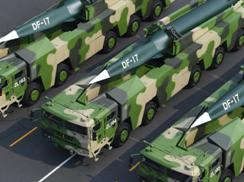
Industry Corporation (CASIC): Specializes in
defense-related aerospace, including missiles, small satellites, and
hypersonic vehicles.
-
Aviation Industry Corporation
of China (AVIC): Leading manufacturer for
military aircraft (J-20, Y-20), helicopters, and avionics,
comprising over 200 units.
-
Commercial Aircraft
Corporation of China (COMAC): Develops
commercial aircraft, including the C919 narrow-body airliner.
-
China Academy of Space
Technology (CAST): Key developer of satellites
and spacecraft.
Emerging
Commercial/Private Players
Key
Technologies and Focus Areas
-
Satellite
Technology: Large-scale,
high-resolution remote sensing, and the Beidou satellite navigation
system.
-
Launch Vehicles:
Long March family and advanced solid/liquid engines.
-
Aviation:
Stealth fighters (J-20), transport aircraft (Y-20), and advanced
avionics.
-
Space
Exploration: Lunar (Chang'e) and
Martian missions.
-
Hypersonics:
High-speed, precision-strike platforms.
Industry
Structure
The sector is characterized by intense state control and "civil-military
fusion," designed to merge defense research with commercial
applications. While major SOEs dominate, a growing number of smaller,
commercial aerospace firms are entering the market for satellite
launches and data, often with government backing.
|
