|
CHINA 5G AND HIGH-SPEED
INTERNET TECHNOLOGY
5G is the 5th
generation mobile network, a global wireless standard designed to
deliver higher speeds, lower latency, and greater capacity than 4G. It
uses
radio waves to connect
devices with speeds up to 20 Gbps and enables technologies like IoT,
autonomous vehicles, and enhanced mobile broadband.
Key Features and Benefits of
5G:
-
Enhanced Speed:
5G offers significantly faster download and upload speeds compared
to 4G, allowing for seamless, high-definition streaming.
-
Ultra-Low
Latency: With reduced lag [potentially
1 millisecond], 5G enables real-time communication, critical for
applications like remote surgery or autonomous vehicles.
-
Increased
Capacity: It supports a massive number
of connected devices simultaneously, essential for smart cities and
the Internet of Things (IoT).
-
Improved
Efficiency: 5G networks are more
energy-efficient and reliable.
How 5G Works:
5G technology operates
across three main frequency spectrums—low-band, mid-band, and high-band
(mmWave) - to balance coverage and speed. It uses a cellular network
structure, dividing areas into smaller zones called cells, with, base
stations, connecting to the broader
internet.
PRESENT
STATUS OF CHINA 5/6/7G
As of early 2026, China
holds a commanding, industry-leading position in 5G deployment, having
established the world’s largest and most advanced network. With over
4.8 million 5G base stations deployed, the country is rapidly
transitioning to 5G-Advanced (5G-A or 5.5G), focusing on
industrial applications, AI integration, and widespread consumer
adoption.
Key 5G Metrics & Status (As of
Late 2025/Early 2026)
-
Base Stations:
Over 4.83 million 5G base stations, making up more than 35% of all
mobile base stations.
-
Users:
Roughly 1.2 billion 5G subscribers, representing over 40% of the
global total.
-
Coverage:
5G signals cover all towns and over 95% of administrative villages.
-
5G-Advanced
(5G-A): Commercialized in over 330
cities, providing 10x faster peak speeds than standard 5G.
-
Data Usage:
5G networks now carry over 75% of total mobile traffic in China.
CORE TRENDS AND DEVELOPMENTS
-
5G-Advanced
(5G-A) Rollout: Major operators
include
China Mobile, China
Unicom and China Telecom. All have upgraded to 5G-A in 2025–2026,
targeting "5G+AI" sensing, smart infrastructure, and enhanced mobile
broadband.
-
Industrial
Application (5G+ Industrial Internet):
5G is integrated into 86 of 97 major economic categories, with over
138,000 use cases, including 1,260 "5G factories" by late 2025.
-
Satellite
Integration: China successfully
conducted the world's first direct real-time 5G video call between a
smartphone and a Low Earth Orbit (LEO) satellite, bridging coverage
gaps.
-
2027 Roadmap:
A second "Set Sail" action plan (2025-2027) aims for 85% 5G user
penetration and 75% of mobile data carried on 5G networks.
Global Technological Leadership
-
Patents:
China accounts for 42% of global 5G standard-essential patents.
-
6G Research:
While dominating 5G, China is simultaneously pioneering 6G, with
2025-2026 trials building a repository of over 300 key technologies.
-
7G already:
China has also started preliminary
research and development of 7G.
WHY CHINA
DOMINATES THE WORLD IN 5/6/7 G
China’s success is
driven by a state-led strategy that prioritizes and coordinates
large-scale infrastructure deployment to establish itself as a global
leader in technology and industrial automation.
By the end of 2024,
China had deployed over 4.19 million 5G base stations, covering more
than 56% of its mobile subscribers.
Some of Key reasons for China's
5G Success Include:
-
Whole-of-Government Support and Planning:
The Chinese government views 5G as critical national infrastructure
rather than just a commercial product. It is a central part of the
"Made in China 2025" strategy, designed to foster advanced
manufacturing and technological independence.
-
Massive
Infrastructure Investment: The state
has provided heavy subsidies for 5G, with each base station
receiving between $700 and $1,400 in subsidies. This, combined with
coordinated, large-scale deployment by state-owned enterprises, has
allowed for rapid, nationwide coverage.
-
Industrial
Applications and "5G+" Projects:
Instead of focusing only on consumer 5G, China is heavily investing
in "5G+ industrial internet" projects, with over 4,000 5G-powered
factories by 2024. These applications include automated ports (e.g.,
Ningbo, Tianjin), smart mining, and remote AI-assisted surgery.
-
Leading
5G-Advanced Deployment: China is a
pioneer in "5G-Advanced" (5G-A), boasting higher speeds (up to 10
Gbps) and enhanced capabilities that are already being implemented
in major cities.
-
Strategic
Spectrum Allocation: China has
assigned nearly twice the amount of mid-band spectrum to wireless
operators compared to the U.S., allowing for faster speeds and
broader coverage.
-
Domestic Talent
and Ecosystem: Companies like Huawei
and ZTE train hundreds of thousands of engineers annually, and China
has established a robust, vertically integrated ecosystem covering
everything from, chips, and terminals to network infrastructure.
HOW 5G IS A
KEY PART OF THE BRI AND HELPS DEVELOPING COUNTRIES
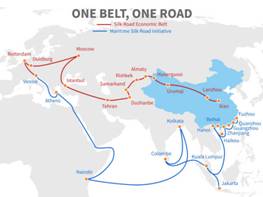
5G technology
accelerates development in lower-income economies by providing
affordable high-speed, reliable internet that acts as an alternative to
expensive fiber infrastructure. It boosts productivity in key sectors
like agriculture and manufacturing, enhances telemedicine, enables
remote education, and fosters financial inclusion, helping to reduce the
digital divide and increase GDP.
Key Ways 5G Helps Developing
Nations:
-
Fixed Wireless
Access (FWA): 5G provides high-speed,
reliable broadband to homes and businesses in rural or underserved
areas, bypassing the need to install costly physical underground
cables.
-
Healthcare
Transformation: Low latency enables
real-time telemedicine and remote robotic surgeries, allowing
specialists to treat patients in remote areas.
-
Agricultural
Advancements: Smart, sensor-enabled 5G
technologies allow farmers to monitor crops, optimize water usage,
and reduce fertilizer waste, increasing yields and reducing costs.
-
Digital
Inclusion and Education: High-speed
internet facilitates remote education, virtual classrooms, and
e-commerce, allowing entrepreneurs to participate in the global
economy and reducing barriers for women.
-
Economic Growth:
By supporting IoT, artificial intelligence, and faster data
transfer, 5G fosters new industries, improves logistics, and
increases industrial productivity.
|
