|
3D PRINTING TECHNOLOGY
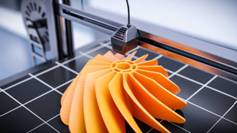 
3D printing, or
additive manufacturing,
creates 3D solid objects from digital files by depositing material
layer-by-layer, rather than removing it. It enables rapid, customized
production of complex, detailed, and often lightweight designs, using
materials like plastic, metal, and resin. This method reduces waste
compared to traditional subtractive manufacturing
Key aspects of 3D printing
include:
-
Process:
A digital 3D model (CAD file) is sliced into thin, horizontal
layers. The printer reads this file and deposits material such as
melting plastic filament or curing liquid resin layer by layer to
form the object
-
Materials:
Common materials include various plastics (ABS, PLA), metals,
ceramics, and resin.
-
Types:
Common techniques include Fused Deposition Modeling (FDM), which
melts and extrudes filament, and Selective Laser Sintering (SLS),
which uses lasers to fuse powder.
-
Applications:
Used for prototyping, industrial manufacturing, creating customized
medical implants, and replicating artifacts.
3D printing offers
significant advantages in, for example, rapid prototyping, allowing for
faster, more cost-effective development
CURRENT
STATUS OF 3D PRINTING IN CHINA

China's 3D printing
industry is experiencing explosive growth, with 2025 data showing a >50%
increase in production and a projected 27.5% annual market growth
through 2030, driven by the "Made
in China 2025" strategy. Key strengths include dominating
low-cost consumer printers, advancing large-scale industrial metal
(SLAM) printing for aerospace/medical, and integrating AI for automated
production.
Key Status
Indicators (2025–2026):
-
Production Boom:
3D printer output in China saw a 100.5% increase in production
volume in 2025.
-
Market
Leadership: The industry is
transitioning from prototyping to high-volume industrial production,
particularly in aerospace and medical sectors.
-
Export
Dominance: Shenzhen-based
manufacturers lead globally, with exports growing 14% year-on-year,
primarily to the US, Latin America, and Southeast Asia.
-
Key Players:
Major players driving innovation and volume include
Bambu Lab,
Creality,
Elegoo,
Anycubic,
Farsoon, and
Bright Laser Technologies (BLT).
-
Technological
Advancements:
-
Metal AM:
Specialized metal powder bed fusion (SLM) is achieving near 100%
density for high-end manufacturing.
-
Speed &
Efficiency: Recent breakthroughs
include 3D printing in under a second for microstructures and
using AI for one-click modeling, significantly lowering
operation thresholds.
-
Material
Growth: The market for 3D printing
materials is growing even faster than the machines, focusing on
high-performance polymers and metal powders.
Industry
Trends:
-
Lower Costs:
Consumer-grade 3D printers have become highly accessible, with
prices dropping significantly from previous, higher levels.
-
Policy Support:
The Chinese government actively supports the industry as part of its
"intelligent manufacturing" strategy.
-
Integration:
3D printing is being integrated with AI and the Internet of Things (IoT)
to create automated, smart factories
WHY CHINA
LEADS THE WORLD
 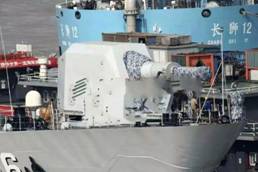
China leads the global
3D printing industry through aggressive government support massive
economies of scale, and a robust, integrated manufacturing supply chain.
By offering significant R&D incentives, fostering rapid innovation in
metal and polymer printing, and reducing costs, Chinese firms like
Farsoon,
BLT, and
Bambu
Lab dominate both in
technological advancements and market export volume.
Key factors driving
China's leadership include:
-
Government-Driven Strategy: The
Chinese government has heavily prioritized additive manufacturing,
embedding it in national strategies to transition from "Made in
China" to "Intelligent Manufacturing".
-
Cost-Effective
Innovation: Chinese manufacturers
produce high-performance 3D printers and materials at a fraction of
the cost of Western alternatives, allowing for rapid adoption across
industries.
-
Strong Supply
Chain & Infrastructure: Unmatched
industrial infrastructure allows China to rapidly prototype and
produce, supported by a skilled workforce and efficient, vertically
integrated manufacturing networks. Numerous technology hubs
providing a massive network of suppliers, tech start-ups, and a
large, skilled STEM workforce
-
Focus on Key
Sectors: China has integrated 3D
printing into critical industries such as aerospace, automotive, and
healthcare, with a particular focus on large-scale construction and
complex metal part production.
-
Rising Technical
Capabilities: Significant
breakthroughs in high-speed, high-precision machines, as well as
AI-driven design and process optimization.
-
Global Export
Domination: With Shenzhen as a major
hub, Chinese companies are dominating the international market with
high export volumes, particularly in consumer-grade and
industrial-grade printers.
-
High-Tech Focus
("New Productive Forces"): China is
focusing on high-tech, AI-driven manufacturing and robotics to
maintain a cost advantage while upgrading its technological
capabilities.
-
Government
Leadership: Most important factor for
China’s success is the government’s ability to develop, plan and
execute long term visions successfully on time and on budget.
Government policies and expenditures are focussed on benefiting the
country and its people rather than special interests.
The majority of the Chinese leaders are highly qualified and
experienced engineers and scientists with extensive experience in
administration, management and project development.
-
Massive
Scientific and Engineering Talent.
China produces more STEM students each year than the US and G7
countries combined. Most of the world’s top STEM
universities and research institutions are in China
China is now the world leader in the publication of high impact and
frontier technology papers.
FUTURE DIRECTIONS FOR CHINA 3D PRINTING
China's 3D printing
industry is rapidly advancing from prototyping to industrial-scale
production, driven by policies focusing on aerospace, automotive, and
healthcare. Future growth centers on developing high-performance metal
materials, enhancing large-scale printing capabilities, and integrating
AI for intelligent, sustainable, and eco-friendly manufacturing, aiming
to secure global leadership in additive manufacturing.
Future
Directions and Development Areas
-
Strategic
Industrial Application: The industry
is moving beyond prototyping toward critical, high-end applications,
specifically in aerospace (engine components), biomedicine, and
automotive manufacturing.
-
Technological
Advancements: Key developments include
enhancing the speed, accuracy, and size of metal 3D printers, as
well as the development of new, specialized materials.
-
Integration with
"Intelligent" Manufacturing: Future
development involves combining 3D printing with big data,
intelligent robots, and advanced control systems to create smart
factories.
-
Green &
Sustainable Focus: There is a strong,
policy-driven shift towards low-carbon, energy-efficient, and
sustainable "green" additive manufacturing practices.
-
Innovation
Ecosystem: China is focusing on
improving standardization, legal frameworks, and research-industry
collaboration to overcome current bottlenecks.
Key Trends
-
Industrialization & Scale: Shifting
from small-scale to mass production, increasing the use of 3D
printing for end-use, complex, and high-load-bearing parts.
-
Localized
Innovation: Increasing investment in
R&D to shift from technology adoption to innovation leadership,
specifically in patent development and specialized applications.
-
Supply Chain
Integration: Using 3D printing to
enhance supply chain resilience, particularly for on-demand
production and reduced inventory costs.
The industry is heavily
supported by long term government initiatives, providing subsidies for
research centers and industrial parks, creating a favorable ecosystem
for continued growth and innovation.
Key Military
3D Printing Applications
China uses 3D printing
technology to build and maintain advanced military hardware, including
fighter jet structures, drone engines, and railgun components.
-
Jet Fighter
Components: State-owned defense contractors such as the Aviation
Industry Corporation of China utilize large-scale metal 3D printing
to build integrated structural parts and titanium components for
warplanes like the J-16 and carrier-based J-15.
-
UAV Turbojet
Engines: The Aero Engine Corporation of China successfully
flight-tested a minimalist turbojet engine made with over 75%
3D-printed parts designed to power target drones and loitering
munitions.
-
Railgun Parts:
Research institutes in Beijing have tested 3D-printed critical
components such as internal honeycomb structures for electromagnetic
railgun systems to reduce weight and manage stress tolerances.
-
Battlefield
Maintenance:
The
People's Liberation Army (PLA) Northern Theatre Command has
conducted drills combining 3D printing units with drone delivery
systems to supply remote troops with on-demand replacement parts.
MARKET SHARE
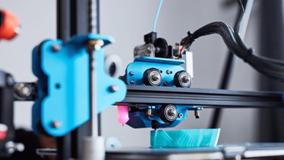
China dominates the
global 3D printing industry, manufacturing approximately 90% of the
world's consumer-grade printers and holding about 70-95% of the
entry-level printer market. Shenzhen is the central hub for this
production. The market is rapidly expanding, with industrial
applications in metal and polymer growing strongly, aiming for USD 20
billion by 2027.
Market Share
and Production Leadership
-
Consumer/Desktop
Dominance: China accounts for roughly
70% of the global desktop 3D printer market and up to 90% of global
consumer-grade, low-cost printer manufacturing, with a ~95% share of
entry-level shipments.
-
Shenzhen
Powerhouse: Shenzhen acts as the core
manufacturing base, with 3D printer exports in the first three
quarters of 2025 exceeding 800 million US dollars, representing ~79%
of China’s total exports.
-
Rapid Growth:
The Chinese 3D printing market is growing significantly, with
industrial, medical, and construction sectors adopting the
technology. The market was expected to exceed USD 3.82 billion in
2026 and is projected to pass USD 14 billion by 2027.
Technology
and Industry Trends
-
Shifting to
Industrial/Metal: While dominant in
desktop, China is rapidly advancing in industrial, high-precision
metal 3D printing
(e.g.,
Selective Laser Melting).
-
Materials
Market: The 3D printing materials market in China has seen
growth rates exceeding 35% annually, with market size reaching 4
billion yuan by 2018.
-
Key Players &
Innovation: Major players include
companies like
UnionTech and
Flashforge. The
country is moving from "copying" to innovation, with significant
patent activity in major cities.
-
Government
Support: Favorable policies, including
tax deductions for R&D (up to 200%), have accelerated the growth of
the sector.
Key Regional
Hubs
-
Shenzhen:
Leading in consumer and low-cost industrial 3D printers.
-
Beijing and
Shanghai: Key centers for research and
development, holding significant shares of patent applications.
MAJOR 3D PRINTING PLAYERS IN CHINA
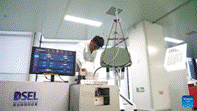  
China's 3D printing
industry is a global leader, dominated by Shenzhen-based consumer giants
including:
Creality,
Bambu Lab,
Anycubic, and
Elegoo, alongside
industrial metal specialists such as
BLT,
Farsoon, and
Eplus3D. These
companies excel in affordable FDM/resin printers and high-performance,
large-format multi-laser metal systems for automotive and aerospace.
Key Players
in the Chinese 3D Printing Industry
Key
Technologies and Trends
-
High-Speed FDM:
Companies like Bambu Lab and Creality are setting new standards for
speed and automated leveling in consumer printers.
-
Industrial Metal
Additive (LPBF): Chinese
manufacturers are heavily investing in multi-laser (up to 64 lasers
in some Eplus3D models) systems to reduce production time for large
aerospace and automotive components.
-
Desktop Resin
(SLA/DLP): Anycubic and Elegoo lead
the world in making high-resolution resin printing accessible for
users.
-
Intelligent
Systems: Integration of AI for
real-time monitoring and defect detection is a major R&D focus for
industrial players.
-
Application-Specific Materials: Rapid
growth in specialized materials for medical, dental, and aerospace
applications.
Major
Industry Hubs
-
Shenzhen:
The "Silicon Valley of Hardware" for 3D printing, housing the "Four
Little Dragons" (Creality, Bambu Lab, Anycubic, Elegoo).
-
Xi'an:
Major hub for industrial metal 3D printing technology, particularly
with companies like BLT.
|
