|
|
|
CHINA MANUFACTURING |
|||||||
|
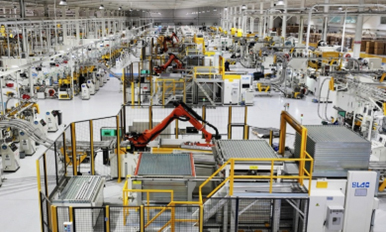
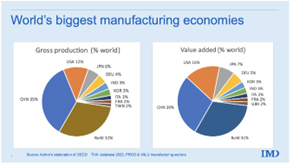
From about 3% global manufacturing export in 1995, China is now the world's leading manufacturing factory, producing a massive share of approximately 30% of global manufacturing output, far exceeding the US, Japan, Germany, South Korea and India combined, dominating numerous advanced industries from electronics and machinery to metals, and leading in most critical and strategic tech sectors such as AI, clean green energy and transportation, aerospace, quantum communication and computing, industrial and consumer internet of things, biotechnology and pharmaceuticals, chemicals, robotics, big data, fintech, advanced materials, shipping and rare earths mining, extraction, separation, purification and critical materials.
Its
dominance stems from strong government led long term planning and
support, massive and targeted investment in innovation and science and
technology, scale, manufacturing infrastructure and talent, supply chain
integration, and rapid tech innovation from opportunity identification,
formation of ideas, research, pilot scaling, commercialization, adoption
and the development of integrated and complete supply chains and
ecosystems from manufacturing hardware to software and talent
development. |
|||||||
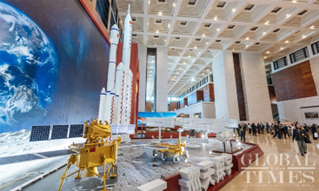
China is constantly moving up the value chain, transforming, developing new productive forces and upgrading its advanced and basic manufacturing to maintain global competitive edge with a focus on quality and value-adding to new as well as traditional industries such as steel, non-ferrous metals, machinery and textiles that accounts for nearly 80 percent of the manufacturing sector's total output, giving the false impression that China manufacturing has slowed.
|
|||||||
 China is actively formulating domestic and global policies to stimulate domestic consumption and diversifying its export markets for manufactured products to the BRI and global south countries in order to better withstand external pressure and challenges such protectionism, weaponization of tariffs and the weakening of international trade organizations including WTO. Given China is the locomotive and major engine in global manufacturing and supply chains, China's sound development of manufacturing is essential in injecting confidence, stability and impetus to global economic recovery and growth. China’s manufacturing is now fuelled by AI driven smart and intelligent technologies, new productive forces and emerging economic engines. |
|||||||

China’s manufacturing is underpinned by its well-developed ecosystem - a strong and extensive network of suppliers, manufacturers, and logistics companies. The country's massive manufacturing ecosystem enables China to remain unmatched in its economic resilience around the world, especially during adverse global economic challenges. China understands that innovation and mastering core technology in key fields is the future and the driving force of manufacturing. China’s ability to produce low cost but high-quality products for the global markets is critical in helping to raise the standard of living of importing countries
|
|||||||
|
|
|||||||
 |
 |
||||||
|
China’s dominance in manufacturing is unlikely to change significantly for the decades to come. China builds while other countries talk. |
|||||||