|
|
|
CHINA ECONOMY |
|||||||
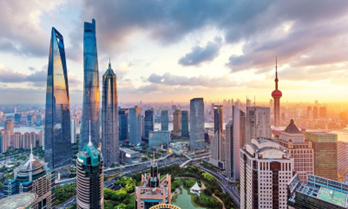 China is the world's largest economy by PPP surpassing the United States, Japan and Germany and with a FOREX reserve of ~USD 3.2 trillion. China has a rapidly growing middle class and an economy that has been growing at a remarkable average rate of 10% for most of the last 3 decades. China's economy is currently going through a period rapid modernization, upgrading and strategic restructuring - transforming to a more open, sustainable, green, quality-oriented, high value and high technology driven model. An economic system that is knowledge and technology-based and one that is much more equitable, eco-friendly and less reliance on export and where new growth engines, new quality productive forces, services and domestic consumption playing a greater role in GDP growth. Despite relentless US led western containment, sanctions, tariffs, supply chain disruption and technology blockade to disrupt and contain China’s development and modernization, China has been the world's engine of economic growth for the last 2 decades - contributing to 1/3 of the world's annual GDP growth and more than the combined contributions made by the US and G7 countries. Despite an uncertain world with many international and domestic challenges, China will continue to be the cornerstone of global stability and the anchor of economic growth. |
|||||||
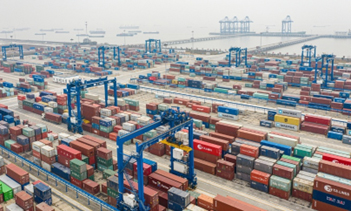
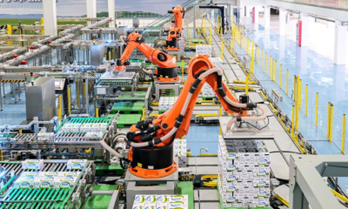
China has entered industrial revolution 4.0 and its economic, industrial and manufacturing engines are now powered more and more by new quality productive forces and innovations, particularly in areas such as AI, big data, quantum, cloud computing, blockchain, robotics, automation, informatization, networked digitalization and all things smart. China is the world’s industrial and manufacturing superpower, responsible for more than 35% of global manufacturing production and nearly three times that of the US. |
|||||||
China’s economy and industries will become much more smart, efficient, resilient, self-sufficient and interference proof – including technology sanctions and blockades. Despite global geopolitical uncertainties, rising protectionism, supply chain decoupling and economic contraction in G7 and EU countries - it is predicted that China’s economy will remain strong and continue to grow both in quantity and quality at a rate of approximately 5% for the next decade and achieves its goal of becoming a modern, advanced and prosperous country by 2030. |
|||||||
In terms of global economic and trade governance, China has been instrumental in advocating for reforms to the western controlled and weaponized international institutions such as the World Bank and International Monetary Fund (IMF) to better reflect the voice, quotas and voting power of emerging and developing countries. China is also at the forefront of demanding the reform of WTO where every country is expected to abide its rules and judgements with no exceptions and veto power for the US, G7 and its allied countries. |
|||||||
|
Looking ahead, there is a number of challenges that will impact China’s economic growth. These include relatively weak domestic and global demand, falling birth rate, an underperforming property market and uncertainty in US and EU foreign trade policies. |
|||||||